
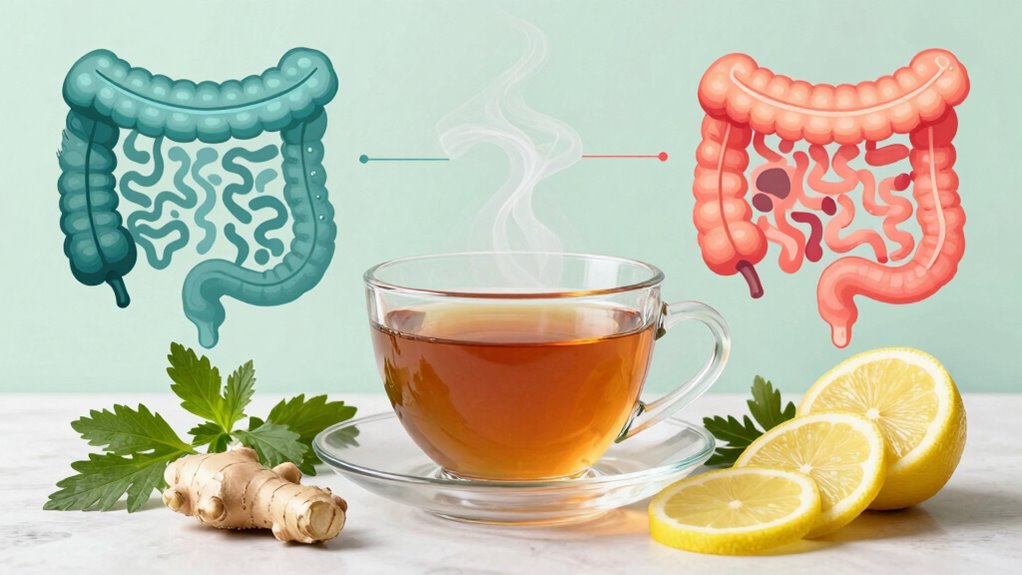
Tea plays an essential role in your gut health. With its polyphenols, tea fosters beneficial bacteria and reduces harmful ones, enhancing your microbiome’s balance. Green tea, rich in antioxidants, boosts Bifidobacteria, while ginger and peppermint tea soothe digestion. Fermented teas like kombucha introduce probiotics, supporting gut diversity. By incorporating 2-3 cups of tea into your daily routine, you foster better digestion, inflammation reduction, and overall wellness. Discover more about tea’s transformative effects on gut health.
Understanding the Gut Microbiome’s Role in Health

Although it mightn’t be immediately evident, the gut microbiome plays a pivotal role in your overall health. This complex ecosystem of trillions of microorganisms aids digestion, boosts immune function, and supports your health.
Beneficial bacteria within the gut help modulate inflammation and contribute to metabolic health. When there’s an imbalance in your gut microbiota, it can lead to conditions like obesity and inflammatory bowel diseases.
Fortunately, dietary interventions can help restore balance. Tea consumption is one such intervention, potentially enhancing your gut health by influencing the microbiome’s composition. In particular, herbal teas can offer stress relief and immune support, further benefiting gut health.
Since approximately 70% of your immune system resides in the gut, maintaining a diverse microbiome is essential. By understanding these connections, you can make informed choices to support your body’s health.
Types of Tea and Their Unique Gut Health Benefits
You’re about to discover how different teas can uniquely benefit your gut health.
Green tea stands out with its antioxidant-rich profile, which enhances the growth of beneficial bacteria like Bifidobacteria and Lactobacillus, essential for maintaining a healthy gut.
Meanwhile, herbal teas such as ginger and peppermint not only soothe digestive discomfort but also harness anti-inflammatory properties to support your gut’s overall wellness. Additionally, chamomile tea may aid digestion and alleviate bloating, further promoting your gut health.
Green Tea Antioxidant Effects
Green tea, celebrated for its vibrant flavor and health benefits, is rich in antioxidants like catechins, which play a significant role in supporting gut health.
Drinking green tea can enhance your gut microbiota by increasing beneficial bacteria such as Bifidobacteria and Lactobacillus. This supports microbial diversity and helps maintain a healthy balance between Bacteroidetes and Firmicutes, essential for your digestive well-being.
The polyphenolic compounds in green tea also work to reduce harmful bacteria, promoting overall gut health while aiding in weight management. Regular consumption can lead to improved gut health, reducing the risk of obesity and metabolic diseases. Additionally, the health benefits of green tea extend beyond gut health, contributing to overall wellness and vitality.
- Enhances beneficial bacteria in the gut
- Promotes microbial diversity
- Supports weight management
- Reduces harmful bacteria in the gut
Herbal Tea Digestive Support
While green tea is known for its beneficial impact on gut health, herbal teas offer a unique array of digestive benefits worth exploring.
Ginger tea, for instance, is celebrated for its anti-inflammatory properties, helping digestion and soothing nausea, making it perfect for easing digestive discomfort.
Peppermint tea helps relax gastrointestinal muscles, alleviating symptoms of irritable bowel syndrome and promoting digestive health.
Chamomile tea aids in relaxing the digestive tract, reducing bloating, and enhancing overall digestive wellness.
Oolong tea, with its partial fermentation, assists in regulating fat metabolism and boosting gut health through its polyphenols.
Finally, kombucha, a fermented tea rich in probiotics, supports the balance of gut microbiota composition, enhancing beneficial bacteria and improving both digestive health and immune function.
How Tea Polyphenols Benefit Gut Microbiota
You’re about to discover how tea polyphenols can enhance your gut health by promoting a balanced microbiome.
These powerful compounds in green and black teas act as antioxidants and prebiotics, fostering beneficial bacteria like Bifidobacteria and Lactobacillus.
Polyphenols Enhance Microbial Balance
Tea polyphenols play an essential role in enhancing microbial balance within your gut, primarily by fostering the growth of beneficial bacteria like Bifidobacteria and Lactobacillus.
These powerful compounds, abundant in green and black teas, contribute to a healthier gut microbiota. By regularly consuming tea rich in polyphenols, you can expect:
- An increase in microbial diversity, vital for gut health.
- A reduction in pathogenic bacteria, maintaining a balanced microbial ecosystem.
- Enhanced gut barrier integrity, which prevents conditions like leaky gut syndrome.
- Improved digestive health, thanks to the reshaping effects of tea polysaccharides on gut microbiota composition.
Ultimately, integrating tea into your routine can boost your gut’s microbial balance, supporting overall well-being and efficient digestive processes.
Gut Health Through Antioxidants
Building on the benefits of polyphenols in enhancing microbial balance, let’s explore how these compounds, particularly as antioxidants, further benefit gut health.
Green tea, rich in polyphenols, plays a significant role in supporting your gut microbiota. These antioxidants help reduce oxidative stress, allowing beneficial bacteria like Bifidobacteria and Lactobacillus to thrive. Such bacteria are vital for your metabolic and digestive health.
Regular tea consumption can improve gut microbiome diversity, maintaining a healthy balance essential for ideal digestive function. Polyphenols in tea also inhibit harmful bacteria, ensuring a favorable environment for health-promoting microbes.
This supports better metabolic health by maintaining a healthy Bacteroidetes to Firmicutes ratio, essential for weight management. Additionally, tea polyphenols may act as prebiotics, nourishing beneficial gut flora.
Prebiotic Effects of Tea
How do tea polyphenols influence your gut health? They offer significant prebiotic effects by nourishing beneficial microorganisms and promoting microbial diversity.
Regularly drinking tea, especially green and black varieties, supports your gut by:
- Encouraging the growth of beneficial bacteria, essential for maintaining a healthy gut microbiota.
- Reducing harmful bacteria while improving the Bacteroidetes/Firmicutes ratio, which enhances metabolic health.
- Enhancing the abundance of microbes like Bacteroides_H through tea polysaccharides, positively affecting metabolic markers.
- Modulating gut microbiota with bioactive compounds found in fermented tea, such as theaflavins and catechins, supporting better lipid metabolism.
These actions create a healthier internal environment, ultimately aiding in glucose metabolism and contributing to your overall well-being.
Embrace the power of tea polyphenols for a harmonious, healthy gut.
How Tea Compounds Enhance Gut Bacteria Function
When you explore the world of tea, it’s fascinating to discover how its compounds can considerably boost gut bacteria function.
Tea polyphenols, found in both green and black tea, act as prebiotics that nourish beneficial gut bacteria. They enhance the diversity and function of your gut microbiota, supporting metabolic health.
Maintaining a balanced ratio of Bacteroidetes to Firmicutes is essential for preventing dysbiosis, and tea helps achieve this balance.
Fermented teas introduce probiotics like lactobacilli and bifidobacteria, which protect your gut microbiome by inhibiting harmful bacteria.
Regular tea consumption has been linked to improved metabolic markers, indicating enhanced gut function.
Specific gut microbiota, such as Bacteroides_H, improve glucose metabolism, showcasing the impressive benefits of including tea in your diet.
Incorporate Tea for Better Gut Health
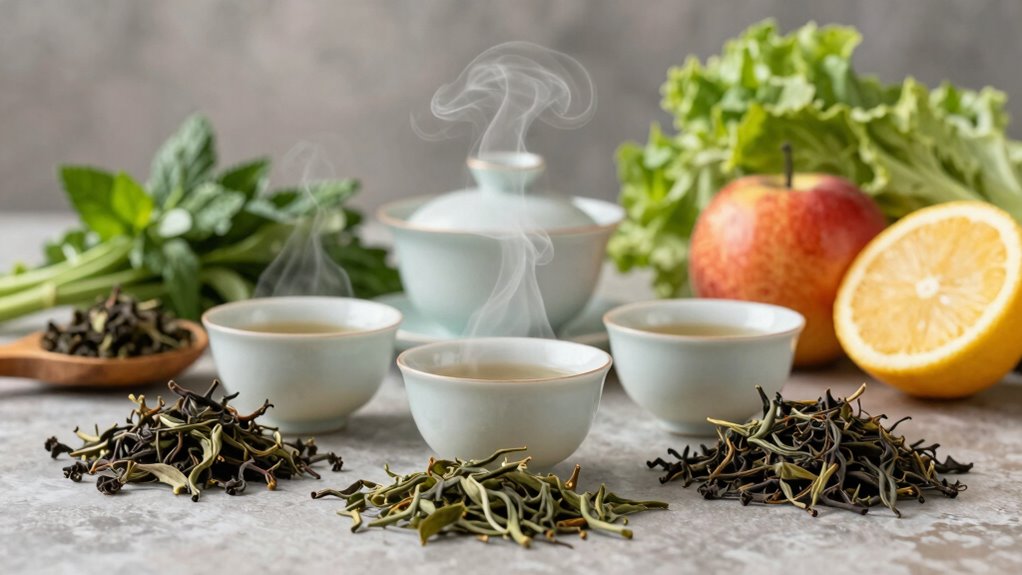
To incorporate tea into your daily routine for better gut health, you might start by selecting a variety of teas that promote a balanced microbiome. Regularly drinking green tea can enhance the diversity of your gut microbiota and encourage beneficial bacteria like Bifidobacteria and Lactobacillus.
Tea polyphenols help reduce harmful bacteria, supporting a healthy balance of Bacteroidetes and Firmicutes for better gut health.
- Green tea: Boosts microbiota diversity and beneficial bacteria.
- Fermented teas: Rich in probiotics, they regulate gut flora and improve digestive wellness.
- Herbal teas: Options like ginger and peppermint alleviate digestive discomfort.
- 2-3 cups daily: Supports digestive wellness, nutrient absorption, and provides anti-inflammatory benefits.
Incorporating these teas helps foster a balanced microbiome, enhancing your overall digestive health.
Busting Myths About Tea and Your Gut
Isn’t it intriguing how many myths surround the relationship between tea and gut health? You might’ve heard that all teas are harmful, but that’s far from the truth.
The consumption of green tea, for instance, can greatly enhance your gut microbiota. It promotes beneficial bacteria like Bifidobacteria and Lactobacillus, improving your gut’s overall health.
Tea polyphenols, especially in fermented teas, can balance critical bacterial groups, preventing dysbiosis linked to obesity and metabolic disorders. This balance supports metabolic processes and aids in weight management.
Contrary to popular belief, moderate tea drinking enhances fat oxidation and metabolic rates. Research shows consuming more than three cups daily can reshape the microbiome, reducing hypertension risk without harming your liver or intestines.
Future Research and Advancements in Tea and Gut Health
As the scientific community explores deeper into the relationship between tea and gut health, researchers are particularly keen to understand how tea polyphenols influence gut microbiota.
Future research will investigate:
- The role of theaflavins and thearubigins in modulating gut microbiota and boosting beneficial bacteria.
- The impact of bioactive compounds from fermented tea on lipid metabolism and obesity.
- Sex-specific effects of tea on gut microbiota, especially since changes appear more in men.
- Clinical studies needed to explore ideal tea types and amounts for gut health benefits.
Frequently Asked Questions
Can Tea Consumption Affect Mental Health Through Gut Health Improvements?
Yes, you can enhance mental health by improving gut health through tea consumption. Tea polyphenols support microbiome balance, aiding digestive support. This boosts the gut-brain connection, reducing stress and inflammation, thereby enhancing mood and cognitive function.
Are There Specific Times to Drink Tea for Optimal Gut Benefits?
Imagine your gut as a garden; you’ve got to nourish it at the right times. Start with a morning ritual, afternoon boost, pre-meal digestion, post-workout recovery, bedtime relaxation, and mindful sipping for ideal benefits.
Can Herbal Teas Provide the Same Gut Health Benefits as Traditional Teas?
Herbal teas can support digestive health like traditional teas. Different tea types offer unique benefits, as herbal ingredients provide antioxidant properties, aid in inflammation reduction, and promote a healthy gut microbiome. Proper brewing techniques enhance these herbal tea benefits.
How Does Tea Interact With Probiotics in the Gut?
Imagine tea throwing a wild party with probiotics, bringing synergy to the dance floor. Its fermentation, polyphenols, and antioxidants boost your gut microbiome, while digestive enzymes and immune modulation join the conga line of health benefits.
Does the Temperature of Tea Affect Its Gut Health Benefits?
Yes, the temperature of tea affects its gut health benefits. Use ideal temperatures during tea brewing to preserve beneficial tea compounds. This guarantees the gut microbiome thrives, digestive enzymes work efficiently, and steeping time maximizes health benefits.
Wrapping It Up
Imagine your gut as a bustling city where tea is the diligent gardener, nurturing the vibrant flora that fuels its energy. By sipping different teas, you’re not just indulging in a soothing ritual; you’re actively supporting your gut’s ecosystem. Studies show that tea polyphenols can boost beneficial bacteria, enhancing digestion and overall health. So, make tea a part of your daily routine—it’s a simple yet powerful step toward a healthier, more balanced life.