You’ll find four reliable Darjeeling tea bags for 2026: Twinings Darjeeling Black Tea (150 individually wrapped bags, about $8, light woody cup), VAHDAM Darjeeling (100 biodegradable pyramid bags, about $12, higher caffeine), Harney & Sons Darjeeling (50 sachets, about $14, First Flush and Autumnal blend), and Taylors of Harrogate Afternoon Darjeeling (20 bags, Rainforest Alliance, about $6, floral muscatel notes), and if you keep going you’ll get brewing tips, grades, and sourcing details.
| Twinings Darjeeling Black Tea – 150 Individually Wrapped Bags | 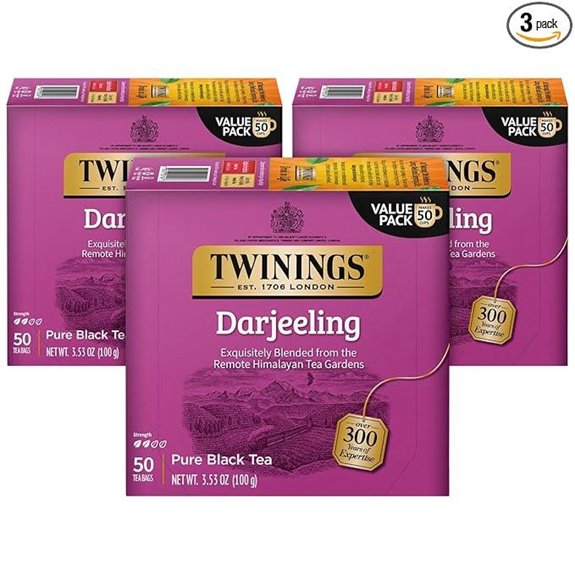 | Best for Everyday | Origin / Tea Type: Darjeeling black tea (Himalayan foothills) | Caffeine: Caffeinated (black tea; less than coffee) | Flavor Profile Notes: Delicate, light, woody, refined | VIEW LATEST PRICE | See Our Detailed Review |
| VAHDAM Darjeeling Black Tea Bags (100 Count) | 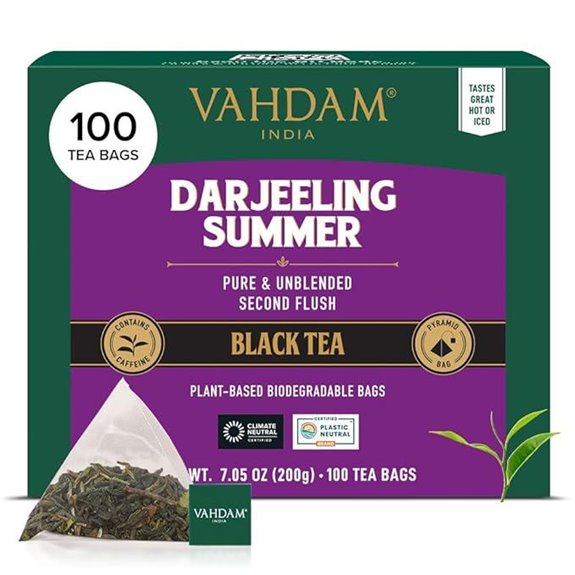 | Best for Sustainability | Origin / Tea Type: Darjeeling black tea (India, second flush) | Caffeine: High caffeine (black tea) | Flavor Profile Notes: Smooth, sweet, fruity (muscatel) and full-bodied | VIEW LATEST PRICE | See Our Detailed Review |
| Harney & Sons Darjeeling | 50ct Bag of Sachets |  | Best for Connoisseurs | Origin / Tea Type: Darjeeling black tea (high Himalayan gardens; first flush + autumnal blend) | Caffeine: Contains caffeine | Flavor Profile Notes: Light, fragrant; green and brown leaf character | VIEW LATEST PRICE | See Our Detailed Review |
| Taylors of Harrogate Afternoon Darjeeling Tea (20 Bags) | 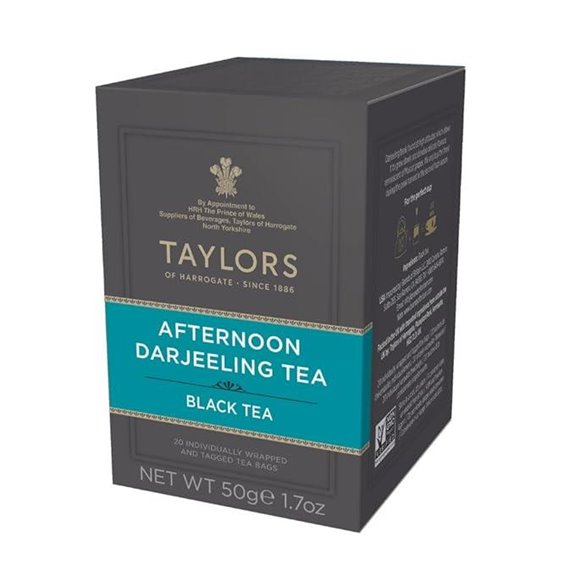 | Best for Afternoon Sips | Origin / Tea Type: Darjeeling black tea (Himalayan, second flush) | Caffeine: Caffeinated | Flavor Profile Notes: Delicate, sweet, floral; subtle muscatel/wine-like | VIEW LATEST PRICE | See Our Detailed Review |
More Details on Our Top Picks
Twinings Darjeeling Black Tea – 150 Individually Wrapped Bags
If you want a reliable everyday Darjeeling that stays fresh and is easy to store, Twinings Darjeeling Black Tea — 150 individually wrapped bags is a practical choice, and it’s especially good for busy households or offices. You get three packs of 50 foil-wrapped bags, each bag sealed to lock in freshness, so storage is simple and portions are consistent. The tea brews a light, woody cup, it’s thin-bodied and balanced, and it has less caffeine than coffee. Steep for 3–5 minutes, drink hot or iced, add milk or sweetener if you like, and expect consistent quality at a reasonable price.
- Origin / Tea Type:Darjeeling black tea (Himalayan foothills)
- Caffeine:Caffeinated (black tea; less than coffee)
- Flavor Profile Notes:Delicate, light, woody, refined
- Packaging Format:Individually wrapped tea bags (50 per pack ×3 = 150)
- Brewing / Preparation Guidance:Steep 3–5 minutes; plain, with milk/sweetener, or iced
- Brand Sustainability / Ethical Note:Freshness-focused packaging (no specific certification noted; brand promotes well‑being)
- Additional Feature:Pack of 3 (50 each)
- Additional Feature:Individually sealed bags
- Additional Feature:“Champagne of teas” reputation
VAHDAM Darjeeling Black Tea Bags (100 Count)
Tea drinkers who want a convenient, reliable Darjeeling option will appreciate VAHDAM’s Darjeeling Black Tea Bags, sold in a 100-count box and priced competitively for everyday use. You’ll get high-caffeine, non‑GMO, gluten-free tea from the second flush, which delivers a smooth, sweet cup with fruity muscatel notes and a full body. The pyramid, plant-based biodegradable bags let leaves unfurl for better flavor, and no artificial flavors are added. VAHDAM ships globally, is carbon- and plastic-neutral, and supports farmers with fair pricing plus a Teach Me program funding education, making it a practical, responsible choice.
- Origin / Tea Type:Darjeeling black tea (India, second flush)
- Caffeine:High caffeine (black tea)
- Flavor Profile Notes:Smooth, sweet, fruity (muscatel) and full-bodied
- Packaging Format:Pyramid tea bags (100 count), plant-based biodegradable material
- Brewing / Preparation Guidance:Designed to let leaves unfurl (pyramid); implied hot or iced; no artificial flavors
- Brand Sustainability / Ethical Note:Carbon-neutral and plastic‑neutral; fair prices to farmers; reinvests in growers’ education
- Additional Feature:Pyramid biodegradable bags
- Additional Feature:High-caffeine second flush
- Additional Feature:Reinvests revenue (Teach Me)
Harney & Sons Darjeeling | 50ct Bag of Sachets
For anyone who wants a reliable, convenient Darjeeling in sachet form, Harney & Sons’ 50-count bag is a smart choice, especially if you like a lighter cup and easy brewing. You get fifty individually wrapped sachets, each holding a blend of First Flush and Autumnal teas sourced from high Himalayan gardens, enough for everyday use or occasional guests. The cup shows a light color, with a fragrant nose and a mix of small green and larger brown leaves visible in the sachet, and the tea contains caffeine. Harney & Sons donates one percent of sales to environmental groups via 1% for the Planet.
- Origin / Tea Type:Darjeeling black tea (high Himalayan gardens; first flush + autumnal blend)
- Caffeine:Contains caffeine
- Flavor Profile Notes:Light, fragrant; green and brown leaf character
- Packaging Format:Sachets (50-count bag of sachets)
- Brewing / Preparation Guidance:Standard hot infusion (no specific time given in summary)
- Brand Sustainability / Ethical Note:Member of 1% for the Planet (donates 1% of sales to environmental causes)
- Additional Feature:Blend of two flushes
- Additional Feature:Sachet-style packaging
- Additional Feature:1% for the Planet member
Taylors of Harrogate Afternoon Darjeeling Tea (20 Bags)
You’ll find Taylors of Harrogate Afternoon Darjeeling best for drinkers who want a light, floral black tea with consistent convenience, since the box contains 20 individually wrapped bags that are easy to steep at home or take on the go. You’ll taste subtle muscatel and a wine-like note, from second flush Himalayan leaves, with a delicate, sweet profile. Use one bag per cup, add freshly boiled water, steep 2–3 minutes, serve hot or iced, or add milk if desired. The tea is caffeinated, carbon neutral, Rainforest Alliance and Ethical Tea Partnership certified, and usually priced around $6–$9.
- Origin / Tea Type:Darjeeling black tea (Himalayan, second flush)
- Caffeine:Caffeinated
- Flavor Profile Notes:Delicate, sweet, floral; subtle muscatel/wine-like
- Packaging Format:Individually wrapped tea bags (20)
- Brewing / Preparation Guidance:Use one bag, add boiling water, infuse 2–3 minutes; can be served pure or with milk
- Brand Sustainability / Ethical Note:Carbon Neutral Certified; Ethical Tea Partnership member; Rainforest Alliance Certified
- Additional Feature:Afternoon-specific blend
- Additional Feature:Rainforest Alliance certified
- Additional Feature:Carbon neutral certified
Factors to Consider When Choosing Darjeeling Tea Bags
When choosing Darjeeling tea bags, you’ll want to note the flavor profile, from floral First Flush notes to muscatel Second Flush tones, and pick what matches your taste and typical steep time. Consider caffeine level and flush, since early harvests often have lower caffeine and a lighter body, and check leaf grade and bag material—whole-leaf or pyramid bags cost around $6–$12 for 20 bags, while fannings in paper sachets can be $3–$6. I recommend prioritizing leaf quality and bag type for a cleaner cup, but if you need lower cost, accept smaller leaf grades and simpler packaging.
Flavor Profile Nuances
Because Darjeeling tea changes noticeably by flush and terroir, you should pay attention to specific flavor cues before picking a bag. First flush bags usually offer a light, floral aroma and a delicate muscatel note, while second flush bags deliver richer, fruitier sweetness and deeper muscatel tones. High-altitude teas add subtle wine-like character, similar to Muscat grapes, so look for origin labels and elevation, for example 1,000–2,000 meters. Check leaf color in the blend; small green leaves suggest early harvest, larger brown leaves hint at later picks, and mixed leaves mean blended harvests. Also consider steep time and temperature, such as 2–3 minutes at 80–85°C versus 3–5 minutes at 90°C, which will increase richness and depth.
Caffeine Level Preference
How much caffeine you want in your cup will shape which Darjeeling tea bags you pick, so consider flush, brew time, and the time of day you plan to drink it. Darjeeling caffeine ranges about 30–70 mg per 8-ounce cup, depending on brew time and temperature. If you prefer lower caffeine, choose first flush options, usually lighter and closer to 30–40 mg. For a stronger lift, second flush bags often sit higher, near 50–70 mg, and offer fuller flavor. Think about sensitivity and schedule, choose morning or early afternoon for higher caffeine, evenings for lower. Check product labels for estimated mg, steep 2–3 minutes for milder, 4–5 minutes for stronger, and compare prices from $6–$18 per box.
Flush and Harvest
Since the harvest date shapes taste and strength, you should check the flush on any Darjeeling tea bag label before buying, as First Flush (picked in March–April) gives light, floral cups around $6–$12 per box, Second Flush (June–July) delivers fuller, muscatel flavors often priced $8–$15, and Autumnal Flush (October) falls between the two in body and cost; the region’s altitude, climate, and soil also affect aroma and mouthfeel, so if you want a brisk, lower-caffeine morning tea choose First Flush, pick Second Flush for a richer afternoon brew, and consider sample packs or 10–20 bag boxes if you’re testing different flushes to compare strength, steep time, and price before committing to a larger purchase.
Pay attention to harvest timing and origin, check labeling for flush and vintage, and buy small packs to find your preferred balance of flavor, body, and cost.
Tea Bag Material
When you pick Darjeeling tea bags, pay attention to the bag material, because it directly affects flavor, brewing performance, and environmental impact. Choose pyramid or mesh bags, they give leaves room to unfurl, improving extraction and aroma. Look for biodegradable options made from plant-based fibers, they break down in months and usually cost $5–$10 for 20–50 bags. Avoid paper bags with plastic lining, they can leach microplastics and alter purity. Confirm the bag holds up at 95–100°C, so it won’t split during steeping. Check labels for no artificial flavors or additives, that keeps the cup clean and true to Darjeeling character. Personally, I prefer biodegradable pyramids, they balance taste, strength, and sustainability.
Leaf Quality Grade
Now that you’ve looked at bag construction and materials, the leaf quality inside the bag matters just as much, because it shapes aroma, strength, and mouthfeel. You should look for grades like SFTGFOP or FTGFOP, which indicate young tips and finer leaves, they often cost more, typically $6–$20 per 25 tea bags. First flush leaves are lighter and floral, second flush leaves are darker with muscatel notes, choose based on whether you want delicate or fuller-bodied flavor. Inspect dry tea for even, intact leaves and a fragrant scent, that signals higher quality. Use aroma, appearance, and taste to compare options, the grading system helps you tell premium packs from standard ones, so pick what matches your flavor expectation.
Packaging Freshness Preservation
Packaging plays a direct role in keeping Darjeeling tea fresh, so look for individually wrapped tea bags, airtight tins or pouches with foil lining, and clear freshness guarantees on the label. You should prefer individually wrapped bags, they limit air and moisture exposure and keep each serving sealed. Also check for foil-lined pouches or tins with airtight seals, these block light and oxygen that degrade aroma. Biodegradable mesh bags can help leaves expand, improving flavor, but confirm they still come sealed. Freshness statements or packed-on dates matter, aim for teas packaged within weeks of first or second flush harvests. Expect quality packs to cost $8–$25 for 25–50 bags, and choose brands that list sealed packaging and a freshness guarantee.
Ethical Sourcing Standards
Because the way your tea is sourced affects both people and the environment, look for clear ethical sourcing standards on the label and brand site, such as Rainforest Alliance or Fair Trade certification, direct-trade claims, or documented worker-welfare programs. You should prefer brands that show fair wages and safe working conditions, and that reinvest profits into education or healthcare in tea communities. Check for supply-chain transparency, with origin details, harvest dates, and farmer partnerships listed, often on product pages or QR codes. Direct-trade brands usually provide farmer contact info or cooperative names, which helps quality and sustainability. Expect certified Darjeeling tea bags to cost more, typically $6–$15 per 25–50-count box, reflecting social and environmental investments.
Brewing Recommendations
After checking ethical sourcing and origin details, you’ll want to focus on how to brew your Darjeeling tea bags to get the most from their flavor and aroma. Use one tea bag per cup, steep in hot water for 3–5 minutes as a standard, and adjust time to taste and strength. For first flush, steep 2–3 minutes to keep floral notes bright. If you make iced Darjeeling, brew normally, let the tea cool, then pour over ice to avoid dilution and muted flavors. You can add milk or sweetener, but many drink it plain to taste the muscatel character. For consistent results, note bag weight and try small time or temperature tweaks, most bags cost $4–$12 per pack.
Frequently Asked Questions
Are Darjeeling Tea Bags Gluten-Free and Safe for Celiac Disease?
Yes, most plain Darjeeling tea bags are gluten-free and safe for celiac disease, but you should check labels for additives, flavorings, or cross-contamination warnings. Look for certified gluten-free claims, ingredient lists showing only Camellia sinensis, and manufacturer info on processing lines. Single-origin packets often cost $6–$12 for 20–25 bags, and loose-leaf substitutes run $8–$20 per 100g, which you can choose if concerned.
Do Darjeeling Teas Contain Caffeine Compared to Green Teas?
Yes, Darjeeling teas usually have caffeine, and they tend to be moderate, often 40–70 mg per 8 oz cup, while green teas are usually lower, about 20–45 mg per 8 oz cup. You’ll find first-flush Darjeeling lighter, second-flush fuller, prices range $6–$20 per 25 bags, and steeping time 2–4 minutes affects caffeine. If you need very low caffeine, choose decaf or herbal options instead.
Can Darjeeling Tea Bags Be Composted at Home?
Yes, you can compost many Darjeeling tea bags at home, but it depends on materials, since some bags use plastic or polyester staples, which won’t break down. Check packaging for “biodegradable” or “compostable,” or choose unbleached paper bags, loose leaf sachets, or silk-free options, which decompose in 2–12 weeks in a hot compost (130–160°F). You’ll pay $4–$12 for compostable boxes, but they’re easier to process.
Are Any of These Brands Fair Trade Certified?
Yes, some brands are Fair Trade certified, and you can spot certification on packs, websites, or labels. Look for Fairtrade International or Fair Trade USA marks, often on 20–50 bag boxes priced $4–$12. Certified brands note farm wages, export traceability, and product batch numbers. If certification isn’t shown, contact customer service, check certification databases, or choose organic Fair Trade blends to guarantee labor and environmental standards.
How Should Darjeeling Tea Bags Be Stored Long-Term?
Store Darjeeling tea bags in an airtight, opaque container, and keep them in a cool, dark place away from heat and light. Use containers with silicone seals, about 8–16 oz capacity, priced $10–$25, to hold 20–50 bags. Avoid the fridge and direct sunlight, because moisture and odors degrade flavor. Check bags every 6–12 months, and use them within 12–18 months for best taste, in my view.
Wrapping It Up
You’ll find solid options among the four picks, each offering clear strengths for different needs. Twinings gives 150 individually wrapped bags for about $8–$12, good for storage and daily use. VAHDAM’s 100-count runs $10–$15, with strong aroma and consistent leaf quality. Harney & Sons offers 50 sachets for $12–$18, with a refined cup. Taylors’ 20 bags cost $4–$6, ideal for trying Darjeeling without committing. Choose by taste, price, packaging, and caffeine level.