
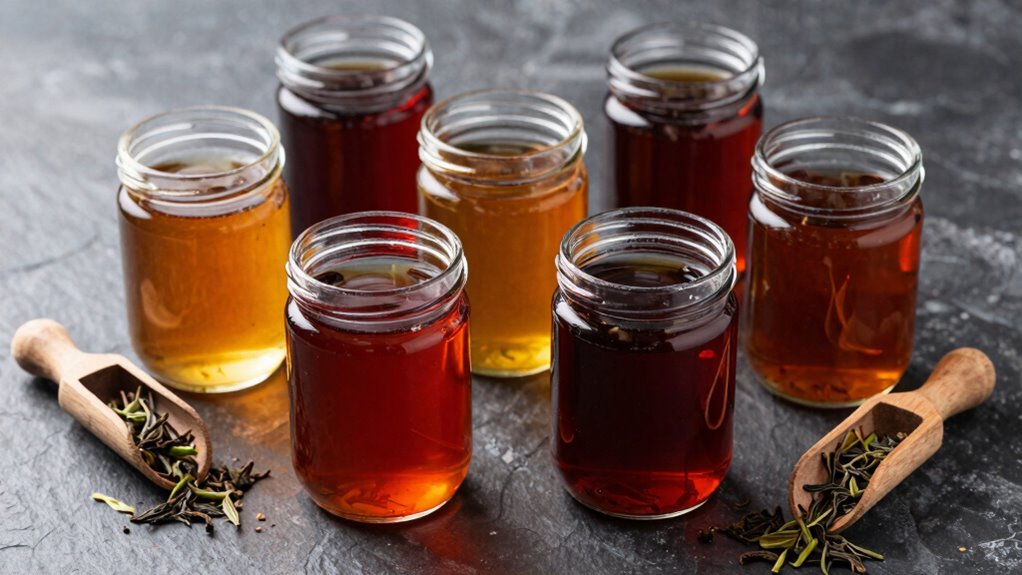
Fermented teas, crafted from Camellia sinensis leaves, go through a unique fermentation process, turning black, green, and pu-erh teas into complex beverages cherished for their flavors and health benefits. This process involves fungi and bacteria, creating probiotics and antioxidants that aid digestion and reduce oxidative stress. Pu-erh tea, particularly from Yunnan, China, exemplifies this category with its rich history and unique aging techniques. By exploring more, you’ll uncover their diverse flavors and preparation methods.
What Are Fermented Teas?

Fermented teas, a fascinating category within the tea world, are crafted from real tea leaves, mainly from the Camellia sinensis plant, and they undergo a unique fermentation process.
This process can span weeks to decades, transforming black tea, green tea, and particularly pu-erh tea into complex beverages with rich flavors and aromas. The fermentation process involves beneficial fungi and bacteria, which contribute to the distinct health benefits these teas offer, such as improved digestion and enhanced antioxidant properties.
Unlike traditional teas, which may only undergo oxidation, fermented teas achieve their complexity through this microbial transformation. As a result, they’re highly sought after by enthusiasts who appreciate not just the taste but the potential health benefits they provide.
Exploring Pu-erh Tea: Types and Origins
Although often overshadowed by more common teas, pu-erh tea stands out with its rich history and unique fermentation process.
Originating from Yunnan province, China, pu-erh is a type of fermented tea named after the historic city of Pu-erh. This tea comes in two main forms: sheng cha, or raw pu-erh, and shou cha, or ripe pu-erh.
Sheng cha undergoes a natural fermentation process and can be aged for many years, enhancing its flavor. In contrast, shou cha is produced through an accelerated fermentation method.
Pu-erh is often compressed into cakes or bricks, with uncompressed leaves known as maocha. The aging process makes older varieties highly prized, and only tea from Yunnan can be legally marketed as pu-erh, preserving its distinct characteristics. Additionally, pu-erh tea, like oolong tea, is rich in antioxidants, contributing to its health benefits.
How Fermented Tea Is Made
When making fermented tea, you start by harvesting large leaves from specific Camellia sinensis varietals, ensuring they’re best suited for fermentation.
The next step involves a careful combination of aging and shaping techniques, such as pressing the tea into cakes or bricks, which helps enhance the flavor and complexity over time.
As the tea ages, it undergoes a transformation that not only influences its taste but also its value and appeal to tea enthusiasts.
Harvesting Large Tea Leaves
Large tea leaves play an essential role in the making of fermented teas, like pu-erh, and are harvested from specific varietals of Camellia sinensis.
These large leaves are ideal for the fermentation process, marking the first significant step in creating fermented tea. When you start harvesting, focus on selecting these larger leaves, as they allow the unique flavors of pu-erh tea to develop.
Initially, the leaves are dry-roasted to stop oxidation, then lightly bruised and sun-dried, preparing them for fermentation.
This process can vary; shou cha involves accelerated fermentation, while sheng cha follows a traditional method. Understanding the importance of harvesting large leaves guarantees that the resulting pu-erh tea is rich in flavor and ready for further processing. Additionally, diverse tea practices around the world highlight the cultural significance of unique tea varieties, including pu-erh.
Aging and Shaping Techniques
Having harvested and prepared large tea leaves, the journey of creating pu-erh tea continues with aging and shaping techniques.
This fermented dark tea begins its transformation through fermentation, where shou cha (ripe) undergoes accelerated processes, while sheng cha (raw) develops traditionally over time.
You’ll find that after fermentation, compression into shapes like cakes, bricks, or squares is essential. These shapes not only make storage easier but also enhance the tea’s aging process, allowing its flavor profile to mature beautifully.
As aging progresses, the tea’s flavors deepen, increasing its rarity and market value. Some pu-erh teas are aged for decades, becoming prized possessions for tea enthusiasts.
This meticulous process ultimately results in a complex and rich drinking experience.
How Fermented Teas Benefit Your Health
Fermented teas offer a wealth of health benefits that you shouldn’t overlook. By drinking these teas, you introduce probiotics into your system, promoting a healthy gut. This guarantees better digestion and may enhance your overall health.
Fermented teas, like pu-erh, are rich in antioxidants that combat oxidative stress, helping protect your cells from damage. Additionally, these teas are gentle on the stomach due to their lower tannin levels, avoiding the bitterness often found in other teas.
Their caffeine content delivers a mild energy boost, keeping you alert and potentially improving cognitive function. Regularly consuming fermented teas might also aid in weight management and metabolism, as some studies suggest they can help reduce body fat.
Discovering Fermented Tea Varieties

Exploring the world of fermented teas opens up a variety of unique and flavorful options that are as intriguing as they’re beneficial.
You’ll find that teas like pu-erh, made from Camellia sinensis tea leaves, undergo a fascinating fermentation process. This can enhance their flavor profiles and health benefits, such as aiding digestion and providing antioxidants.
Pu-erh comes in raw and ripe forms, with varying fermentation methods that affect taste and oxidation levels. Dark tea, another fermented variety, shares similar enriching processes.
Additionally, regional specialties like Awa Bancha from Japan and Hunan Brick Tea from China highlight diverse techniques.
Even kombucha, a tangy, bubbly drink, is made using tea leaves. Embracing these varieties enriches your tea experience and well-being. Moreover, health benefits of tea such as improved digestion and increased antioxidants make fermented teas a worthwhile addition to your daily routine.
How to Prepare Fermented Teas
When preparing fermented teas like pu-erh, you’ll want to start by carefully flaking the leaves from their compact cakes or bricks, using a pu-erh knife for precision.
Rinse the leaves briefly with boiling water to clean them and awaken the flavors, then choose the brewing method that suits your taste exploration—traditional Gongfu with its multiple short infusions or the Western style for a longer steep.
Traditional Brewing Techniques
Preparing fermented teas like pu-erh can be a delightful ritual, rich in tradition and flavor. Start by flaking off leaves from cakes or bricks with a pu-erh knife. Rinse them using boiling water to remove impurities.
The brewing techniques vary; the Gongfu method uses smaller amounts of tea with shorter steeping times, offering multiple infusions that reveal unique flavor profiles.
Western-style preparation involves steeping pu-erh tea for 1 to 5 minutes, enhancing its boldness. Adjust water temperature and steeping time based on the tea’s type and age to optimize flavor extraction.
Experiment with both hot and cold preparations, as the flavor profile of fermented teas evolves with temperature and duration, creating a rich and satisfying sensory experience.
Flavor Development Methods
Understanding how to develop flavor in fermented teas like pu-erh enriches your brewing experience, providing a tangible connection to centuries of tradition.
Start by flaking leaves from compressed cakes or bricks using a pu-erh knife—this guarantees ideal brewing. Before steeping, rinse the tea leaves with boiling water to remove impurities and enhance flavor.
For a rich experience, try the Gongfu method, which involves multiple short infusions, allowing the tea’s complex flavors to unfold gradually. Alternatively, the Western style offers longer steeping times of 1-5 minutes, revealing different nuances.
Both methods highlight the unique flavor brought out by fermentation and oxidation. Enjoy your fermented tea hot or cold, appreciating how flavors evolve with each infusion.
Choosing the Right Fermented Tea for You
How do you choose the perfect fermented tea for your taste and lifestyle? Start by exploring the flavor profile of various fermented teas.
Pu-erh teas, for example, range from earthy and robust to sweet and mellow, influenced by fermentation and aging. Consider specific tea varieties like sheng (raw) or shou (ripe); sheng offers astringent complexity, while shou provides a smoother richness.
Reflect on your caffeine tolerance, as these teas contain caffeine that can energize you based on your preference and brewing method.
Don’t overlook health benefits; fermented teas are rich in antioxidants and may aid digestion, with lower tannin levels making them gentle on the stomach.
Experiment with different preparation methods, such as Gongfu or Western style, to enhance your tea experience.
Frequently Asked Questions
Can Fermented Teas Be Made at Home Easily?
Yes, you can easily make fermented teas at home. Focus on home brewing by understanding the fermentation process. Select ingredients wisely for flavor variations. Enjoy health benefits and follow proper storage tips for the best results.
Are Fermented Teas Safe for Children to Consume?
Fermented teas can be safe for children if you consider age recommendations and child health. The fermentation process offers probiotic benefits, but always check for safe consumption. Herbal alternatives might be a gentler option for younger kids.
Do Fermented Teas Have Caffeine Content?
Ever wondered about caffeine content in fermented teas? Yes, they’ve got it. Different tea varieties and brewing methods can affect levels. Enjoy health benefits, diverse flavor profiles, and a potential energy boost. It’s an exciting tea experience!
What Is the Shelf Life of Fermented Teas?
The shelf life of fermented teas depends on storage conditions and packaging types. Ideal flavor and health benefits are preserved longer with proper storage. Over time, flavor changes occur due to the fermentation process and varying shelf life factors.
How Do Fermented Teas Compare to Other Probiotic Drinks?
You’ll find fermented teas, like kombucha, offer unique health advantages compared to kefir. They provide varied flavor profiles and probiotic sources. The fermentation process enhances these benefits, making them a distinct and beneficial choice among probiotic drinks.
Wrapping It Up
Fermented teas offer a rich tapestry of flavors and health benefits that are worth exploring. Imagine trying a cup of Pu-erh tea, known for its earthy taste and origins in China’s Yunnan province. With a little patience, you’ll learn to prepare these teas perfectly, revealing their full potential. Whether you’re drawn to their unique taste or wellness perks, there’s a fermented tea that suits your needs, inviting you to enhance your daily routine with a touch of tradition.


