
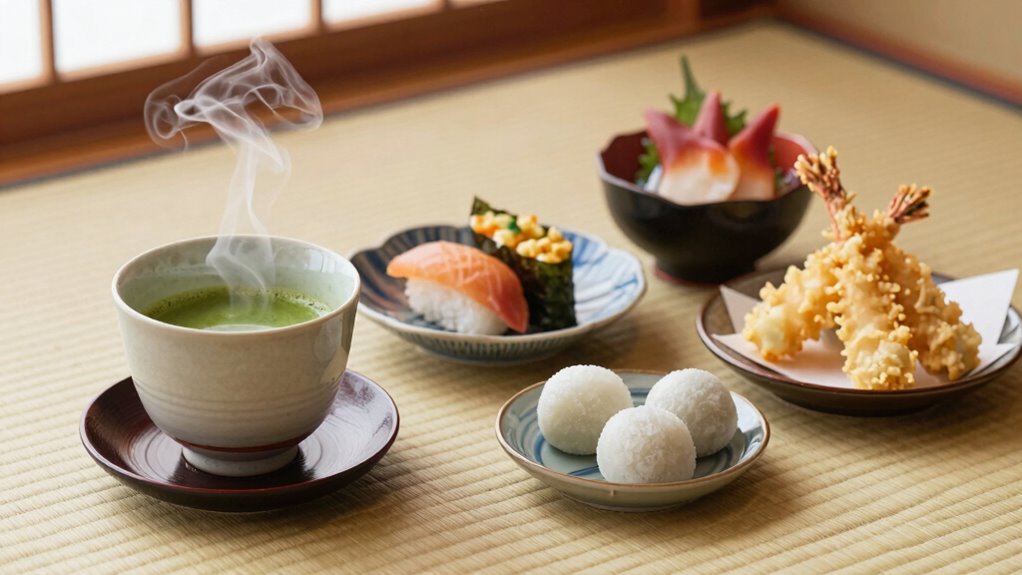
To perfectly pair matcha tea with Japanese cuisine, consider incorporating its earthy flavor and creamy texture into both traditional and modern dishes. Classic pairings like wagashi sweets, mochi, and senbei crackers balance matcha’s boldness, while contemporary options like matcha cheesecake or risotto provide an innovative twist. The rich umami taste of matcha enhances savory foods such as sushi and mushrooms, while sweet treats like citrus fruits and white chocolate elevate its unique bitterness. Discover more pairing possibilities soon.
What Sets Matcha Apart?

Matcha tea, a standout among green teas, owes its distinctive qualities to its unique production process and composition. You’ll find that matcha, made from shade-grown Tencha leaves, boasts a rich, earthy flavor, characterized by its smooth, creamy texture and notable umami taste.
These qualities make it an exceptional choice for food pairing, especially with Japanese food. The increased chlorophyll and L-theanine content not only enhance its flavor but also contribute to its health benefits, like boosting metabolism and mental clarity. Engaging in tea rituals can lead to spiritual awakening and tranquility, further enhancing the matcha experience.
Matcha’s versatility shines in both sweet and savory dishes, pairing seamlessly with traditional Japanese foods as well as modern desserts. Its vibrant green color and frothy texture, achieved through whisking, elevate the tea-drinking experience, making matcha truly unique.
Traditional Matcha Pairings
While exploring the world of matcha, you’ll find that traditional pairings enhance your tea experience by complementing its rich, earthy flavor profile.
Traditional Japanese tea pairings often include wagashi, delicate sweet foods like mochi and dorayaki, which beautifully offset matcha tea’s grassy notes.
Senbei, or rice crackers, are another classic choice, enhancing the earthy and vegetal taste without overwhelming the palate.
Dried fruits and nuts offer a natural sweetness, balancing the tea’s boldness, while chewy daifuku mochi filled with sweet red bean paste creates a harmonious contrast.
Candied chestnuts are also a favored accompaniment, providing just enough sweetness to counteract matcha’s bitterness.
These thoughtful pairings elevate your enjoyment of matcha tea, making each sip a delightful experience, as they reflect the traditional tea practices that shape Japan’s cultural identity.
Savory Pairings That Highlight Matcha’s Versatility
You might be surprised how well matcha complements savory dishes, creating unique taste experiences that highlight its versatility.
Pair it with the creamy richness of avocado to balance its earthy notes, or explore how the umami of mushrooms enhances its grassy undertones.
Sushi and onigiri also offer a delightful combination, with matcha’s flavor harmonizing beautifully with their savory profiles.
Avocado and Umami Harmony
When you explore the world of savory flavors, the combination of avocado and matcha opens a door to culinary creativity.
Avocado’s creamy texture and subtle taste enhance matcha’s earthy notes, creating a savory pairing that highlights matcha’s versatility. The umami flavor of avocado perfectly complements matcha’s rich, grassy taste, resulting in a well-balanced flavor experience.
By incorporating matcha into avocado dishes like toast or salads, you can elevate the overall taste and add a unique twist to your tea pairings. This delicious combination isn’t just about taste; it’s also health-conscious.
Both matcha and avocado are packed with antioxidants and healthy fats. Additionally, high in antioxidants, both ingredients support overall health while offering a delightful culinary experience. Get creative with this pairing in dips, dressings, or smoothies, and discover the delightful harmony they bring.
Mushroom and Matcha Fusion
Drawing you into a domain of savory delights, the fusion of mushrooms and matcha showcases the tea’s adaptability and depth in culinary creations.
By pairing varieties like shiitake and enoki with matcha, you tap into a rich umami experience that elevates savory dishes. The earthy, vegetal notes of matcha align beautifully with mushrooms, enhancing their flavor profiles and adding complexity.
Imagine a creamy matcha-infused risotto or sautéed mushrooms, where the tea’s bitterness is perfectly balanced by the mushrooms’ savory sweetness. This pairing not only excites your palate but also boosts nutritional benefits, thanks to the antioxidants in both ingredients.
Whether it’s a matcha-laden soup or sauce, this fusion promises a delightful and health-promoting culinary adventure.
Sushi and Onigiri Pairing
Exploring the delightful fusion of mushrooms and matcha naturally leads us to another culinary pairing that highlights matcha’s versatility: sushi and onigiri.
Matcha pairs beautifully with sushi, enhancing the umami flavors of the fish while providing a revitalizing cleanse to the palate between bites. The rich and vegetal characteristics of matcha highlight the delicate flavors of sushi ingredients, ensuring a harmonious interplay of tastes.
When enjoying onigiri, the light, umami-packed profile of this rice ball complements matcha’s earthy notes, making it a wholesome snack option that balances flavors effectively.
Traditional options like salmon or tuna sushi and onigiri work exceptionally well with matcha, as the tea’s complexity adds depth to the dining experience, elevating it to new culinary heights in modern Japanese cuisine.
Sweet Flavors That Balance Matcha’s Bitterness
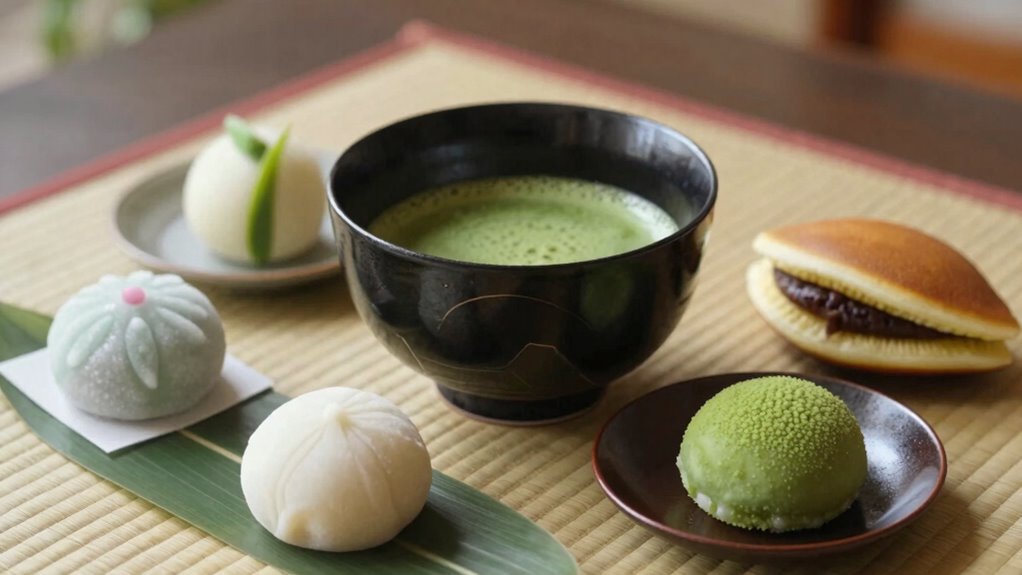
While matcha’s distinctive bitterness mightn’t appeal to everyone at first sip, pairing it with sweet flavors can transform the experience into something delightful.
In Japanese cuisine, traditional wagashi, like mochi filled with sweet red bean paste, beautifully complement matcha, highlighting its complex taste. These desserts balance matcha’s earthy and grassy notes, making them an ideal pairing.
Additionally, sweet baked goods, such as pastries and cakes, provide a lovely contrast, enhancing the tea’s umami without overpowering its unique profile.
White chocolate and shortbread cookies also serve as excellent companions, adding sweetness while maintaining matcha’s integrity.
For a revitalizing twist, try citrus fruits like lemon or grapefruit, which add a zesty brightness, creating a well-rounded and balanced palate experience.
Contemporary Dishes Incorporating Matcha
You’re about to discover how matcha’s unique flavor profile enhances modern recipes, bringing unexpected twists to both sweet and savory dishes.
From matcha-infused desserts like ice cream and pastries to savory creations such as risotto and ramen, innovative chefs are pushing the boundaries of flavor combinations.
As you explore these contemporary dishes, you’ll see how matcha’s earthy notes marry perfectly with other ingredients, creating exciting culinary experiences.
Matcha in Modern Recipes
Incorporating matcha into modern recipes opens a world of culinary possibilities that delight both the eyes and the palate. Matcha, a vibrant Japanese green tea, is perfect for creative food pairings, especially in modern desserts. Its sweet flavor adds a unique twist to dishes like matcha cheesecake, where the earthy notes complement the creamy texture.
You can also enjoy matcha in baked goods such as cookies and muffins, where its subtle bitterness balances sweetness while offering a distinctive green hue.
For a revitalizing treat, matcha-infused ice cream combines the umami-rich tea with creamy, cold textures, creating a delightful dessert experience.
Even in drinks, matcha shines; try a matcha latte, blending this versatile tea with steamed milk for a visually appealing, delicious sip.
Innovative Flavor Combinations
Exploring innovative flavor combinations with matcha can transform your culinary creations into something truly extraordinary.
Matcha’s unique taste makes it a versatile pairing choice in Japanese cuisine, enhancing both sweet and savory dishes. Imagine matcha and white chocolate truffles where the sweetness balances matcha’s bitterness, creating a delightful treat.
Or consider matcha’s grassy notes complementing the creamy texture of avocado toast, adding a nutritious twist to your breakfast. Chefs are also getting creative by infusing matcha into sauces for grilled meats, providing an earthy depth and umami richness.
- Matcha-infused pancakes and muffins: Vibrant color and distinct taste.
- Matcha affogato: Matcha over vanilla ice cream for a unique dessert.
- Matcha sauces for meats: Adds depth and richness.
How to Host a Matcha and Japanese Cuisine Event
When planning a matcha and Japanese cuisine event, start by curating a diverse selection of matcha teas to set the stage for an authentic experience. Choose ceremonial-grade matcha for traditional flavor or culinary-grade for versatile food pairing.
Matcha’s umami flavor pairs beautifully with classic Japanese cuisine like sushi, enhancing the fish’s freshness and complementing light, savory notes. Balance this with sweet treats such as wagashi, mochi, or shortbread cookies to contrast matcha’s earthy bitterness.
Include savory options like avocado sushi rolls or miso soup to showcase matcha’s versatility and rich umami profile. Finally, create a visually appealing presentation by using traditional tea bowls and beautifully plated dishes, enhancing the cultural and aesthetic experience of your event.
Why Matcha Is the Talk of the Culinary World
As the culinary world evolves, matcha has emerged as a star ingredient, enchanting chefs and food enthusiasts alike. Its unique flavor profile—earthy, grassy, with a touch of umami—makes it perfect for tea pairing with both sweet and savory Japanese dishes.
The rising trend of the sober-curious lifestyle has boosted the demand for non-alcoholic beverages, and Japanese Green teas like matcha are leading the way. Its high antioxidant content and health benefits, including calm energy from caffeine and L-theanine, enhance its appeal.
Matcha’s versatility shines in unique pairings such as:
- Matcha with yuzu lemonade, offering a revitalizing twist.
- Incorporating matcha in sushi for a new flavor experience.
- Creating desserts with matcha to balance sweetness with umami notes.
Social media further amplifies matcha’s culinary presence.
Frequently Asked Questions
What Do Japanese Eat With Matcha?
You can enjoy matcha with wagashi like mochi, balancing its bitterness with sweetness. Try matcha dessert recipes for a delightful treat. Explore matcha tea varieties and appreciate its health benefits and cultural significance through traditional matcha preparation.
What Food Compliments Matcha?
Imagine matcha as a gentle breeze weaving through citrus orchards, enhancing flavor profiles. Pair it with mochi or avocado ice cream for matcha dessert ideas. Explore matcha cooking techniques to reveal its health benefits and cultural significance.
What Food Does Matcha Pair Well With?
You’ll find that matcha pairs well with sweet desserts, citrus fruits, and creamy textures. Its unique flavor profiles enhance both traditional pairings and modern culinary uses, providing health benefits and celebrating its cultural significance in every bite.
What Japanese Sweet Is Served With Matcha?
You often find wagashi matcha paired with sweets like matcha daifuku or matcha mochi. Matcha dorayaki and matcha anmitsu are also popular choices, enhancing the earthy flavors of matcha and offering a delightful Japanese culinary experience.
Wrapping It Up
In the world of Japanese cuisine, matcha is like a samurai—steeped in tradition yet adaptable to modern tastes. You’ve explored its unique pairings, from savory dishes that showcase its versatility to sweet treats that balance its natural bitterness. As you plan your own matcha-inspired event, remember the harmony it brings to any meal. Matcha’s rise in culinary circles is no accident; it’s a demonstration of its timeless appeal and ability to enhance diverse culinary experiences.