
Using tea in your hair care routine can boost your hair health in various ways. Tea rinses nourish and hydrate your hair, thanks to its abundance of antioxidants, leading to a shinier appearance and reduced split ends. Black tea enhances dark hair color, while green tea promotes growth and thickness by stimulating blood circulation. Herbal teas like chamomile and nettle calm scalp irritation and boost overall scalp health. There’s much more to discover about tea’s benefits for your hair.
How to Use Tea for Hair Care
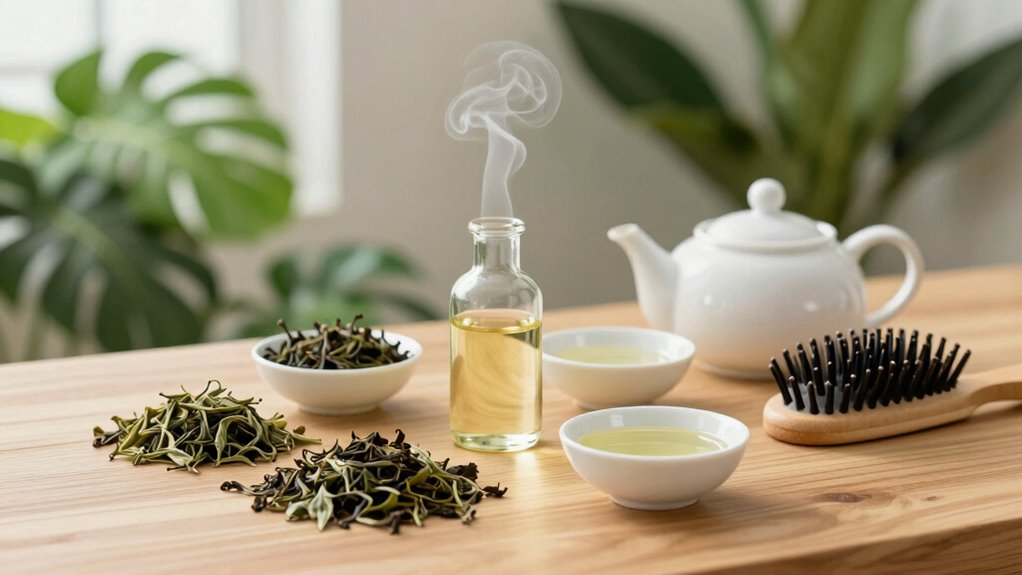
If you’re looking to elevate your hair care routine, using tea can be a natural and effective choice. Start by brewing tea, like black, green, or herbal, to create tea rinses that nourish your scalp and hair.
The antioxidant properties in tea contribute to a healthy scalp and help prevent hair loss. Simply steep the tea in hot water for at least ten minutes, cool it to room temperature, and then apply it after shampooing.
Massage the rinse into your scalp and hair, leaving it on for five to sixty minutes to improve hair health. Incorporate this once a week for added moisture.
Consider adding essential oils for an extra boost, but remember to adjust for your hair type to maintain healthy hair.
Naturally Enhance Hair Color With Tea
Using black tea as a hair rinse can give your dark hair a temporary color boost, thanks to its tannins and polyphenol antioxidants that enhance darker pigments.
Theaflavins and thearubigins in the tea work to deepen your hair color, though you’ll notice the effects fade after a few washes.
While this method isn’t effective for lighter hair colors, it offers dark-haired individuals a natural way to enhance shine and temporarily reduce the appearance of grey hairs.
Tea’s Temporary Color Boost
While chemical dyes offer lasting results, black tea rinses provide a natural, temporary color boost for those with dark hair, enhancing its richness and depth.
Tannins and polyphenol antioxidants in black tea contribute considerably to this effect. Theaflavins and thearubigins are key components that provide the dark pigment, allowing you to enhance your hair’s color without chemicals.
This method is ideal if you’re seeking a non-permanent solution, as the effects typically fade after a few washes.
It’s crucial to recognize that this color enhancement works best on dark hair and isn’t effective for lighter shades like blonde or red.
Additionally, regular use can help reduce the appearance of grey hairs, making it a versatile option for maintaining your natural color.
Antioxidants for Color Enhancement
When it comes to enhancing hair color naturally, the antioxidants found in black tea offer a compelling solution.
Black tea is rich in tannins and polyphenol antioxidants, which contribute to the health benefits of a tea rinse. These components can temporarily enhance the color of naturally dark hair. Theaflavins and thearubigins in black tea provide a subtle color boost, slightly reducing the appearance of grey hairs.
However, keep in mind that black tea rinses don’t offer color enhancement for lighter hair shades like blonde or red. These temporary effects typically fade after a few washes.
Regular use of black tea rinses not only supports color enhancement but also improves overall hair health, leading to a more vibrant and healthy appearance.
Dark Hair Pigmentation Benefits
If you’re looking to naturally enhance your hair’s color, black tea offers a promising solution, especially for those with dark hair.
Rich in tannins and polyphenol antioxidants, black tea can temporarily enrich the pigmentation of your natural hair, adding depth and vibrancy. The theaflavins and thearubigins in black tea are key contributors to its dark pigment, providing a subtle yet effective color boost.
Regular black tea rinses can help reduce the appearance of grey hairs, though remember these effects are temporary and fade after a few washes.
To maximize the benefits, use black tea as a rinse after shampooing, allowing it to sit for a few minutes.
However, this method isn’t effective for lighter hair colors.
How Tea Caffeine Supports Hair Growth
As you explore the benefits of tea for hair health, you’ll find that caffeine plays a significant role in promoting hair growth.
Tea, especially black tea, contains caffeine that stimulates hair follicles, leading to increased growth and thickness. This happens as caffeine blocks dihydrotestosterone (DHT), a hormone linked to hair loss, thereby reducing hair thinning.
Caffeine also enhances keratin production in your hair follicles, essential for strong and healthy hair. The antioxidants in tea work alongside caffeine to improve blood circulation to your scalp, ensuring better nutrient delivery.
This combination not only fosters hair growth but also maintains scalp health. By regularly applying tea rinses rich in caffeine, you can create an ideal environment for healthy hair growth.
Get Shiny Hair With Tea Rinses

To achieve shiny hair, tea rinses offer a natural and effective solution. When you use black tea, its antioxidants work wonders by removing buildup on hair strands, allowing essential vitamins and minerals to penetrate more easily. This process enhances hair health and shine.
The caffeine in black tea invigorates your scalp, promoting healthier locks. By incorporating tea rinses into your routine, you improve moisture retention, vital for maintaining soft, shiny hair. This practice is especially beneficial for low porosity hair, which often struggles with moisture absorption. Additionally, the antioxidants in tea support overall hair health by reducing inflammation on the scalp.
For ideal results, follow up with a conditioner to prevent dryness and provide additional nourishment. Regular use of tea rinses not only boosts shine but also offers protection against UV damage.
How Tea Helps Prevent Split Ends
You mightn’t realize it, but tea can be a powerful ally in preventing split ends.
The panthenol in green tea strengthens your hair strands, reducing breakage and keeping your ends intact.
Plus, the vitamins and antioxidants in tea combat oxidative stress, offering protection and nourishment that keep your hair resilient and healthy.
Panthenol’s Strengthening Effects
Panthenol, also known as vitamin B5, plays an essential role in strengthening your hair strands, which greatly helps in preventing split ends.
Found in green tea, panthenol enhances your hair’s moisture retention, making it less prone to dryness and breakage.
When used regularly, tea’s antioxidants work alongside panthenol, removing buildup from your hair and allowing for better absorption of moisture and nutrients.
This process is vital for maintaining hair health and ensuring healthier hair tips.
Consider these benefits of using tea with panthenol:
- Strengthens hair strands to resist split ends.
- Boosts moisture retention, reducing dryness.
- Antioxidants remove buildup for improved nutrient absorption.
- Promotes smoother, shinier hair, preventing damage over time.
Tea rinses with panthenol can lead to overall hair strength and resilience.
Vitamins and Antioxidants Benefits
While it might seem surprising, incorporating tea into your hair care routine can greatly help prevent split ends, thanks to its rich vitamins and antioxidants.
Green tea, in particular, is packed with panthenol (vitamin B5), which strengthens hair strands, improving overall hair health. Antioxidants in tea remove product buildup, allowing essential vitamins and minerals to be absorbed better, reducing split ends.
Regular use of herbal teas like nettle and hibiscus nourishes hair follicles, minimizing breakage. The vitamins and minerals in these teas guarantee healthier hair tips over time.
Additionally, teas such as chamomile offer anti-inflammatory benefits, soothing the scalp and promoting a healthier hair environment. Regular tea consumption acts as a protective shield against oxidative stress and harmful free radicals, which can affect hair health.
Calm Your Scalp With Anti-Inflammatory Teas
Teas like chamomile, hibiscus, and nettle are packed with natural properties that promote scalp health and hair growth. Using a tea rinse can help calm inflammation and reduce irritation, creating a healthy environment for your hair.
Here’s how these teas work wonders:
- Chamomile tea: Known for its anti-inflammatory properties, it relieves dandruff and scalp itchiness.
- Hibiscus tea: Rich in antioxidants and vitamins, it supports hair follicle health.
- Nettle tea: Balances the scalp environment, reducing inflammation and boosting hair growth.
- Regular tea rinses: Contribute to a healthier scalp, decreasing hair loss linked to irritation.
Incorporating these teas helps maintain a balanced, irritation-free scalp. Additionally, chamomile tea’s calming effects can extend beyond hair health, enhancing overall well-being and relaxation.
Add Tea to Your Haircare Routine
To elevate your haircare routine, consider the benefits of incorporating tea rinses, which build upon the soothing effects of anti-inflammatory teas.
Using black tea as a hair rinse can add shine and enhance the natural color of dark hair, thanks to its tannins and antioxidants. This temporary boost helps maintain healthy-looking hair.
Herbal teas like hibiscus and nettle nourish from the scalp, promoting healthier growth and helping reduce hair loss. They create a healthier scalp environment by removing buildup, which is particularly beneficial for those with dandruff.
Green tea rinses can stimulate blood circulation, enhancing hair health. For the best results, use tea rinses weekly after shampooing to maintain moisture.
Drinking tea also supports overall scalp health.
Frequently Asked Questions
Does Drinking Tea Help With Hair Growth?
Yes, drinking tea helps with hair growth benefits. Different tea types, especially herbal blends, boost scalp stimulation and nutrient absorption. Regular consumption maintains hydration levels, while caffeine effects and overall wellness contribute positively to healthier hair.
What Tea Is Good for Your Hair?
Green tea, black tea, and herbal infusions like chamomile, rooibos, and hibiscus help hair health. Nettle and peppermint promote growth, while tea rinses invigorate strands. Sip or rinse for radiant results!
What Is the Most Powerful Herb for Hair Growth?
You’ll find Bhringraj, often hailed as the most powerful herb for hair growth, works wonders. Combine it with essential oils, scalp massage, and stress reduction to boost blood circulation, enhance nutrient absorption, and combat hair loss naturally.
Wrapping It Up
By incorporating tea into your hair care routine, you’re embracing a natural way to enhance your hair’s health and beauty. From boosting growth with caffeine to preventing split ends, tea offers a variety of benefits that are both simple and effective. Imagine your hair becoming shinier, stronger, and more vibrant—this is the power of tea. So, why wait? Start using tea today and watch your hair transform, bringing out the best version of itself naturally.