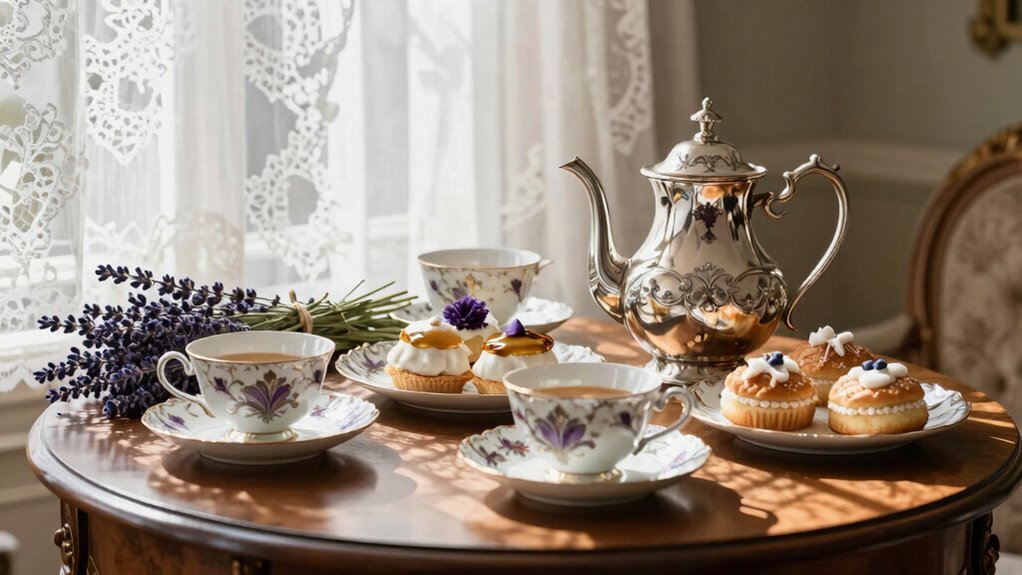
French tea culture stands out with its emphasis on quality and delicate flavors, favoring floral and herbal notes over robust British teas. Introduced by Cardinal Mazarin in 1639, tea became a French aristocratic luxury, endorsed by King Louis XIV. Parisian tea salons like Angelina blend tradition with modern flair, serving as social hubs with luxurious pastries. Iconic brands like Mariage Frères reflect this refined heritage. Discover more about how French preferences have influenced tea experiences and service.
What Makes French Tea Culture Unique?
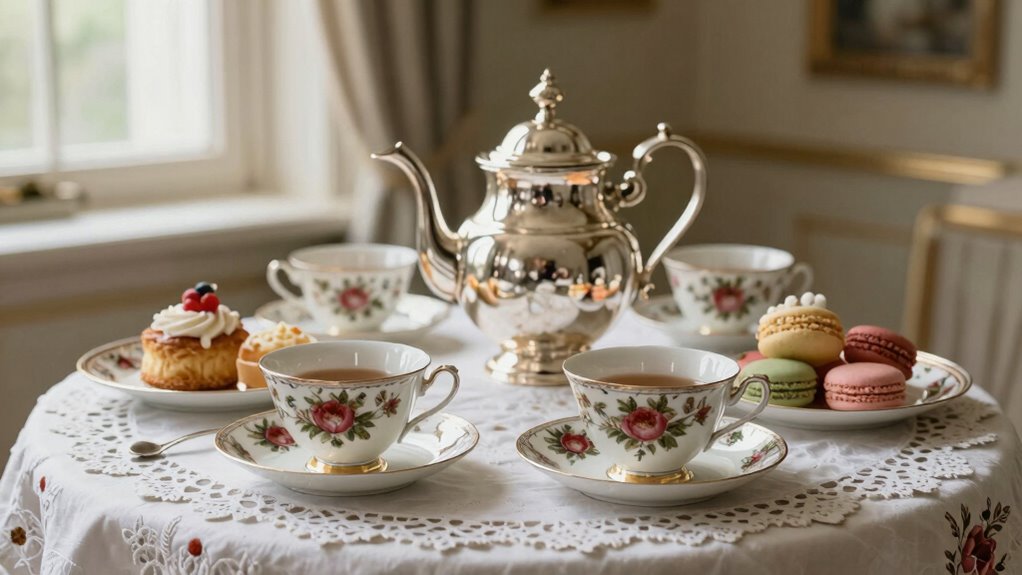
Although French tea culture mightn’t be as globally renowned as its British counterpart, it offers a distinctive charm that sets it apart. You’ll find a focus on quality and refinement, emphasizing delicate blends often infused with floral and herbal notes. This contrasts sharply with the robust, tannin-rich black teas typical in Britain.
French afternoon tea, known as le goûter, is more about indulgence than formality, often accompanied by exquisite pastries. It’s a cherished social ritual, not just a beverage break.
Unlike the British, the French prefer enjoying their tea in bowls without milk, preserving the purity of herbal infusions. The recent resurgence in French tea culture reflects a growing interest in diverse flavors, with high-end blends gaining popularity among health-conscious consumers. This appreciation for tea as a medium for social connection highlights its role in fostering relationships and community.
Tracing the Origins: How Tea Came to France
You might be surprised to learn that tea arrived in France in 1639, thanks to Cardinal Mazarin, who praised its health benefits.
While the Dutch played a vital role in introducing tea to Europe, it was France’s aristocracy, especially under King Louis XIV, that embraced tea as a symbol of luxury and status.
As tea became intertwined with French high society, its journey from a medicinal curiosity to a staple of aristocratic gatherings set the stage for its lasting impact on French culture.
Cardinal Mazarin’s Influence
Cardinal Mazarin played a pivotal role in introducing tea to French society in 1639, marking a significant moment in the history of this cherished beverage. By promoting tea for its health benefits, he drew attention to its potential to alleviate gout, a condition he suffered from.
This endorsement helped integrate tea into French culture, elevating its status among the elite. As tea gained popularity in the French court, particularly under King Louis XIV, it became a fashionable drink, symbolizing luxury and sophistication.
The aristocracy embraced it in salons de thé, where tea was associated with indulgence. This cultural shift was documented by figures like Madame de Sévigné, who noted its early usage, reflecting tea’s growing influence in France.
Dutch Introduction of Tea
In the 17th century, the Dutch played an essential role in introducing tea to France, marking the beginning of its journey into French culture. Around 1639, they brought this exotic beverage to Paris, sparking curiosity and interest among the French elite.
Tea’s allure wasn’t just in its taste but also in its perceived health benefits. Cardinal Mazarin, for instance, consumed it for gout relief. The drink’s popularity soared when King Louis XIV began drinking tea, which encouraged the bourgeoisie to follow suit.
Here’s how tea made its mark in France:
- 1639: The Dutch introduced tea to Paris.
- Cardinal Mazarin: Early adopter, used tea for health.
- King Louis XIV: Boosted tea’s prestige by drinking it.
- Social Gatherings: Tea linked to luxury and decadence.
Additionally, tea became a symbol of hospitality and togetherness in social settings, similar to its cultural significance in other countries like Russia.
Aristocratic Tea Adoption
As tea began to weave its way into the fabric of French society, the aristocracy quickly embraced it, elevating the drink’s status to new heights.
Introduced in 1639 by Cardinal Mazarin for its health benefits, tea soon found favor with King Louis XIV, who linked it to luxury and indulgence.
By the late 17th century, it became a fashionable choice among the aristocracy, often enjoyed in elegant salons de thé. These gatherings became social hubs where elite taste was crafted and shared.
Despite the French Revolution’s initial impact on its popularity, tea culture experienced a revival in the mid-19th century.
Historical companies like Mariage Frères, with roots in the French East India Company, solidified tea’s place in French tradition.
Tea Salons: The Heart of French Tea Culture
When you step into a Parisian tea salon, you’re entering a world where historical tea traditions blend seamlessly with chic, modern flair. These elegant venues, like Angelina and Mariage Frères, invite you to savor signature pastries alongside light, fragrant teas that highlight their natural flavors without milk. As you enjoy these refined experiences, you’ll find that tea salons are more than just places to drink tea—they’re cultural landmarks that showcase the rich tapestry of French sophistication and social ritual. The experience of sipping tea in these salons is enriched by cultural practices worldwide, emphasizing the importance of tea in fostering social bonds.
Chic Parisian Tea Venues
Paris thrives as a haven for tea lovers, where chic tea salons, known as salon de thé, serve as cultural landmarks for enthusiasts.
These venues immerse you in the sophisticated world of French teas, offering a serene escape with each sip. In these tea salons, you’ll discover:
- Angelina: Renowned for its Mont Blanc pastry and rich hot chocolate, it’s a must-visit for a classic Parisian experience.
- Carette: Nestled near Trocadéro, this venue pairs picturesque views with elegant tea offerings.
- Ladurée: Famous for macarons, it provides a luxurious setting to enjoy lighter, perfumed tea flavors.
- Mariage Frères: With roots dating back to 1854, it showcases the rich history and evolution of tea culture in France.
These chic tea venues attract both locals and tourists, furthering French tea culture’s allure.
Historical Tea Traditions
Although tea salons in France hold a rich historical significance, their roots stretch back to the 17th century, where they emerged as vibrant social hubs.
These salons de thé became the heart of French society, offering a space where intellectuals gathered to engage in thoughtful discourse over a cup of black tea.
Introduced by Cardinal Mazarin in 1639, tea was initially favored by the aristocracy for its perceived health benefits.
The establishment of the first notable tea salon by Dammann in 1692 marked an essential point in French tea culture.
Despite a decline during the French Revolution, tea salons regained popularity in the post-1850s, becoming more accessible to the general public.
Today, they represent a luxurious experience, blending tradition with elegance.
Signature Pastries and Brews
Tea salons in France, with their rich historical backdrop, have evolved into vibrant spaces where the art of tea is celebrated alongside exquisite pastries.
When you step into a French tea salon, you’re stepping into a world where teas and pastries harmonize beautifully. Here’s what you can expect:
- Macarons: These delicate, colorful pastries pair perfectly with the subtle flavors of French teas.
- Éclairs: Creamy and rich, éclairs complement the aromatic brews, creating a delightful taste experience.
- Mont-Blanc: This decadent pastry, with its chestnut purée, matches the lighter notes of French tea blends.
- Historic Salons: Visit iconic spots like Angelina and Ladurée for luxurious pastries and esteemed teas from brands like Mariage Frères and Dammann.
Embrace the elegance of French tea culture in these charming settings.
How Do French and British Tea Traditions Differ?

How do French and British tea traditions set themselves apart?
French tea culture emphasizes quality and delicate flavors, favoring lighter black teas and herbal tisanes. You’ll often find French tea served simply, with a teabag and hot water, highlighting the natural sweetness without milk.
In contrast, British traditions lean towards robust, tannin-rich brews like Breakfast Tea, often enriched with milk. There’s a tea for every occasion in Britain, each served with a full tea set in a formal setting.
Afternoon tea in England is a structured event, offering a variety of savory and sweet items. Meanwhile, in France, le goûter is more relaxed, typically accompanied by pastries.
The French market focuses on high-quality, artisanal blends, unlike Britain’s mass-produced tea brands.
How French Tea Preferences Evolved
French tea preferences have undergone a fascinating evolution, marked by shifts in taste and social trends. Initially, tea was a luxury for the elite, introduced by Cardinal Mazarin in 1639. Over time, tastes evolved considerably, reflecting broader societal changes. Here’s how:
- Elite Beginnings: At first, tea was indulgent and sophisticated, consumed by the elite.
- Revolutionary Decline: The French Revolution saw a decline in tea often consumed by the public.
- Resurgence Post-1850: Tea became more popular among the bourgeoisie, reflecting a broader acceptance.
- Modern French Tea Culture: By the 1980s, lighter black teas and herbal tisanes gained favor, moving away from industrial teas.
Today, French tea brands like Mariage Frères reflect this refined and diverse experience.
Discovering Iconic French Tea Brands
While exploring the world of French tea, you’re certain to encounter several iconic brands that have shaped the country’s tea culture.
Mariage Frères, founded in 1854, stands out with its extensive selection of high-quality teas and elegant tea salons across France. This prestigious French tea brand is synonymous with sophistication and tradition.
Another gem, Kusmi Tea, captivates with its modern flair, offering unique flavored blends and vibrant packaging. Its flagship store on the Champs-Élysées demonstrates its popularity and growth.
Dammann Frères, dating back to 1692, is recognized as one of the oldest tea wholesalers, offering aromatic blends and herbal infusions.
These French tea brands emphasize quality, using high-quality tea leaves and innovative flavors that reflect France’s rich culinary heritage.
Craftsmanship and Elegance in French Tea Sets

The art of French tea sets embodies a harmonious blend of craftsmanship and elegance that captivates enthusiasts worldwide.
These sets are renowned for their elegant designs, showcasing a seamless fusion of traditional styles with modern aesthetics. You’ll find that every detail, from the material to the intricate patterns, is meticulously crafted to offer not just functionality but also an artistic statement.
Consider the following elements that define a traditional French tea set:
- Teapot: Often the centerpiece, with intricate details and a shape that balances beauty and utility.
- Cups and Saucers: Designed for comfort and style, matching the teapot’s elegance.
- Sugar Bowls and Milk Jugs: Optional, yet perfectly crafted to complement the set.
- Material: Typically porcelain or ceramic, enhancing the set’s exquisite appeal.
Frequently Asked Questions
What Is the History of Tea in France?
You discover tea’s French journey began in 1639 with royal preferences shaping its popularity. Cultural adaptations like adding milk emerged. Tea imports dwindled post-Revolution but later thrived, emphasizing health. Today, lighter teas and herbal tisanes are favored.
What Is the French Tea Etiquette?
You follow French tea customs by savoring tea leisurely, often with pastries. Serve a selection of blends in fine porcelain or glassware. Engage in polite conversation, highlighting the social aspect of French tea etiquette. Avoid adding milk.
Which Country Is No. 1 in Tea Production?
China leads in tea production, dominating global consumption trends with its advanced production methods. You might explore Assam tea varieties, but Chinese techniques and diverse offerings position it at the forefront of the tea industry worldwide.
What Is the Difference Between English and French Tea?
You’ll notice French blends focus on delicate flavors, unlike English teas that are robust and tannin-rich. French tea culture emphasizes purity in service rituals, while English traditions often include milk and sugar for a bolder taste.
Wrapping It Up
In exploring French tea culture, you’ve seen how its unique charm and elegance distinguish it from others. From the historic arrival of tea in France to the refined sophistication of tea salons, each aspect contributes to a rich tapestry of tradition. How does this differ from the British approach, you wonder? Through iconic brands and exquisite tea sets, France has carved its own niche. As you probe deeper, you’ll find that French tea culture offers a distinct, enchanting experience.