
Choosing between loose leaf tea and tea bags depends on your taste preferences and lifestyle. Loose leaf tea offers superior flavor due to whole leaf expansion during brewing, allowing for a richer, nuanced taste experience that tea bags can’t match. However, tea bags offer convenience and ease, perfect for busy schedules. For environmental and quality benefits, loose leaf is a more sustainable choice. By mastering brewing techniques, you can enjoy tea at its fullest potential. Discover how each option can transform your tea rituals.
What Sets Loose Leaf and Tea Bags Apart?
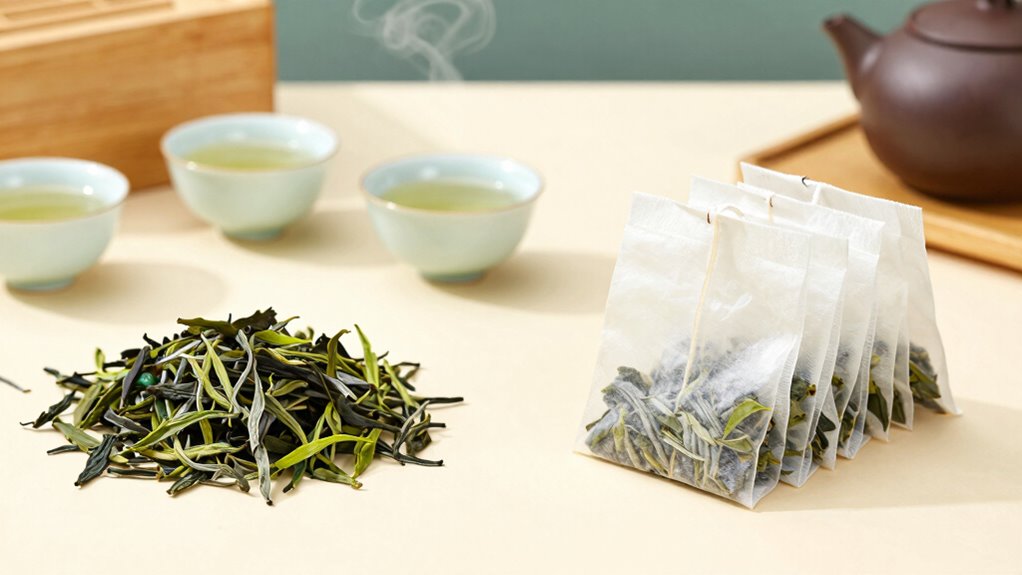
When you’re choosing between loose leaf tea and tea bags, understanding what sets them apart can enhance your tea experience.
Loose leaf tea is crafted from whole leaves, which means it provides a richer and more nuanced flavor profile. In contrast, tea bags often contain tea dust or fannings. These smaller particles limit the infusion process, leading to a blander taste.
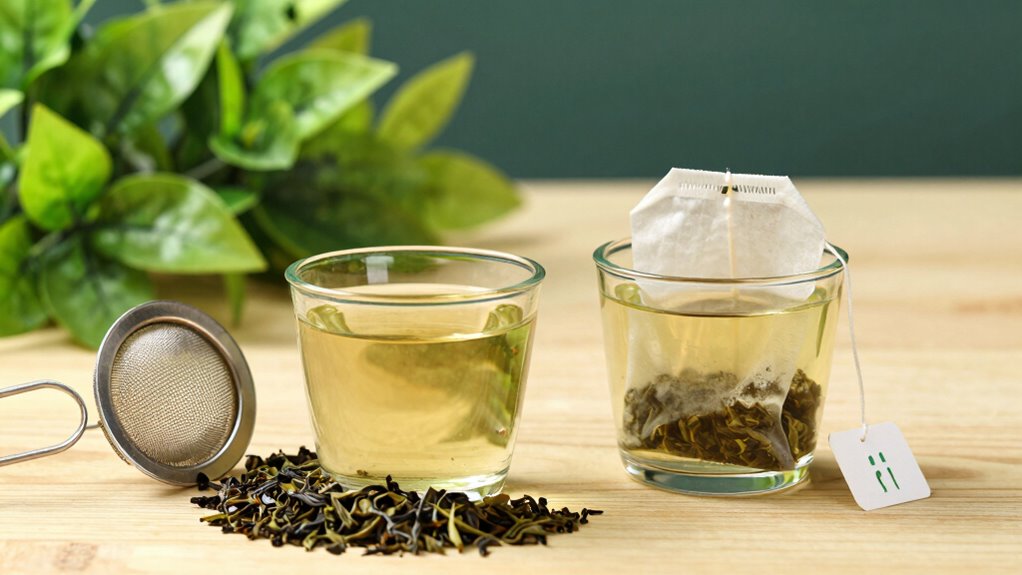
Brewing loose leaf tea allows water to flow freely, giving the leaves room to unfurl and fully release their flavors. This results in a quality tea experience that’s authentic and satisfying.
Although tea bags offer convenience, they often compromise on taste. Loose leaf tea, with its ability to yield multiple steeps, offers a more economical and flavorful journey. Additionally, switching to loose leaf tea promotes eco-friendly options, reducing packaging waste and contributing to sustainability.
Why Loose Leaf Tea Offers a Superior Flavor
When you opt for loose leaf tea, you’re choosing a superior flavor experience thanks to the whole leaves that allow for better flavor extraction and a richer taste.
Unlike tea bags that often contain lower-quality tea dust, loose leaves have the space to unfurl fully, releasing a more complex aroma and fuller-bodied flavor.
This quality not only enhances the flavor depth but also provides the opportunity for multiple infusions, offering both a greater depth of flavor and value. Additionally, switching to loose leaf tea reduces microplastic pollution, contributing to a healthier planet.
Quality of Tea Leaves
Although tea bags might seem convenient, loose leaf tea offers a superior flavor due to the quality of the leaves used.
Loose leaf tea is crafted from whole leaf tea, which retains essential oils and aroma, delivering a richer flavor profile than tea bags. The brewing space available to loose leaf tea allows these larger leaves to expand fully, enhancing the interaction with water. This results in a fuller-bodied flavor that tea lovers cherish.
In contrast, tea bags often contain lower-quality dust and fannings, compromising taste.
Quality loose leaf tea also provides multiple infusions, with each steep revealing unique flavors, unlike tea bags that offer just one less complex cup.
Premium loose leaf teas are micro-blended and packaged to guarantee freshness, setting them apart in quality. Additionally, the variety of loose-leaf tea includes diverse flavors, allowing for customizable brewing parameters that enhance personal flavor preferences.
Flavor Depth Analysis
Despite the convenience of tea bags, loose leaf tea offers an unparalleled flavor depth that elevates the tea-drinking experience.
Loose leaf tea is crafted from whole, high-quality leaves, providing a richer, more nuanced flavor profile. Unlike tea bags, which often contain tea dust, loose leaf tea allows whole leaves to expand fully during steeping. This expansion releases essential oils and complex flavors, resulting in a fuller-bodied infusion.
By allowing ideal water circulation, loose leaf tea guarantees robust flavor extraction, enhancing your taste experience. Additionally, brewing methods typically require longer steeping times, facilitating deeper flavor extraction.
You can steep many loose leaf teas multiple times, revealing layered taste experiences with each infusion that further showcase their depth of flavor.
Mastering the Brewing Process for Maximum Flavor
To master the brewing process for maximum flavor, it’s essential to take into account the unique characteristics of loose leaf tea. Unlike tea bags, loose leaf tea requires more brewing space, allowing leaves to expand and enhance flavor extraction.
Here’s how you can optimize your brewing:
- Brewing Space: Use a teapot or infuser that gives loose leaves room to expand, maximizing taste.
- Steeping Times: Adjust steeping times based on tea type; loose leaf teas often need longer times for full flavor development.
- Water Temperature: Control water temperature carefully. Green loose leaf tea, for instance, brews best around 160°F to prevent bitterness.
- Brewing Methods: Experiment with various methods. Trying different water types or steeping times can greatly alter the tea’s flavor profile.
These steps guarantee a rich, aromatic tea experience.
Is Loose Leaf Tea Worth the Extra Cost?
While the initial cost of loose leaf tea might seem higher than its bagged counterpart, you’re paying for a richer and more authentic tea experience.
Loose leaf tea offers a higher quality brew, delivering a more robust flavor experience due to its whole leaves that expand, releasing essential oils and antioxidants. You might find that a $14 bag yields up to 40 cups, translating to just 35 cents per cup—a worthwhile investment compared to single-serving tea bags.
Premium teas allow you to brew the same tea multiple times, extending your enjoyment and maximizing value.
Unlike tea bags, which often contain lower-quality dust, loose leaf tea enhances your health and taste experience, making it a savvy choice for tea enthusiasts.
Environmental Impact: Choosing Sustainable Tea Options
Choosing sustainable tea options can greatly reduce your environmental footprint, and there are several ways to make a positive impact.
By selecting eco-friendly tea choices, you contribute to a healthier planet. Here’s how you can make a difference:
- Choose loose leaf tea, which typically comes in bulk packaging, reducing single-use materials compared to individually packaged tea bags.
- Opt for pyramid sachets made from biodegradable NeoSoilon® material, which are 100% compostable and break down within 3-5 days, unlike traditional tea bags that take years.
- Support premium teas that use sustainable farming practices to help reduce environmental impact and promote eco-friendly production.
- By choosing compostable tea bags, you help reduce plastic pollution and make a sustainable choice that supports the environment.
Together, these steps contribute to a significant environmental impact.
Balancing Convenience and Ritual: Preparing Your Tea
When it comes to preparing tea, striking a balance between convenience and ritual can transform your daily routine into a moment of tranquility or efficiency.
If you’re short on time, tea bags offer a quick, straightforward preparation method, ideal for on-the-go moments. They deliver satisfactory flavors without the need for additional tools.
However, if you savor the process, loose leaf tea offers a more ritualistic approach. Using an infuser or teapot, you can engage mindfully with your tea, allowing the leaves to fully expand during steeping. This results in a richer flavor profile.
Experimenting with brewing techniques and water quality enhances loose leaf tea’s complexity, making the extra time and effort rewarding for those who appreciate nuanced flavors.
Storing Your Tea for Freshness
To keep your tea tasting its best, it’s essential to store loose leaf tea in airtight containers, as this prevents oxidation and preserves its flavor and aroma.
Both loose leaf and tea bags benefit from being kept in a cool, dark place, away from moisture, heat, and strong odors, ensuring they maintain their ideal taste.
Regularly check your tea’s freshness and aim to use loose leaf within a year, while tea bags should ideally be consumed within six months to a year after opening.
Airtight Storage Importance
Although often overlooked, storing your tea in airtight containers is essential to maintain its flavor, aroma, and freshness. Proper airtight storage can greatly enhance the longevity and quality of your favorite brews. Here’s why you should consider it:
- Preserve Flavor and Freshness: Airtight containers prevent oxidation, preserving the rich flavor of loose leaf tea and tea bags alike.
- Extend Shelf Life: Loose leaf tea, when stored properly, can maintain its quality for months, whereas tea bags benefit from reduced exposure to degrading elements.
- Protect from Degradation: Keeping tea away from air, light, and humidity helps prevent the loss of essential compounds and flavor.
- Avoid Odor Absorption: Airtight containers block external odors, ensuring your tea remains pure and delightful with every brew.
Optimal Storage Conditions
Proper storage is the key to maintaining the freshness and quality of your tea, whether it’s loose leaf or in bags.
Start by using airtight containers for loose leaf tea to shield it from moisture and air, preserving its flavor.
Tea bags, though often individually sealed, still benefit from being kept in a cool, dry place away from light to prolong freshness.
Both types of tea thrive in dark environments, as light exposure can degrade their taste and quality.
To guarantee ideal conditions, keep your tea away from strong odors since it can absorb surrounding smells, altering its natural flavor.
Protecting Tea Freshness
Preserving the freshness of your tea is essential for enjoying its full flavor and aroma, and it starts with how you store it. To keep your loose leaf tea and tea bags at their best, follow these storage tips:
- Airtight Containers: Store loose leaf tea in airtight containers to prevent air exposure, which can compromise flavor and freshness over time.
- Cool, Dry Place: Keep both loose leaf tea and tea bags in a cool, dry location, like a dark cupboard, away from light and moisture.
- Avoid Strong Odors: Guarantee your storage area is free from strong odors, as tea can easily absorb them, altering its taste.
- Resealable Pouches: Use resealable bulk pouches for loose leaf tea to minimize air exposure each time you access it.
Frequently Asked Questions
Which Is Better, Loose Leaf Tea or Tea Bags?
It’s a coincidence you’re asking this! Loose leaf tea wins with its superior flavor profile and aroma intensity, despite longer brewing time. It offers health benefits and better value, though tea bags shine in convenience and cost comparison.
How Much Loose Leaf Tea Is Equal to a Tea Bag?
You’ll find 2 grams of loose leaf tea, about 1 teaspoon, matches a tea bag. Adjust for flavor intensity by increasing to 1.5-2 teaspoons. Consider steeping time, tea varieties, and cost comparison when measuring tea.
Can I Open a Tea Bag and Use It as Loose Leaf Tea?
Yes, you can open a tea bag and use it as loose leaf tea. Consider tea bag freshness, flavor extraction, and herbal blends. Adjust brewing techniques, steeping times, and weigh convenience factors and cost comparison for ideal results.
Do British People Use Tea Bags or Loose Leaf?
In British tea culture, 96% use tea bags for convenience. While they simplify brewing methods, many cherish loose leaf for its rich flavor and historical significance in tea rituals, highlighting cultural preferences and flavor differences.
Wrapping It Up
Choosing between loose leaf and tea bags is like selecting between a handcrafted painting and a quick sketch. Loose leaf tea dances on your taste buds, offering rich flavors and a mindful brewing ritual that rewards your patience. While it may cost more, its environmental benefits and superior taste make it worthwhile. As you begin your tea journey, remember to store your tea properly for freshness, balancing convenience with the art of tea preparation.