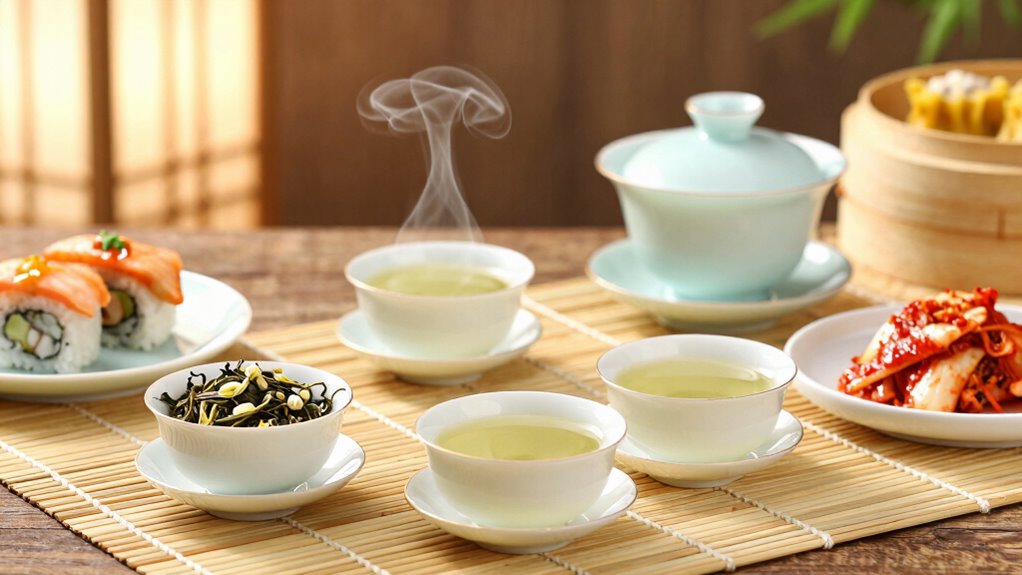
For traditional Asian dishes, choosing the right tea pairing elevates the dining experience by enhancing specific flavors. Green tea‘s bright notes complement seafood and vegetables, while oolong offers versatility for roast duck and delicate dumplings. Black tea’s boldness enriches hearty meats, and white tea’s subtlety suits light dishes. Pu-erh tea excels with rich foods, supporting digestion. Regional traditions guide these pairings, ensuring harmony between tea and cuisine. Explore further to discover more delightful combinations.
A Guide to Tea Pairings for Traditional Asian Dishes
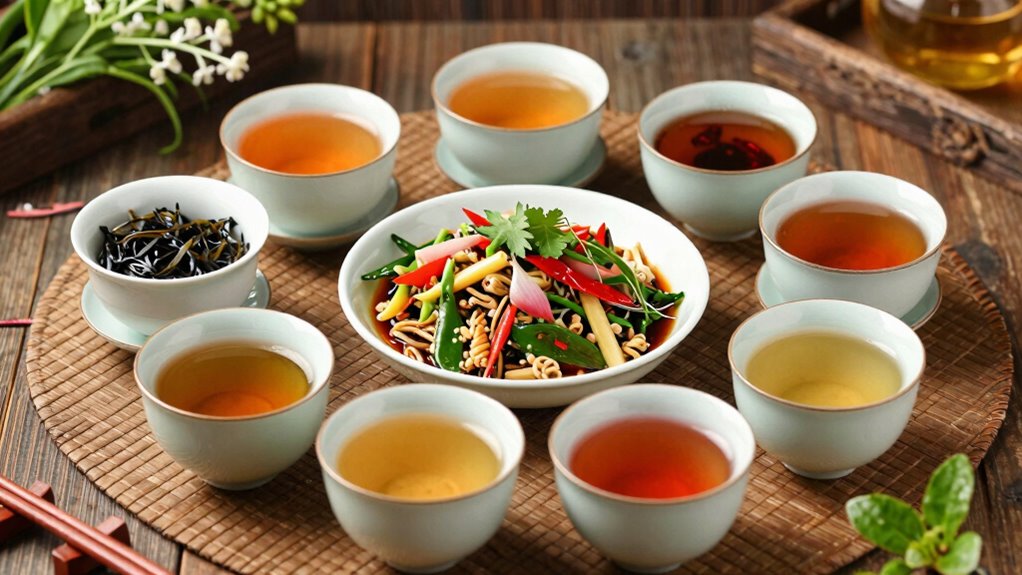
When it comes to pairing tea with traditional Asian dishes, understanding the balance of flavors can elevate your dining experience.
For Chinese dim sum, consider Pu-erh tea; its earthy profile pairs beautifully, cutting through the richness and aiding digestion.
Oolong tea’s versatility makes it an excellent choice for both robust dishes like roast duck and delicate ones such as steamed dumplings. It complements a wide range of flavors, enhancing your meal.
Chrysanthemum tea offers floral notes perfect for seafood, balancing saltiness in dishes like black bean spare ribs.
Each tea offers a unique pairing experience, enhancing the flavors and textures of your meal.
Additionally, exploring the art of tea preparation can further enrich your appreciation of these pairings and the cultural significance behind each brew.
Explore this journey of taste and discover how these teas can transform your culinary adventures.
Green Tea Pairings: Ideal Dishes and Flavors
Exploring the world of tea pairings, green tea stands out with its vibrant and revitalizing profile, offering unique opportunities to enhance your meals.
Its bright, fresh flavors make it an ideal companion for seafood dishes, such as steamed fish, fresh sushi, or pan-seared scallops, enhancing their umami notes.
Pairing green tea with lightly cooked vegetables, like bok choy, or simple steamed or pan-fried chicken dishes, uplifts their delicate flavors without overwhelming them.
As a palate cleanser, green tea refreshes your taste buds, balancing richer, heavier dishes in Asian-inspired meals, allowing the various flavors to shine.
Its grassy, clean notes complement light poultry, making green tea a versatile option for chicken or duck dishes, enhancing your dining experience. Additionally, incorporating green tea fosters a link to centuries-old practices, enriching your culinary journey.
Oolong Tea Pairings: Versatile Matches for Various Dishes
With oolong tea‘s semi-oxidized leaves offering a balanced flavor, you’ve got a perfect partner for a variety of dishes. Light floral oolong enhances the delicate notes of seafood like lobster and shrimp, while dark roasted oolong complements the richness of smoked duck and grilled steak. Its complexity also makes it a great match for both traditional dim sum and modern fusion dishes, shifting effortlessly from one course to the next. Additionally, oolong tea’s health benefits can further enhance the dining experience, promoting overall well-being during meals.
Light Floral Oolong Pairings
Perfectly balancing subtlety and complexity, light floral oolong tea is an exceptional companion for a range of Asian dishes.
When planning a dim sum meal, this tea complements savory dim sum like shrimp dumplings, enhancing their taste profile with its floral notes. Enjoy it alongside delicate seafood dishes such as lobster or steamed fish; the tea highlights their natural flavors without overpowering them.
Its versatility shines when paired with spicy foods; it balances the heat of Szechuan cuisine, creating a harmonious dining experience.
In Asian cuisine, light floral oolong tea’s depth elevates both traditional and innovative dishes. Whether you’re indulging in rich poultry or exploring new flavors, this tea serves as a delightful match, enriching every bite and sip.
Dark Roasted Oolong Matches
Although often overlooked, dark roasted oolong tea offers a rich, complex flavor profile that makes it an outstanding match for various dishes.
Its versatility shines in food pairings, making it a perfect dim sum tea, or a complement to traditional Chinese meals. With its robust, roasted notes, this tea pairs excellently with hearty meats and spicy dishes.
Consider these pairings:
- Hearty Meats: Enhance the savory taste of smoked duck or grilled steak with the tea’s rich flavors.
- Caramelized Dishes: Harmonize char siu or roasted vegetables with the deep, roasted notes of the tea.
- Spicy Dishes: Balance the heat and elevate your dining experience by pairing with spicy foods.
- Dim Sum: Refresh your palate with dark roasted oolong alongside fried dumplings or turnip cake.
Black Tea Pairings: Bold Flavors for Hearty Meals
With its bold flavor, black tea complements rich meats like beef stew and roasted lamb, enhancing their hearty profiles.
It also balances spicy dishes from Szechuan or Hunan cuisine, where its robust character mellows the heat.
For a satisfying finish, pair black tea with decadent desserts such as chocolate lava cake, creating a harmonious dining experience that highlights both the dish’s richness and the tea’s intensity.
Rich Meats and Black Tea
When you’re looking to elevate your dining experience, pairing rich meats with black tea can be a game-changer.
Black tea’s bold flavors complement rich meats like beef stew or roasted lamb, enhancing the hearty nature of these dishes. Here’s how you can make the most of this pairing:
- Brewing: Steep black tea for 3-5 minutes in boiling water to release its full-bodied flavors.
- Rich Meats: The strong tannins in black tea balance the richness and fat content of oily meats.
- Spicy Dishes: It’s an ideal match for spicy dishes from regions like Szechuan.
- Hearty Desserts: Pair with desserts like chocolate lava cake to balance sweetness with the tea’s boldness.
This versatile tea can withstand intense flavors, enhancing your dining experience.
Spicy Dishes Balance
Black tea’s robust flavor profile makes it an ideal partner for spicy dishes, skillfully balancing the intensity of heat with its own boldness. When enjoying spicy cuisines like Szechuan or Hunan, you’ll find that black teas offer a versatile option to achieve flavor harmony.
Their robustness stands up to the fiery spices, ensuring that the rich flavors of your meal aren’t overshadowed. Consider pairing black tea with hearty meals such as beef stew, roasted lamb, or pot roast.
The tea’s strength complements the dish’s intensity, creating a satisfying balance. As you select your tea, pay attention to its caffeine content and boldness; these elements can enhance the overall dining experience, making each bite and sip more enjoyable.
Dessert Complements With Tea
Although it may seem like an unlikely combination, pairing black tea with desserts can create a delightful harmony of flavors.
Black tea’s bold flavors complement the richness of hearty desserts, balancing their sweetness with its strong tannins. Here are four ways black tea enhances your dessert experience:
- Rich Desserts: Pair black tea with chocolate lava cake or sticky toffee pudding for a complementary taste that matches their richness.
- Caramel Notes: The tea’s robust flavor balances caramel-based treats, making each bite more enjoyable.
- Spicy Sweets: Enjoy gingerbread or spiced cakes with black tea to enhance the spicy elements, creating a fuller flavor profile.
- Dense Treats: Assam or Earl Grey contrasts beautifully with cheesecakes, elevating their dense flavors.
Try these pairings to elevate your dessert indulgence.
White Tea Pairings: Light Dishes and Subtle Elegance
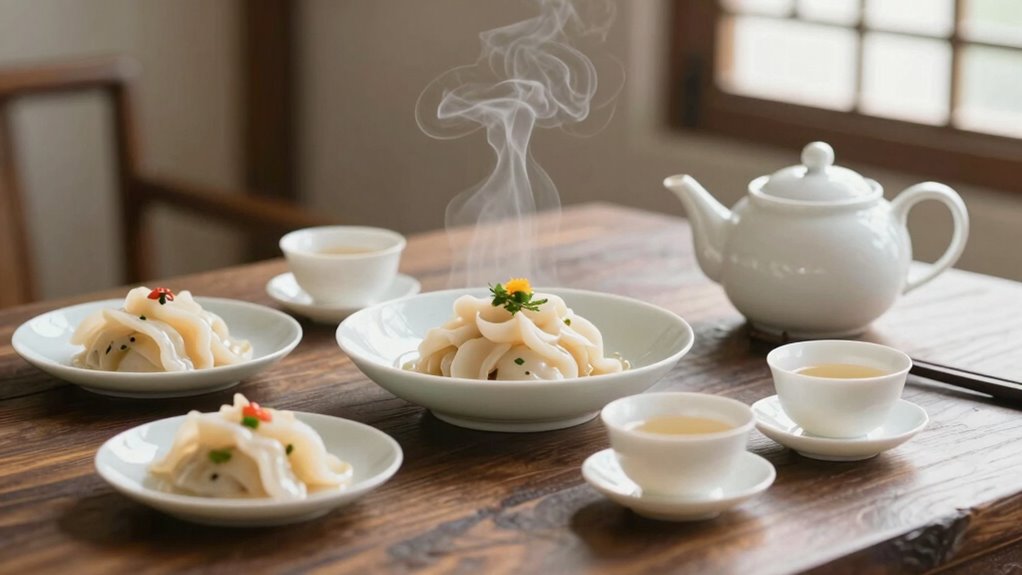
White tea, with its delicate flavor and subtle sweetness, is an ideal companion for light dishes, offering a touch of elegance to your dining experience.
When paired with steamed seafood, like fish and shrimp, white tea enhances flavors without overshadowing them. Its revitalizing character also complements light desserts, such as sorbet or panna cotta, balancing their sweetness.
The gentle taste of white tea brings out the freshness in salads and lightly dressed vegetables, making each bite more enjoyable.
To brew white tea, steep the leaves at lower temperatures, around 160-185°F, for 4-5 minutes, ensuring a smooth taste. This method highlights white tea’s unique qualities, making it perfect for enhancing the subtle flavors of your favorite light dishes.
Pu-erh Tea Pairings: Perfect Matches for Rich Foods
Pu-erh tea, revered for its earthy and deep flavors, excels at elevating rich and fatty dishes to a new level of enjoyment. When you’re indulging in dim sum, this tea is your perfect companion.
Its mild bitterness helps cleanse the palate, allowing each bite of siu mai, fried turnip cake, or lo mai gai to shine. Plus, the complex flavors of pu-erh tea, developed through a unique fermentation process, make it ideal for those who love nuanced tastes.
You’ll find that it doesn’t just enhance flavors but also aids digestion, making it a staple in yum cha traditions.
Here’s how pu-erh tea pairs with rich foods:
- Cuts through greasiness
- Balances the palate
- Cleanses the palate
- Aids digestion
Regional Influences on Tea Pairing Choices
Having explored how pu-erh tea complements rich foods, let’s consider how regional influences shape tea pairing choices across China.
In regional Chinese cuisines, the saying “what grows together, goes together” guides tea and food pairing. For instance, Szechuan cuisine, with its spicy and numbing flavors, often pairs with light Green Tea or fragrant Jasmine Tea to cleanse your palate.
In contrast, Cantonese dim sum typically features Pu-erh tea, which aids digestion and balances the richness of yum cha dishes.
Meanwhile, Oolong tea from Fujian complements the roast duck and baked buns of southern Chinese cuisine.
The Five Elements Theory also plays a role, as different teas like white tea enhance local flavors, balancing rich foods based on their elemental qualities.
Frequently Asked Questions
What Health Benefits Do Tea Pairings Offer With Traditional Asian Dishes?
Tea pairings offer you health benefits by acting as a digestive aid and providing antioxidant properties. They support stress relief, boost your immune system, aid in hydration, and help regulate blood sugar, enhancing your overall dining experience.
How Do Cultural Traditions Influence Tea and Dish Pairings?
Cultural traditions influence tea and dish pairings through historical influences and regional variations. You appreciate flavor profiles, engage in ritual practices, and participate in social customs that reflect family traditions and the cultural significance of these combinations.
Can Tea Pairings Enhance the Dining Atmosphere?
Tea pairings enhance ambiance, balance flavors, elevate sensory experiences, boost dining enjoyment, and highlight cultural significance. They transform meal presentations, captivate guest engagement, and create a memorable atmosphere, ensuring each dining moment is cherished and celebrated.
Are There Seasonal Tea Pairing Recommendations?
Yes, you can elevate your dining experience with seasonal tea pairings. Embrace spring flavors, enjoy summer refreshment, savor autumn warmth, and find winter comfort. Incorporate seasonal ingredients and regional varieties for festive occasions, enhancing every meal.
How Do Brewing Methods Affect Tea and Food Pairings?
Brewing methods, like an artist’s brushstrokes, define tea’s essence. Control temperature and steeping time to extract flavors. Leaf quality and water purity dictate tea types’ harmony with dishes, creating a symphony of culinary delight.
Wrapping It Up
When exploring tea pairings with traditional Asian dishes, remember that variety is the spice of life. Each tea, from green to pu-erh, offers its unique touch, enhancing your dining experience in surprising ways. With green tea’s freshness, oolong’s versatility, black tea’s boldness, white tea’s subtlety, and pu-erh’s richness, you’re well-equipped to complement any meal. Embrace regional influences and let your taste buds guide you, crafting unforgettable culinary moments with each sip and bite.