Brewing tea in a kyusu elevates your Japanese green tea experience. Start by measuring 10 grams of loose-leaf tea. Heat water to boiling, then cool to about 170°F. Pour this into your kyusu, filling it two-thirds full, and steep for 45 seconds. Use the same leaves for a second infusion, steeping just 15 seconds. Rock the kyusu gently to enhance aromas, and master a smooth pour for visual appeal. Discover the finer nuances of tea brewing.
Quick Guide to Brewing With a Kyusu

If you’re ready to experience the art of Japanese tea brewing, using a kyusu can elevate your tea-making skills to a new level.
Start by measuring about 1 tablespoon or 10g of loose-leaf Japanese green tea and adding it to the kyusu. Heat your water to boiling, then let it cool to around 170°F (77°C), which is the ideal water temperature for brewing tea.
Pour this cooled water into the kyusu, covering the tea leaves, and fill it up to about 2/3 full. Steep for 45 seconds for a perfect first infusion.
For a second infusion, use the same leaves, keeping the water temperature consistent, and steep for 15 seconds.
Master the pouring technique by gently rocking the kyusu for even distribution. Additionally, using high-quality green tea leaves can significantly enhance your brewing experience and flavor.
Getting to Know Your Kyusu: The Japanese Teapot
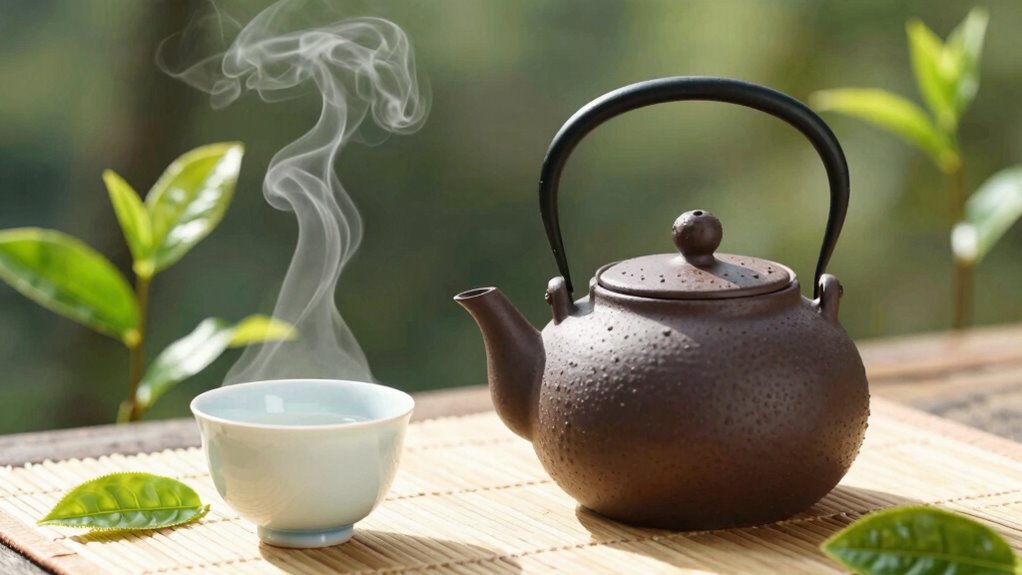
A kyusu is more than just a teapot; it’s a cornerstone of Japanese tea culture that offers both functionality and artistry. This traditional Japanese teapot, often with a side handle, is perfect for brewing Japanese teas like sencha and gyokuro.
Here’s why the kyusu teapot is crucial:
- Heat Retention: Made from clay, it retains heat well, allowing the flavors of Japanese teas to fully develop.
- Optimal Brewing: The smaller size, around 270 to 290 milliliters, guarantees you brew tea in small batches, enhancing the taste and aroma.
- Enhanced Flavor: Built-in filters prevent leaves from escaping, letting them expand fully, enriching your tea experience.
The craftsmanship varies by region, with Tokoname clay particularly prized for enhancing tea flavors over time. Additionally, the samovar serves a similar purpose in Russian tea culture, symbolizing warmth and hospitality.
Selecting Your Kyusu
When you’re selecting a kyusu, understanding its various styles and materials can greatly enhance your tea-brewing experience.
Opt for a yokode, or side-handle design, for easy one-handed pouring, especially if you’re brewing just for yourself. If you prefer brewing multiple servings, consider an ushirode, which features a back-handle.
The material of your kyusu plays an essential role in flavor and heat retention. Unglazed clay is a popular choice as it enhances your tea’s profile over time, allowing for a greater nutritional value due to better extraction of beneficial compounds.
Look for a kyusu with a built-in filter, allowing the tea leaves to expand fully while keeping fine particles out of your cup.
Verify it’s ergonomically designed, offering comfortable handling and pouring, which elevates the overall experience.
Choose a capacity between 270ml and 300ml for personal servings.
Mastering Water Temperature for Green Tea
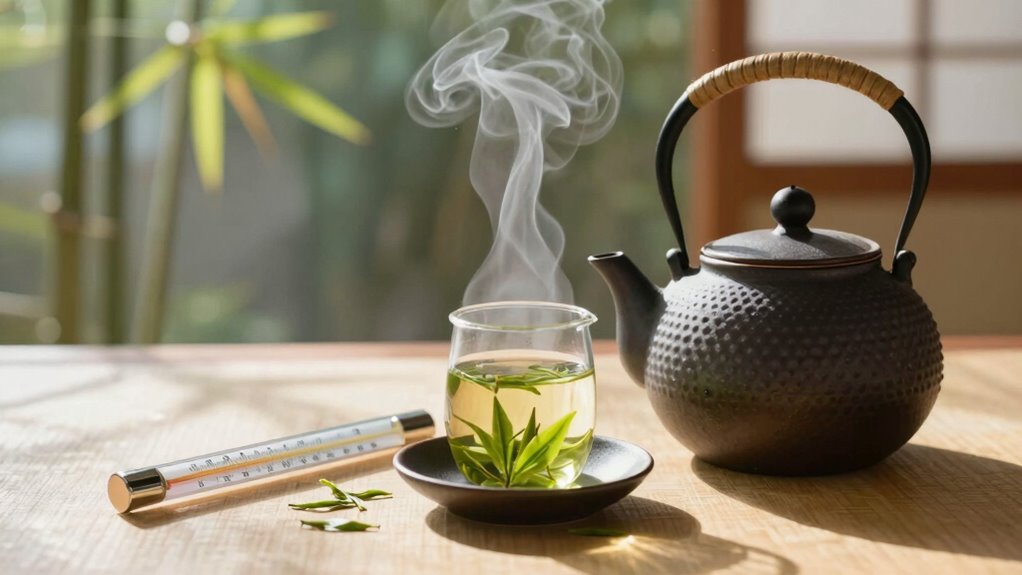
Selecting the appropriate kyusu sets the stage for brewing, but understanding water temperature is where your skills truly shine. Mastering the brewing temperature for Japanese green teas like sencha and gyokuro guarantees you extract their delicate flavors and aromas. Here’s a concise guide:
- Sencha: Brew between 155°F and 165°F. This range highlights its balanced flavor without bitterness.
- Gyokuro: Use cooler water at 120°F to 140°F. Lower temperatures preserve its sweet, umami taste.
- Hojicha: Opt for higher temperatures, 170°F to 180°F. This roasted tea benefits from the added heat.
Utilize a yuzamashi or teacup to precisely adjust the water temperature, usually cooling it by about 10°F per transfer, guaranteeing your loose leaf tea reaches its full potential in kyusu teapots.
Brewing Preparation: Measuring and Enjoying Tea Aroma
To guarantee you’re extracting the best flavors, start by measuring about 1 tablespoon or 10g of loose-leaf tea for your kyusu.
Enhance the aroma by placing the measured tea into the teapot, optionally warming it with a quick rinse of hot water, and taking a moment to inhale the fragrance of the dry leaves.
This careful preparation, including even leaf distribution and maintaining a proper leaf-to-water ratio, sets the stage for a balanced and aromatic tea experience.
Tea Measurement Techniques
Achieving the perfect brew in a kyusu teapot starts with precise tea measurement, an essential step that sets the foundation for a delightful tea experience.
To get the most out of your tea leaves, follow these tea measurement techniques:
- Measure Properly: Use about 1 tablespoon or 10 grams of loose-leaf tea, guaranteeing the ideal leaf-to-water ratio of 1 gram per ounce (29 mL) of water. This helps in capturing the best flavors.
- Distribute Evenly: Make sure the tea leaves are evenly spread in the kyusu to promote uniform infusion and extract the finest flavors during steeping.
- Inhale the Aroma: Before adding water, take a moment to inhale the aroma of your tea leaves, deepening your sensory experience and setting the stage for brewing.
Aroma Enhancement Methods
Anyone who truly appreciates tea understands the importance of enhancing its aroma, as it greatly elevates the tea-drinking experience.
Start by measuring approximately 10g of loose-leaf tea, placing it in your kyusu. This allows ideal flavor extraction during brewing.
Before you add water, warm the kyusu with hot water briefly. This step helps release the tea’s fragrance, preparing the leaves for steeping.
Inhale the aroma of the dry tea leaves once they’re in the kyusu; this initial scent considerably enhances your overall experience.
As you brew, gently rock the kyusu, agitating the leaves to promote the release of aromatic compounds into the water.
Finally, savor the nuanced flavors and aromas by sipping slowly, appreciating every scent and taste.
Optimal Leaf Distribution
Many tea enthusiasts might overlook the significance of ideal leaf distribution in a kyusu, yet it plays a critical role in brewing the perfect cup. Ensuring superior leaf distribution starts by measuring about 1 tablespoon (10g) of loose-leaf tea. This measurement guarantees the highest quality flavor extraction.
Evenly place the leaves in the kyusu, providing space for them to unfurl.
Here’s how to maximize your experience:
- Pre-heat the kyusu with hot water. This step maintains the temperature during brewing, essential for extracting the best flavors.
- Inhale the aroma of the leaves before adding water, enhancing the sensory experience.
- Ensure even infusion by distributing leaves properly. This step maximizes the release of flavor compounds, ensuring you brew tea to perfection.
Perfecting Your Steeping Technique With a Kyusu
How do you perfect your steeping technique with a kyusu? Start by measuring 1 tablespoon (10g) of loose-leaf tea, ensuring ample space for the leaves to unfurl. This is crucial for extracting the full flavors of Japanese green teas.
Pre-heat your kyusu and teacups with hot water to maintain the ideal water temperature, which should be around 155°F-165°F for sencha. Pour the cooled water into the kyusu and steep for about 60 seconds, gently rocking the teapot for even infusion.
This careful balance of time and temperature reveals the tea’s nuanced flavors. For subsequent infusions, slightly increase the water temperature by 5°F and reduce the steeping time by 15-30 seconds to continue highlighting the unique taste profiles.
Pouring Techniques for Perfect Tea
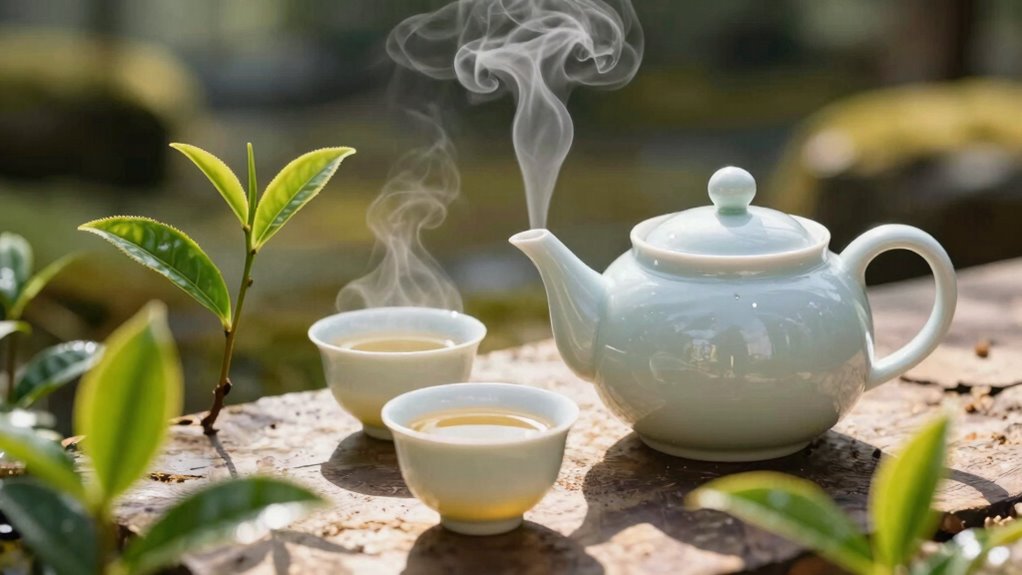
Ever wonder how to achieve the perfect pour from a kyusu? Mastering the art of pouring techniques can enhance your tea’s delicate flavors and guarantee a graceful pour every time. Here’s how:
- Hold Steadily: Secure the kyusu lid with your thumb and forefinger, maintaining stability for a smooth pour.
- Gentle Motion: Rock the kyusu gently to match the tea’s motion, distributing flavors evenly without creating turbulence.
- Final Pour: Empty the kyusu completely with a forceful final pour, preventing oversteeping that can cause bitterness.
Distribute tea evenly into cups, showcasing the best side for visual appeal.
Practice fluid wrist rotations to embody the gracefulness of traditional Japanese tea serving. With these techniques, your kyusu tea experience will never be the same.
Frequently Asked Questions
How to Brew Tea in Kyusu?
Choose the right kyusu type, add tea leaves, and adjust water temperature based on the tea. Steep for the appropriate time, gently rock the kyusu, and serve immediately. Experiment with steeping times for different serving suggestions. Enjoy!
Can You Brew Tea in a Kettle?
Yes, you can brew tea in a kettle, but it’s not ideal. Consider kettle materials and types to avoid overheating. Maintain the kettle well, monitor tea temperature, and explore kettle alternatives for better flavor and control.
Can You Use a Kyusu for Black Tea?
Yes, you can use a kyusu for black tea. Focus on kyusu benefits like flavor extraction and temperature control. Adjust brewing techniques for various black tea varieties to enhance flavors, ensuring ideal taste from your chosen leaves.
How to Brew Tea in a Japanese Teapot?
Imagine you’re brewing gyokuro; start with 10g of leaves. Use 140°F water, steep for 90 seconds. Utilize tea accessories like a strainer, master your pouring technique, and explore how different tea types transform with temperature and time adjustments.
Wrapping It Up
You’ve now revealed the secrets of brewing tea with a kyusu, where every element—teapot, temperature, and technique—melds into an artful experience. As you pour, watch the golden liquid swirl, releasing a fragrant promise of tranquility. Will your next cup be an exploration of flavors or a moment of stillness? With each carefully measured scoop and perfectly timed steep, you’re not just making tea—you’re crafting a sensory journey that captivates and soothes.