
To brew the perfect cup of tea, you’ll need water with the right composition, as it heavily influences taste. Aim for water with TDS levels between 50-150 ppm and a pH around 6 to 8—this balance guarantees your tea isn’t flat or bitter. Hard water’s high calcium and magnesium content can dull flavors, while softer water enhances them. The right brewing time and temperature also play vital roles, so honing these aspects will provide further insights into enhancing your tea experience.
Identifying Water Quality Issues in Tea Brewing
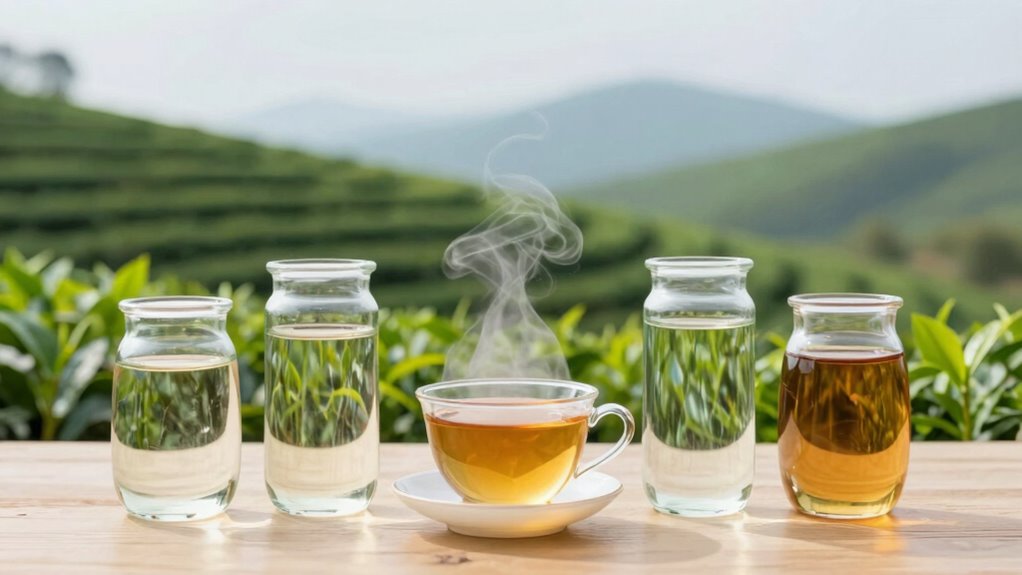
Why does water quality matter so much when brewing tea? The quality of your water directly impacts the taste of your tea.
Water hardness and Total Dissolved Solids (TDS) play significant roles. Hard water, especially above 200 ppm, can lead to a flat taste and even make iced tea appear cloudy.
Ideally, TDS levels should be between 50 and 150 ppm for best flavor extraction. Too high or too low can result in bitter or bland tea.
Using a filtration system can help you control these factors, ensuring your tea tastes as it should. Additionally, water filtration systems can enhance natural tea flavors by removing impurities.
Always evaluate water clarity, smell, and taste before brewing. Addressing water quality issues is essential for a delightful tea experience, making your brew enjoyable every time.
Understanding pH and Hardness in Tea Brewing Water
When brewing tea, understanding the pH and hardness of your water is essential, as these factors considerably influence the final taste.
The ideal pH for brewing tea is between 6 and 8, ensuring optimal flavor extraction. Water hardness, measured in grains, should ideally be between 1 and 4 to avoid a flat taste and weak color.
High water hardness, over 200 ppm, diminishes flavor, so it’s best to steer clear for an enjoyable tea experience. Total Dissolved Solids (TDS) levels between 50 and 150 ppm enhance flavor without overshadowing the tea’s delicate notes.
Chlorine levels should be at 0, as even small amounts can introduce undesirable flavors. Additionally, the presence of tannins in tea can further enhance the overall flavor profile, making water quality even more crucial for a superior brew.
Pay attention to these factors to brew a perfect cup of tea.
How Water Hardness Influences Tea Flavor
Although often overlooked, water hardness plays a significant role in shaping the flavor of your tea. The taste of tea can be dramatically affected by the quality of water you use.
When water hardness increases due to higher concentrations of calcium and magnesium, your tea might taste flat or bitter. Ideally, water hardness should be between 1 to 4 grains for the best flavor experience.
Black tea, in particular, benefits from softer water, ensuring a rich and robust taste. While regions with hard water, like parts of Europe, can produce decent tea, experimenting with softer water often enhances flavor extraction. Using fresh, filtered water can significantly improve the overall tea experience.
Best Methods to Purify Water for Tea
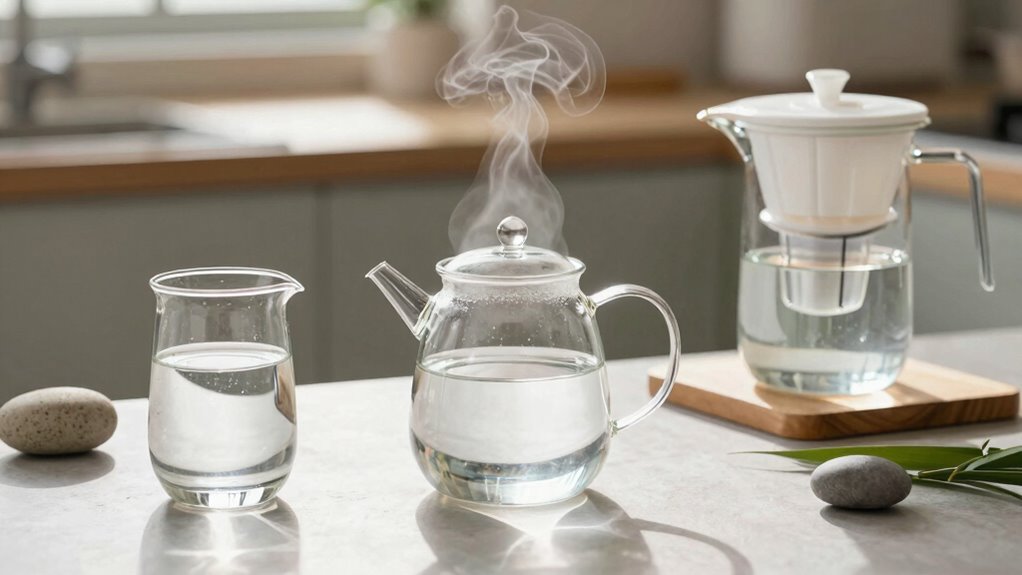
When it comes to purifying water for tea, boiling and using water filters can greatly enhance the flavor by removing bacteria, chlorine, and other impurities that can negatively impact taste.
Opting for bottled or spring water, which is typically already purified, offers a convenient solution for ensuring your tea starts with clean water.
Additionally, regularly testing your water quality can help identify any issues and guide you in choosing the best purification method, ensuring you always brew the perfect cup.
Boiling and Filtration Benefits
Purifying water is essential for brewing the perfect cup of tea, and both boiling and filtration offer effective solutions.
By boiling water, you kill bacteria and remove chlorine, which considerably boosts water purity and enhances the flavor of your tea. This simple step guarantees you’re using a cleaner water base for high-quality tea.
On the other hand, filtered water removes impurities like heavy metals and chlorine, further refining water purity. Using filtered water can dramatically enhance the flavor of your tea, resulting in a more enjoyable experience.
While both methods improve water quality, they each offer unique benefits. Boiling is straightforward and quick, while filtration provides ongoing water purification, making certain your tea consistently meets the highest taste standards.
Bottled and Spring Water
Choosing the right water is essential for brewing the perfect cup of tea, and two excellent options are bottled and spring water.
Bottled water, often purified and contaminant-free, guarantees a high-quality brew. On the other hand, spring water contains natural minerals that can enhance your tea’s flavor profile, offering a richer taste experience.
To achieve the best flavor extraction, aim for a Total Dissolved Solids (TDS) level between 50-150 ppm. This balance guarantees the quality of water doesn’t lead to a flat taste.
When selecting bottled water, check for a neutral pH level between 6-8 to preserve the tea’s natural flavors. Avoid bottled waters with high hardness levels, as they can negatively impact the tea’s overall quality.
Why Brewing Temperature and Time Matter for Tea
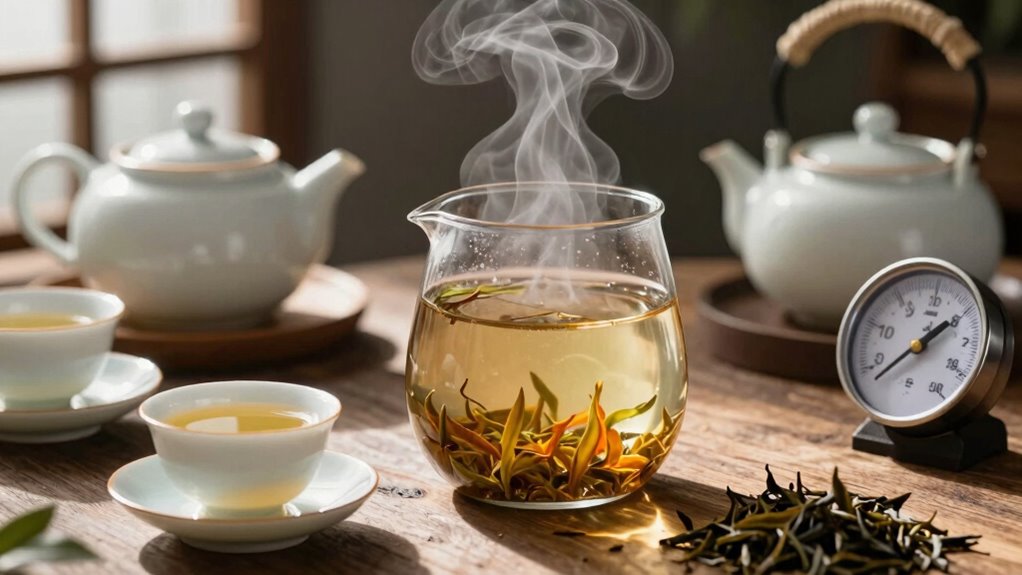
Understanding the impact of brewing temperature and time on tea can transform your tea-drinking experience, as each tea variety has its own sweet spot for flavor extraction.
For example, green tea thrives at 170°F for 3-5 minutes, ensuring a smooth taste, while black tea needs higher temperatures like 200-212°F for ideal richness.
Optimal Brewing Temperatures
While brewing a perfect cup of tea might seem straightforward, getting the temperature just right is essential for releasing its full flavor potential. The water quality and brewing temperatures greatly influence the taste of your tea.
Different teas require specific temperatures; green tea thrives at around 170°F (76°C), while black tea needs water at 200-212°F (93-100°C) to reveal its rich flavors. Using lower temperatures for delicate teas, like white and green, prevents bitterness and enhances subtle notes.
Avoid overboiling water, as it extracts excessive tannins, leading to a bitter taste. Investing in a temperature-controlled kettle can help maintain precise brewing conditions, ensuring you consistently enjoy the best possible cup.
With the right approach, every sip will reveal tea’s true essence.
Perfect Steeping Durations
Brewing the perfect cup of tea goes beyond just getting the temperature right; steeping time is equally important for revealing the full range of flavors each tea has to offer.
Different teas need specific steeping durations to avoid tasting flat. For instance, green tea shines at 170°F (77°C) for 3-5 minutes, while black tea reaches its peak at 200-212°F (93-100°C) for about 5 minutes.
Water quality also plays an essential role in achieving that perfect cup of tea. Oversteeping can lead to bitterness, and understeeping results in weak flavors. Oolong tea, for example, thrives at 190°F (88°C) for 4-5 minutes.
A temperature-controlled kettle guarantees precision, letting you adjust brewing temperature and steeping time to match your personal taste preferences.
Balancing Flavor and Bitterness
Achieving the perfect balance between flavor and bitterness in your cup of tea hinges on careful control of both brewing temperature and time.
Delicate teas like white and green require lower temperatures, around 170°F to 175°F, and shorter steeping times to avoid bitterness. Black teas, however, thrive at higher temperatures, with a longer brewing time, but be cautious as over-extraction can lead to unpleasant astringency.
Oolong tea, less affected by water hardness, finds its sweet spot at 190°F.
The significance of water can’t be overstated; water quality, including factors like calcium, magnesium, and overall pH, plays a vital role in brewing. They can flatten the taste of your brewed tea, so choose your water wisely to enhance flavors and minimize bitterness.
Practical Tips for Improving Your Tea Brewing Experience
To enhance your tea brewing experience, consider starting with the quality of water you use, as it plays a crucial role in flavor extraction.
Prioritize water quality by using filtered or bottled water with a Total Dissolved Solids (TDS) level between 50-150 ppm. This range supports ideal flavor in brewing tea.
Avoid hard water, which exceeds 200 ppm, since it can lead to flat and bitter flavors due to high calcium and magnesium.
Check the water’s pH, ensuring it’s between 6-8, as this neutral range enhances taste.
Regularly test your water quality with a reliable kit to detect issues like chlorine and hardness that might affect your tea’s flavor.
Experiment with various water sources to discover the best taste.
Exploring Regional Water for Tea
Exploring the impact of regional water on tea can reveal new dimensions in your brewing experience. Water quality varies considerably by region, influencing how tea leaves release their flavors.
In places like Japan, the water is softer, with hardness levels from 20 to 80, ideal for brewing delicate green teas. This soft water enhances flavor without overpowering the tea leaves.
Conversely, European regions often have hard water, with levels from 200 to 400, which can dull the flavor of lighter teas. The Total Dissolved Solids (TDS) in water, ranging ideally from 50-150 ppm, is essential for extracting flavors effectively.
Regions with mineral-rich waters, such as mountain streams, can improve your brewing experience by providing a balanced mineral content that enhances tea flavor.
Frequently Asked Questions
Does Water Quality Affect Tea Taste?
Yes, it does. You’ll notice that water minerals affect tea flavor, while brewing temperature and tea variety play roles too. Use proper filtration methods to refine tasting notes, ensuring a delightful tea experience every time.
Does Hard Water Affect the Taste of Tea?
Yes, hard water affects tea taste. Minerals muddle flavors, making delicate tea varieties taste flat. Brewing at proper temperature doesn’t help much, as mineral content still masks flavor compounds, resulting in a disappointing drinking experience.
Why Does My Tea Suddenly Taste Different?
Your tea’s flavor changes could stem from altered brewing temperature effects, older tea leaf age, or varied water mineral content. Additionally, switching tea varieties can impact taste, so consider these factors when your tea tastes different.
Why Should You Not Reboil Water for Tea?
You’d think reboiling water isn’t a big deal, but it actually alters boiling temperature, depletes oxygen levels, and intensifies water minerals. This process dulls flavor compounds, diminishing the nuanced taste of various tea varieties. So, reconsider!
Wrapping It Up
To truly elevate your tea experience, pay attention to water quality. You might think it’s insignificant, but the right water enhances flavor, aroma, and even the color of your brew. Focus on balancing pH and hardness; these factors considerably impact taste. Don’t overlook purification methods, as they can turn a good cup into an exceptional one. Remember, the perfect cup of tea starts with the perfect water. By mastering this, you’ll enjoy a richer, more satisfying tea experience.