
Creating DIY tea blends is an engaging way to customize your tea experience. Start by choosing a base like black, green, or Oolong tea. Maintain a 2:1 ratio of tea leaves to herbs and add dried fruits or spices for flavor. Properly dry ingredients, then store your creations in an airtight container. Use a tea strainer to brew, adjusting steeping times for peak flavor. Immerse yourself in experimenting with different blends and enhance your tea enjoyment.
Tea Blending Basics
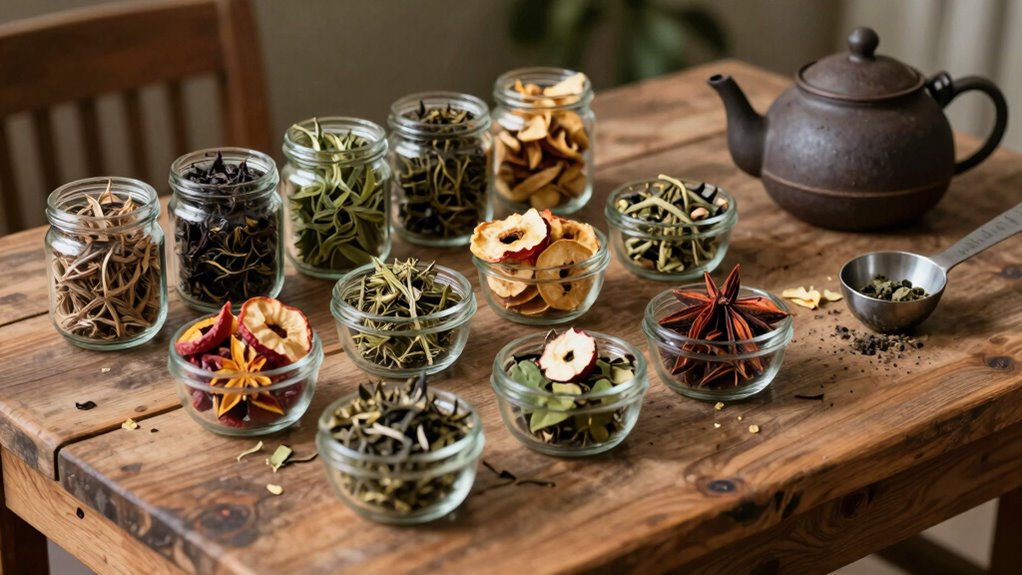
Creating your own tea blend can be an exciting venture into the world of flavors. Start by selecting dried tea leaves from the camellia sinensis plant. A good rule of thumb is to use a 2:1 ratio of tea leaves to herbs.
By adding dried fruits, spices, or floral herbs, you can craft a tea blend that suits your personal taste. It’s essential to properly dry any fresh ingredients using a dehydrator or a low-temp oven to lock in flavor and extend shelf life. Additionally, consider the balance of flavors to create a harmonious and enjoyable blend.
Once mixed, store your creation in an airtight container, placing it in a cool, dark location to maintain its quality. Experiment with steeping times and temperatures to maximize the flavor of your custom blend.
Choose Your Tea Base
Choosing the right tea base is an essential first step in crafting your own blend, as each variety from the camellia sinensis plant offers unique flavors and aromas.
Start by selecting from tea varieties like green, black, white, or Oolong. Black tea, with its robust flavor, is perfect for rich blends such as Chai Spice. If you’re aiming for something lighter, green tea provides a delicate base for invigorating options like Minty Green.
White tea’s subtle sweetness and floral notes pair well with fruits, ideal for blends featuring dried berries. Oolong tea, semi-oxidized and complex, enhances floral or herby blends with lavender or chamomile. Always consider your blend’s intended flavor profile and maintain a balanced ratio of tea to additional ingredients. Additionally, understanding the health benefits of tea can help you choose a base that aligns with your wellness goals.
Prepare Your Ingredients
To begin preparing your ingredients for a DIY tea blend, gather a variety of dried tea leaves and complementary flavors that match your desired profile.
Start with dried leaves from the Camellia sinensis tea plant, choosing between green, black, or oolong for your blend’s base.
Then, select additional ingredients that enhance your flavor profile. Consider these options:
- Dried Fruits: Add berries or citrus for a sweet or tangy twist.
- Spices: Use cinnamon or ginger to introduce warmth and spice.
- Herbs: Chamomile or mint can offer soothing and invigorating notes.
Ensure all fresh ingredients are properly dried to maintain their essence. Switching to loose leaf tea not only enriches your blending experience but also helps reduce environmental footprint, contributing to a more sustainable lifestyle.
Follow a 2:1 ratio for tea leaves to herbs, and store your blend in an airtight container, keeping it cool, dry, and dark to preserve quality.
Select Complementary Flavors
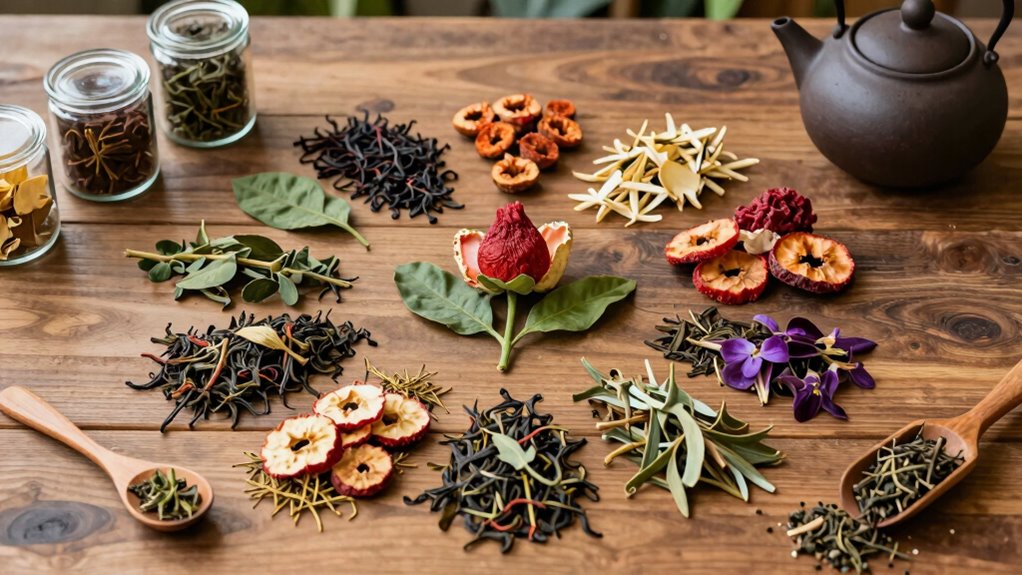
When selecting complementary flavors for your DIY tea blend, start by choosing flavor profiles that enhance your base tea, like pairing green tea with mint or black tea with spices.
Balance your ingredients proportionally, maintaining a 2:1 ratio of tea leaves to herbs, which allows the tea’s natural character to shine without being overshadowed.
Consider incorporating seasonal ingredients, such as dried fruits or floral elements, to add a touch of freshness and creativity to your blend, making it unique and aligned with the time of year.
Choose Flavor Profiles
Crafting your own tea blend offers a delightful opportunity to experiment with a variety of flavor profiles, allowing you to tailor each cup to your personal taste.
Tea lovers can create a tea mixed to their liking by selecting complementary flavors. Consider these profiles:
- Fruity: Enhance your blend with dried berries, citrus peel, or apple for a rejuvenating and vibrant note.
- Spicy: Incorporate cinnamon sticks, dried ginger, or cardamom for a warm, invigorating kick.
- Floral and Herby: Add chamomile, lavender, or mint for a soothing, aromatic experience.
These profiles guide your ingredient choices, ensuring your tea creation is both pleasing and unique.
Balance Ingredients Proportionally
After selecting your desired flavor profiles, it’s important to balance the ingredients proportionally to achieve a harmonious tea blend.
Start with a basic ratio of 2 parts tea leaves to 1 part herbs. This guarantees your green tea base isn’t overpowered.
Pair complementary flavors to enhance the blend: try smooth green tea with invigorating mint for a Minty Green blend.
Consider the intensity of each ingredient; stronger flavors like cinnamon should be used sparingly.
Experiment with combinations, such as mixing dried berries with lavender for a unique fruity-floral profile.
Aim for a balanced taste, avoiding too many strong herbs or spices that might overshadow the tea.
With careful selection and proportional balance, you’ll create a delightful and harmonious tea experience.
Consider Seasonal Ingredients
Embracing seasonal ingredients in your tea blends can greatly enhance their flavor profiles and align them with the time of year. By selecting the right ingredients, you can create blends that not only taste great but also evoke the spirit of each season.
For instance, winter is the perfect time to explore hearty blends with black tea as the base. Consider these options:
- Winter Comfort: Combine black tea with dried figs or dates for a rich, comforting flavor.
- Autumn Spice: Mix black tea with dried apples and warm spices like ginger or cardamom for a cozy infusion.
- Spring Freshness: Use floral ingredients like chamomile or lavender with green tea to capture the essence of blooming gardens.
These combinations guarantee your tea is always seasonally appropriate and delicious.
Mix Your DIY Tea Blend
Blending your own tea is a rewarding endeavor that starts with choosing a suitable base tea, whether it’s the earthy tones of green tea, the robust flavors of black tea, or the nuanced taste of Oolong.
Tea growers carefully cultivate these varieties, allowing you to craft a perfect cup of tea.
Begin by mixing your base tea with herbs at a 2:1 ratio. Enhance the blend with dried fruits, like berries for a fruity note, or spices, such as cinnamon for a spicy kick.
Make certain all fresh additions are properly dried using a dehydrator or low-temperature oven to avoid moisture.
Thoroughly mix the ingredients to guarantee an even flavor distribution.
Finally, experiment with steeping times and temperatures to perfect your custom blend.
Store Your Blend Properly
Now that you’ve crafted your unique tea blend, storing it properly will preserve its flavor and freshness. To guarantee your tea lasts a long time, follow these essential storage tips:
- Use an Airtight Container: Place your tea in an airtight container to shield it from oxygen. This prevents flavor degradation and maintains the freshness of your blend.
- Store in a Cool, Dry, and Dark Place: Keep the container away from light, heat, and humidity, which can negatively impact your tea’s quality. An opaque container is ideal for blocking light exposure, preserving the essential oils in your blend.
- Avoid Strong Odors: Store your tea away from strong scents, as it can easily absorb them, altering the flavor profile.
Label your container with the blend name and date to monitor freshness effectively.
Brew Your Custom Tea
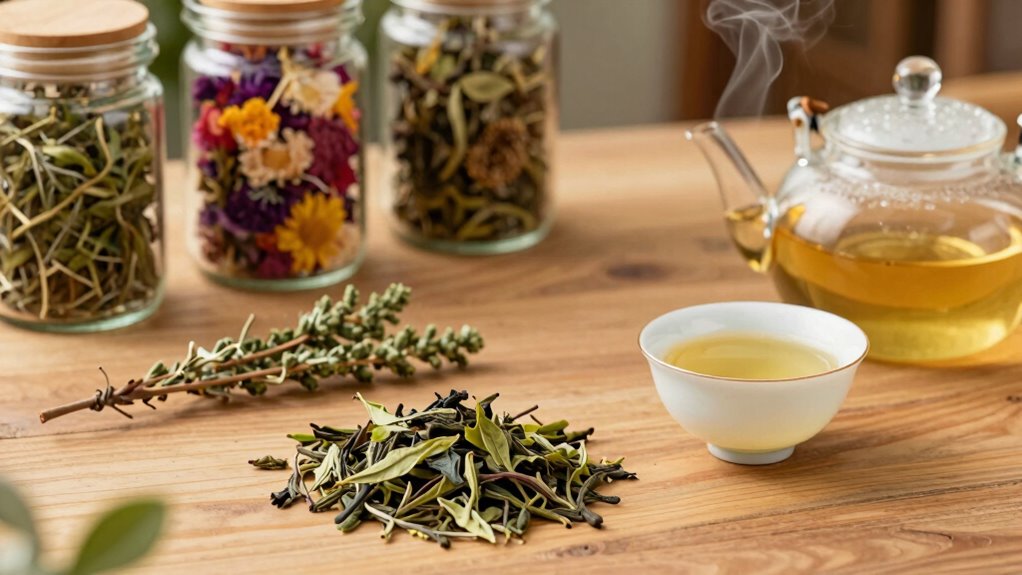
When you’re ready to brew your custom tea, start by gathering your selected dried tea leaves and herbs, adhering to a recommended ratio of 2:1.
Use a tea strainer or infuser to steep your blend in hot water, ensuring a clean brew by removing the leaves after steeping.
Tea comes alive through careful timing; adjust the brewing duration based on your chosen tea type. Experimentation can reveal unique flavors in your blend.
Remember, different teas may require varying steeping temperatures, so consulting specific guidelines is wise.
Store your dried tea in an airtight container, keeping it in a cool, dark place to preserve its essence.
A thoughtful approach to these details will elevate your custom tea experience considerably.
Frequently Asked Questions
Can I Use Fresh Ingredients Instead of Dried Ones?
Yes, you can use fresh herbs in your tea blends. Just remember, fresh herb usage might alter the flavor balance. Experiment with small quantities to find the perfect combination that suits your taste preferences. Enjoy the process!
How Do I Know if an Ingredient Is Overpowering?
To know if an ingredient’s overpowering, taste your blend. Think like a radio tuner—adjust until you hear harmony. Note tasting notes for ingredient balance. If one note shouts louder, it needs dialing down.
Can I Blend Different Types of Tea Bases Together?
Yes, you can blend different tea bases together. Experiment with tea base combinations to create unique flavor profiles. Balance is key; make certain one base doesn’t overpower the others. Trust your taste buds and enjoy the creative process!
What Is the Shelf Life of a Homemade Tea Blend?
Your homemade tea blend typically lasts about six months. Store it in an airtight container, away from light and moisture. This way, you’ll preserve its flavor and enjoy a fresh cup every time you brew.
How Do I Adjust Blends for Caffeine-Free Options?
Think of caffeine-free options like a peaceful garden. Replace caffeinated teas with caffeine alternatives, such as rooibos or chamomile. Use herbal infusions like peppermint or lavender to create soothing blends without the caffeine buzz.
Wrapping It Up
Creating your own tea blends can be both rewarding and educational. Did you know that 80% of tea consumed in the U.S. is black tea? This highlights the opportunity to experiment with other varieties. By choosing a base, preparing ingredients, and selecting complementary flavors, you’ve crafted a unique brew tailored to your taste. Proper storage guarantees longevity, while brewing allows you to savor your creation. Enjoy the process, and let your curiosity guide you to new flavors.