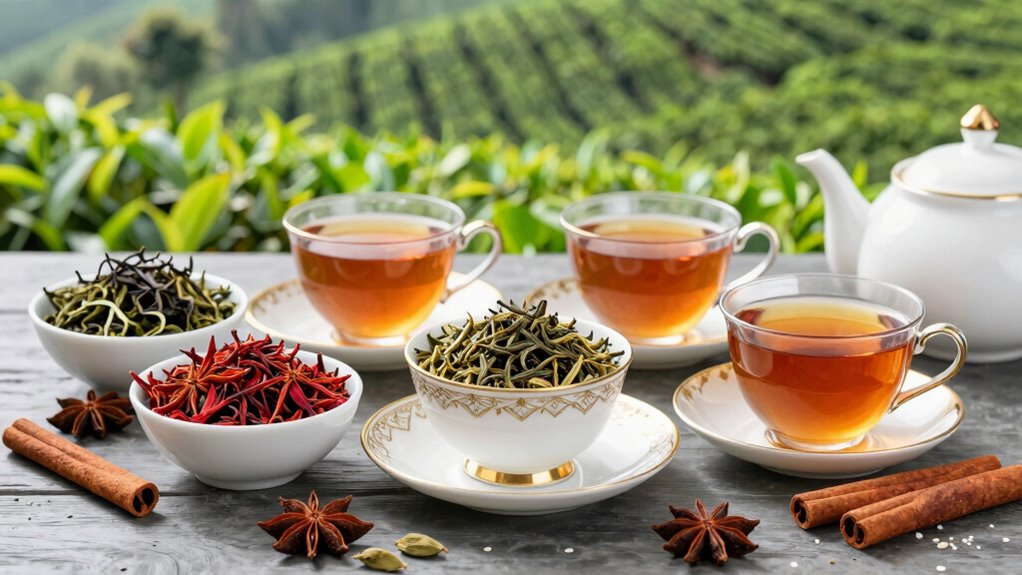
Explore India’s diverse teas that mirror its vibrant culture and landscapes. Assam tea offers bold, malty flavors and health benefits, while Darjeeling tea delights with its delicate floral notes. Nilgiri tea provides a smooth, fruity taste, perfect for various preparations. Embrace the rich aromas and health perks of masala chai, a spiced tea steeped in tradition. Whether you’re seeking robust or gentle flavors, India’s teas promise a sensational experience, with more awaiting discovery.
A Journey Through India’s Rich Tea Culture
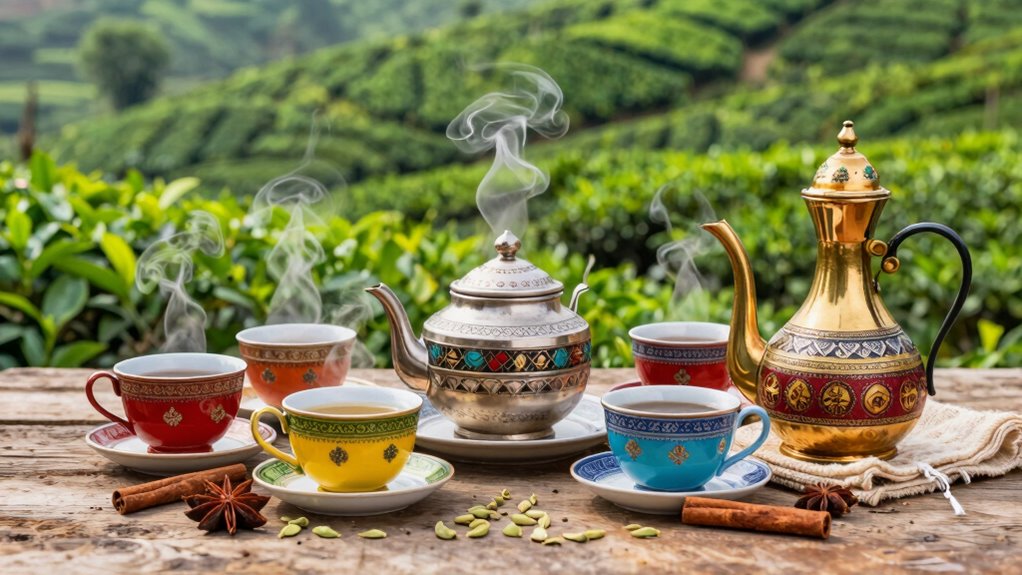
Beginning a journey through India’s rich tea culture reveals a tapestry woven with tradition and taste, offering insights into the diverse flavors and rituals that define this cherished beverage.
You’ll find that Indian tea isn’t just a drink, but a crucial part of everyday life, deeply rooted in social rituals and hospitality.
With regions like Assam producing robust Assam tea known for its strong, malty flavors, it’s clear why about 70% of Indian tea is consumed domestically.
In contrast, Darjeeling tea, often dubbed the “Champagne of teas,” offers a delicate aroma and complex taste from high altitudes.
These diverse flavors highlight the depth of India’s tea culture, making it a fascinating journey for any tea enthusiast. Additionally, the use of brewing techniques can significantly enhance the tea-drinking experience, showcasing the unique characteristics of each variety.
Assam Tea: Bold and Malty Flavors With Health Benefits
Assam tea, one of the most esteemed black teas globally, captivates with its bold, malty flavors that are hard to forget. Originating from the lush Assam region, this tea stands out due to its robust taste and significant health benefits.
You’ll find Assam tea in many popular breakfast blends, thanks to its strength and rich, malty flavor. The unique climate, with its tropical river valley and Himalayan influences, imparts distinct taste and aroma profiles to this tea.
Beyond flavor, Assam tea is packed with antioxidants, promoting heart health, aiding digestion, and supporting weight management. Its production accounts for a whopping 50-75% of India’s total tea output, emphasizing its importance. Regular consumption of Assam tea may contribute to lower heart disease risk, showcasing its role in a healthy lifestyle.
Harvested in two main flushes, this tea offers a delightful experience for any tea enthusiast.
Darjeeling Tea: Delicate and Elegant
While Assam tea captivates with its bold and malty flavors, Darjeeling tea offers a completely different experience with its delicate and elegant profile.
Known as the “Champagne of teas,” Darjeeling tea is grown in the high elevations of West Bengal, ranging from 2,000 to 7,000 feet. This unique altitude contributes to its delicate flavor, distinguishing it with complex floral notes and a light, astringent quality, especially prominent in the first flush from March to April.
Despite its rarity, accounting for just 1% of India’s tea production, Darjeeling tea’s reputation is immense. Each harvest season—from the richer second flush to the robust autumnal—brings a distinctive taste. The tea’s unique flavor profile reflects the seasonal characteristics that influence its taste throughout the year.
Look for the certified logo to guarantee you’re enjoying authentic Darjeeling tea.
Why You’ll Love Nilgiri Tea’s Smooth Flavor

Nilgiri tea is a delightful choice for those who appreciate a smooth and fragrant cup. Sourced from the lush Western Ghats, Nilgiri teas offer a distinct flavor, blending fruity notes like those of Darjeeling with the robust essence of Assam.
You’ll be captivated by its invigorating aroma, making each sip a sensory pleasure. The region’s sunny plateaus and forests contribute to its mildly sweet taste and light floral finish.
What sets Nilgiri tea apart is its low tannin content, allowing for longer brewing times without bitterness—perfect for iced tea lovers. Its versatility means you can enjoy it both hot and cold, appealing to diverse palates.
With 25% of India’s tea production, it’s a favorite among enthusiasts.
Masala Chai: A Spiced Indian Tradition
Masala Chai is an iconic Indian tea that brings together a unique blend of spices like cinnamon, ginger, cardamom, and clove, creating a rich tapestry of flavors and aromas that are both comforting and invigorating.
You’ll find that this traditional beverage holds a special place in Indian culture, symbolizing hospitality and community as it’s often shared during social gatherings and family rituals.
Each region offers its own twist on preparation, with variations like Assam Kadak Chai and Spicy Masala Tea, showcasing the diverse tea culture across the country.
Unique Spices and Flavors
Although it’s a staple across India, Masala Chai is much more than just a simple tea; it’s a fragrant blend that tells a story of tradition and flavor.
When you sip Masala Chai, you’re tasting a rich flavor crafted from black tea, milk, sugar, and an array of spices like cinnamon, ginger, cardamom, and clove. Each cup can be a unique experience, as families customize their recipes to reflect regional tastes and personal preferences.
These spices don’t just add aroma and depth; they also provide health benefits like improved digestion and anti-inflammatory properties.
The traditional preparation involves boiling loose tea leaves with these spices, then adding milk to create a full-bodied beverage that’s both comforting and invigorating.
Cultural Significance and Rituals
A key component of Indian culture, Masala Chai transcends mere beverage status to become an essential part of daily rituals and social interactions.
You’ll find that Masala Chai isn’t just about enjoying a warm drink; it’s deeply woven into India’s tea culture. With roots stretching back over 5,000 years, it started as an Ayurvedic healing beverage.
Today, Masala Chai combines black tea with milk, sugar, and a unique blend of spices like cinnamon, ginger, cardamom, and clove, known as chai masala. Each family often has its own recipe, reflecting regional flavors.
This comforting and aromatic tea symbolizes hospitality, often shared during gatherings, showcasing a rich diversity of preparation styles that enhance its cultural significance across India.
Preparation and Variations
The cultural significance of Masala Chai naturally leads to exploring its preparation and variations, highlighting the richness of Indian tea traditions.
When you prepare masala chai, start by boiling black tea leaves in water. Then, add milk and a blend of spices like cinnamon, ginger, cardamom, and clove. Each household often has its own unique recipe, creating diverse flavors across Indian teas.
You might enjoy popular versions such as Assam Kadak Chai or Spicy Masala Tea. This tea preparation results in a robust and invigorating drink, perfect for daily enjoyment.
Masala chai isn’t just a beverage; it’s a gesture of hospitality in India, warmly served to guests. Its origins date back over 5,000 years, rooted in Ayurveda.
Discover Saffron Kashmiri Kahwa
Imagine sipping a cup of Saffron Kashmiri Kahwa, an exotic green tea that transports you to the serene valleys of Kashmir. This exquisite blend of green tea leaves, saffron, cardamom, and cinnamon captivates your senses with its rich aroma and vibrant color.
The addition of spices and dried rose petals enhances both flavor and appeal, creating a truly unique experience. Traditionally enjoyed in winter, Saffron Kashmiri Kahwa is sweetened with honey and garnished with almond slivers, adding texture and warmth.
Beyond its delightful taste, this tea offers soothing properties, making it perfect for relaxation. It’s celebrated not only for its comforting qualities but also for the health benefits associated with its ingredients, providing a revitalizing escape during colder months.
Mastering Traditional Indian Tea Brewing Methods
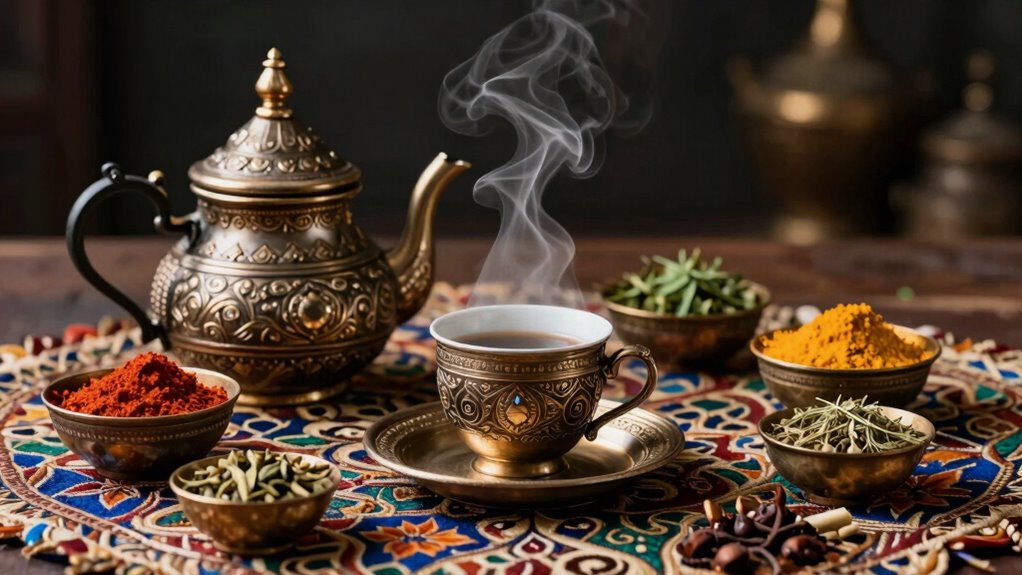
Savoring the warmth of a Saffron Kashmiri Kahwa naturally leads you to explore the art of mastering traditional Indian tea brewing methods.
Begin by boiling black tea leaves with spices, milk, and sugar in a pot to create the rich, aromatic Masala Chai. Confirm the water reaches its boiling point, around 100°C, before adding the leaves, steeping them for 3-5 minutes depending on your preferred strength.
Using traditional clay pots can enhance the flavor, as they absorb and impart unique characteristics over time. The First Flush, picked in early spring, offers delicate floral notes, while the Second Flush, harvested in summer, brings richer, bolder flavors.
With milk, balance the tea’s astringency, crafting a creamy texture that pairs well with spices.
Frequently Asked Questions
What Are the Different Types of Indian Tea?
You’ll find various Indian teas like Assam and Darjeeling among black tea types. Explore green tea varieties and discover white tea origins in regions like the Nilgiris. Don’t forget to try the aromatic Masala Chai.
What Is the Most Popular Indian Tea?
You’d likely find Masala chai as the most popular Indian tea. Its rich blend captivates, its spices invigorate, its warmth comforts. While Assam black and Darjeeling green charm many, Masala chai remains the undisputed favorite.
Which Teas Are Native to India?
You’ll find that teas native to India include Assam, known for its robust cultivation; Darjeeling, celebrated for its delicate varieties; and Nilgiri, famous for its fragrant flavors. Each reflects unique regional characteristics beautifully.
What Is a Typical Indian Tea?
Masala Chai’s a typical Indian tea, blending black tea, milk, and spices like cinnamon and ginger. You should try Darjeeling Tea for its aroma or Assam Black for its strong, malty flavor. Each offers unique experiences.
Wrapping It Up
Begin a tea adventure that spans the diverse landscapes of India, from the robust, malty embrace of Assam’s leaves to the ethereal elegance of Darjeeling. You’ll savor the smooth harmony of Nilgiri, while Masala Chai’s vibrant spices dance on your palate. Don’t forget the luxurious allure of Saffron Kashmiri Kahwa. Master these traditional brewing techniques, and transform your tea rituals into an extraordinary sensory journey, savoring every cup’s unique story and cultural richness.