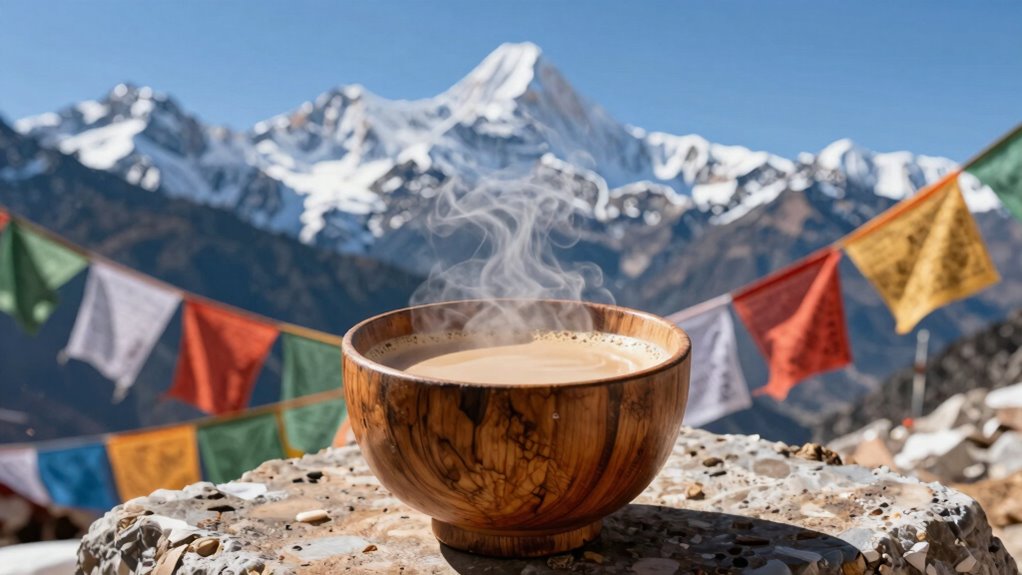
In the Himalayan high-altitude regions, Tibetan butter tea is essential for warmth and nourishment. Also known as Po cha, it’s made by blending smoky black tea, yak butter, and salt. This traditional drink, significant to Tibetan culture, supports digestion and combats altitude sickness while symbolizing community and prosperity. Variations exist across Tibetan regions, but the drink consistently provides energy and warmth. Stay engaged to discover richer insights into its cultural significance and preparation methods.
What Is Tibetan Butter Tea?
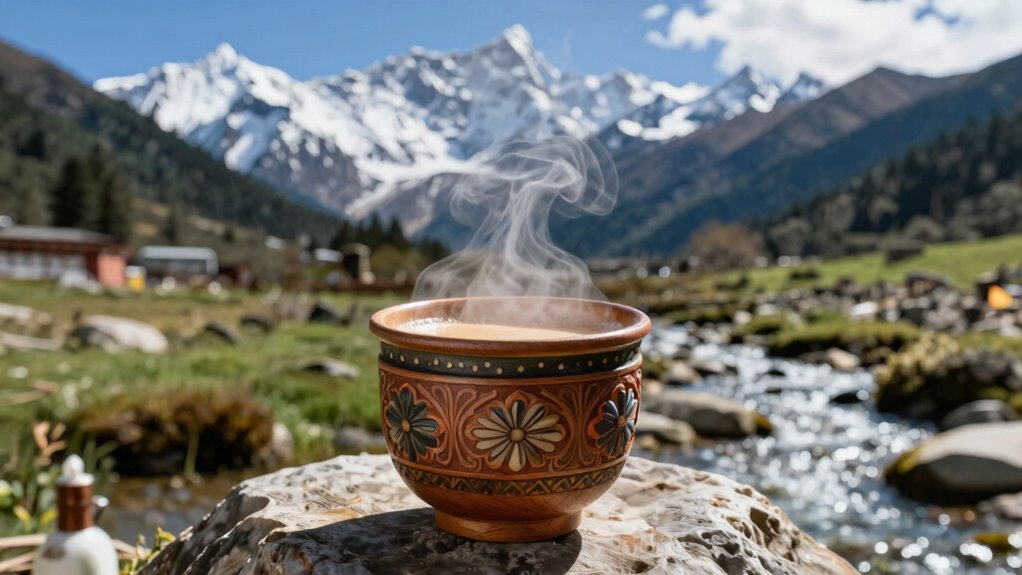
Tibetan butter tea, or Po cha, is a unique and traditional beverage that plays an essential role in Tibetan culture and daily life.
At high altitudes, this drink provides warmth and energy, vital for enduring cold climates. Made from strong black tea, yak butter, and salt, Tibetan butter tea is rich in calories and healthy fats. It aids digestion and helps combat altitude sickness, making it indispensable in Tibetan diets.
The tea’s robust flavor comes from black brick tea boiled for hours before blending with butter and salt, creating a concoction often likened to a light, salty soup.
Consumed daily, this beverage symbolizes prosperity and community, embodying Tibetan hospitality and culture through shared experiences and social gatherings. Additionally, the antioxidants in tea may protect against free radicals, further enhancing its health benefits in the Tibetan diet.
How to Make Tibetan Butter Tea
To make Tibetan butter tea, start by gathering essential ingredients like smoky black tea, salt, yak or cow butter, and milk.
Follow the step-by-step preparation by boiling water, steeping the tea, and blending everything until frothy.
While traditional methods involve hours of boiling for a robust flavor, you can create a delicious modern version in much less time, perfect for enjoying with warm staples like tsampa.
Essential Ingredients Needed
When making Tibetan butter tea, also known as Po cha, you’ll need a few key ingredients to capture its unique flavor and texture.
Start with strong black tea, preferably from Pemagul, which provides the robust base for your tea. Yak butter is essential for that creamy consistency, though cow butter can suffice if yak butter is unavailable. Salt enhances the savory aspect, while water and possibly milk or half-and-half complete the mixture.
Here’s what you’ll need:
- 4 cups of water – Boil this to steep your black tea.
- 2 tablespoons of yak butter – Blend for richness.
- 1/4 teaspoon of salt – Add for a savory touch.
These ingredients form the foundation of Tibetan butter tea, promising a comforting and authentic experience.
Step-by-Step Preparation
Begin by boiling 4 cups of water, an essential step that sets the stage for your Tibetan butter tea.
Once the water boils, add 2 tablespoons of strong black tea, preferably a smoky type like Lapsang Souchong. Let it boil for a couple of minutes, then strain the tea.
To make butter tea, mix the brewed tea with 1/4 teaspoon of salt, 2 tablespoons of yak butter (or cow butter if yak isn’t available), and 1/2 cup of milk or half and half in a blender.
Blend the mixture for 2-3 minutes until creamy and frothy. Adjust salt and butter to taste.
Serve the butter tea hot, savoring its rich connection to Tibetan culture.
Traditional Versus Modern Methods
Having explored the step-by-step preparation for making Tibetan butter tea, it’s interesting to compare traditional and modern methods of crafting this unique beverage.
Traditional preparation involves boiling strong black tea for hours, blending it with yak butter and salt for an authentic Tibetan experience. In contrast, modern methods often employ organic black tea steeped briefly, using cow butter or high-quality alternatives for convenience.
Both methods require an essential blending process to achieve that sought-after frothy texture.
Consider these differences:
- Ingredients: Traditional uses yak butter, while modern opts for cow butter.
- Process Duration: Traditional boiling lasts hours; modern steeping is quicker.
- Customization: Modern methods allow salt and fat adjustments for personal taste.
These approaches highlight the blend of heritage and innovation in Tibetan butter tea.
Unique Ingredients in Tibetan Butter Tea
Tibetan butter tea, known as Po cha, is an intriguing beverage due to its unique blend of ingredients that contribute to its distinct taste and cultural significance.
At its core, Tibetan butter tea combines smoky black tea, brewed for hours to develop a rich flavor, and yak butter, which is favored for its unique taste and cultural importance.
Salt is added to enhance the savory profile and help with hydration and electrolyte balance, especially in high-altitude conditions.
Some variations also include toasted barley powder, imparting a nutty flavor and added nutrition. Milk or milk curds can be used for extra creaminess.
The use of fresh yak butter not only enriches the tea but also symbolizes prosperity within Tibetan society. Additionally, the health benefits of tea are further enhanced by the incorporation of yak butter, which provides essential fats that support overall wellness in challenging environments.
Health Benefits of Tibetan Butter Tea
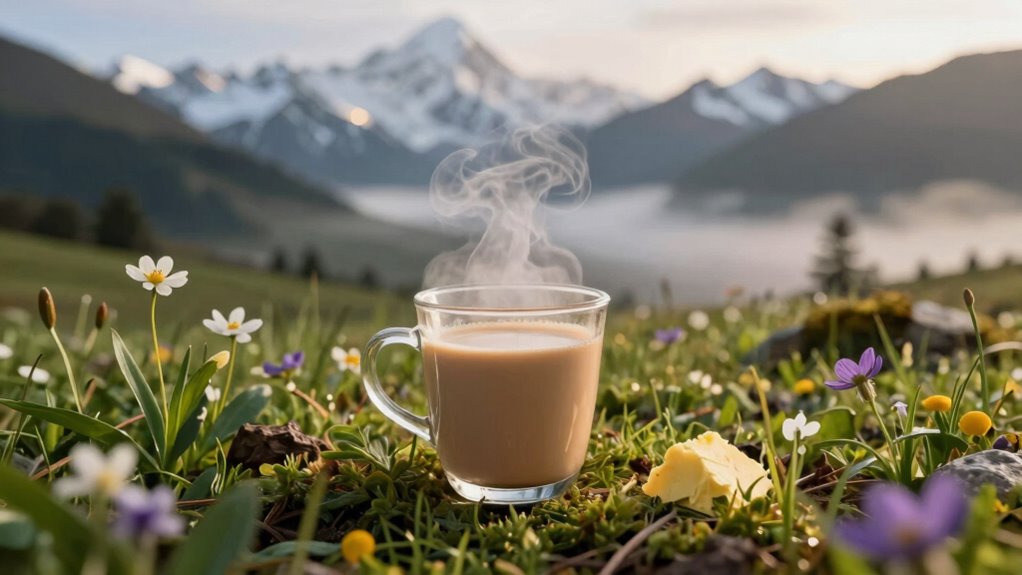
You’ll find Tibetan butter tea to be an excellent energy source, especially in cold, high-altitude environments where maintaining warmth is vital.
It supports digestive health by aiding in digestion and promoting mental focus, which is particularly effective when consumed on an empty stomach.
Additionally, its ingredients help combat altitude sickness by regulating water balance and providing essential nutrients that support overall cardiovascular health.
Energy Boost in Cold
While sipping on a warm cup of Tibetan butter tea, you’re not just enjoying a unique flavor; you’re tapping into a potent source of energy that combats the cold and high-altitude challenges.
This high-calorie drink, made from yak butter, is essential for Tibetan people living in harsh, mountainous regions. It provides an energy boost that helps you withstand freezing temperatures and altitude-related fatigue.
You’ll find that this tea is more than just a beverage; it’s a survival tool. Here’s why it’s indispensable:
- Warming Properties: Keeps you warm in bitter cold conditions.
- Sustained Energy: Offers long-lasting energy for physically demanding tasks.
- Hydration Support: Balances hydration to counteract high-altitude diuretic effects.
Additionally, the high-fat content of Tibetan butter tea provides sustained energy that helps maintain stamina throughout the day.
Tibetan butter tea is a lifeline in the unforgiving Himalayas.
Digestive Health Support
As you savor the warmth of butter tea, you’re not just gaining energy to tackle the cold; you’re also benefiting your digestive health considerably.
Tibetan butter tea, made with rich yak butter, supports a healthy gut environment and enhances nutrient absorption. Its high-calorie content provides sustained energy, essential for metabolic processes at high-altitude.
The tea’s salt helps regulate hydration and maintain electrolyte balance, both critical for ideal digestive function in these extreme climates. Drinking butter tea on an empty stomach can boost digestive efficiency and stimulate appetite, especially helpful when food intake is challenging.
Additionally, pu-erh tea in the mix offers antioxidants that reduce oxidative stress, further promoting gut health.
Embrace this traditional beverage for holistic digestive support.
Altitude Sickness Relief
Tibetan butter tea, known as po cha, offers a unique combination of ingredients that makes it a powerful ally in combating altitude sickness. In high-altitude environments, the richness of yak butter provides essential energy, helping you fight fatigue. The salt content in Tibetan butter tea is vital, regulating your body’s water balance and counteracting dehydration caused by high altitudes.
To really highlight the benefits, consider these points:
- Energy Boost: The high-calorie content from yak butter keeps you energized during demanding climbs.
- Hydration Support: Salt content aids in maintaining hydration, vital in thin air.
- Mental Clarity: Healthy fats and caffeine enhance focus, essential for maneuvering high-altitude challenges.
Drinking po cha helps you maintain body warmth and adapt to the harsh Himalayan climate.
Butter Tea in Tibetan Social and Cultural Traditions
In Tibetan culture, butter tea, or Po cha, serves as a cornerstone of social and cultural traditions, symbolizing warmth and hospitality.
You’ll find Tibetan butter tea at the heart of communal activities, where its preparation often involves family members working together. This process strengthens bonds and upholds cultural traditions.
When you attend social gatherings or community events, sharing a cup of butter tea reflects the importance of shared experiences. Offering this tea to guests isn’t just about serving a beverage; it’s a generous gesture of hospitality and respect. Your cup is continually refilled, embodying the values of generosity and respect.
This timeless drink ties meals together, often paired with hearty dishes like tsampa, creating a comforting and inclusive atmosphere.
How Butter Tea Changes Across Tibetan Regions
Family gatherings and social ceremonies aren’t complete without a steaming cup of butter tea, yet this cherished beverage takes on different forms across Tibetan regions. Each area adds its own twist, showcasing unique regional flavor variations.
In the Amdo region, you’ll find salty milk tea more common than traditional butter tea, reflecting local tastes. Wealthier families might indulge in pure yak milk butter tea, while poorer ones sometimes sell their yak butter, altering their consumption. Nomadic families, especially Tibetan nomads in high-altitude areas, rely heavily on butter tea as an energy source.
Meanwhile, the Kham region prefers a slightly sweet version made with yak milk, and the Tsang region enjoys an even sweeter brew. These variations underscore the integral role of butter tea in social gatherings.
- Amdo: Salty milk tea
- Kham: Slightly sweet yak milk tea
- Tsang: Sweet yak milk tea
Butter Tea vs. Bulletproof Coffee
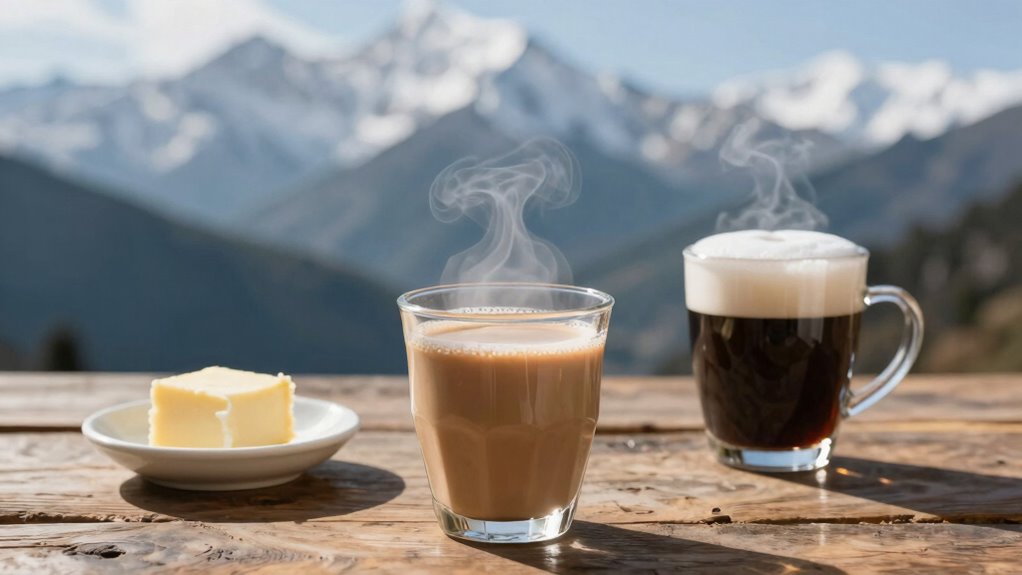
While both Tibetan butter tea and Bulletproof Coffee serve as energy-boosting beverages, they originate from distinct traditions and ingredients.
Tibetan butter tea, a traditional Tibetan drink known as po cha, uses smoky black tea, yak butter, and salt. It’s designed to provide warmth and energy in high-altitude conditions. The preparation of Tibetan butter tea involves boiling tea for an extended period and blending in yak butter, creating a unique flavor profile.
In contrast, Bulletproof Coffee blends high-quality grass-fed butter with coffee and MCT oil, aiming to enhance cognitive function and energy levels.
Tibetans consume po cha daily, often with hearty meals, while Bulletproof Coffee is popular among those seeking a low-carb, high-fat breakfast alternative.
Both beverages offer high calories and distinct benefits.
Frequently Asked Questions
What Tea Is Used for Tibetan Butter Tea?
You use Tibetan tea, specifically smoky brick tea, for Tibetan butter tea. Embrace its butter origins and follow traditional recipes. The tea preparation holds cultural significance and offers unique health benefits, creating a savory drink different from sweet teas.
Is Tibetan Butter Tea Good for You?
Yes, Tibetan butter tea is good for you. It offers health benefits like energy boost and digestive aid. The traditional recipe holds cultural significance and promotes hydration effects. However, watch its high fat and salt content.
Why Do Tibetans Put Butter in Tea?
Did you know 85% of Tibetans consume butter tea daily? They add butter for its cultural significance and health benefits. Traditional preparation methods and ingredients create a rich flavor profile, with variations recognized to suit different tastes.
What Is Himalayan Butter Tea?
You’re curious about Himalayan butter tea, a rich, salty drink offering health benefits and energy. Its preparation involves unique methods and flavors, with cultural significance and variations. Embrace serving traditions to fully appreciate this Tibetan staple.
Wrapping It Up
In exploring Tibetan butter tea, you’ll find a fascinating blend of tradition and health benefits. Did you know that nearly 80% of Tibetans start their day with this rich drink? It’s more than just a beverage; it’s a cultural cornerstone, connecting generations through its unique ingredients like yak butter and salt. As you sip, consider how these elements not only fuel the body but also foster community, illustrating the deep-rooted bonds between culture and cuisine.