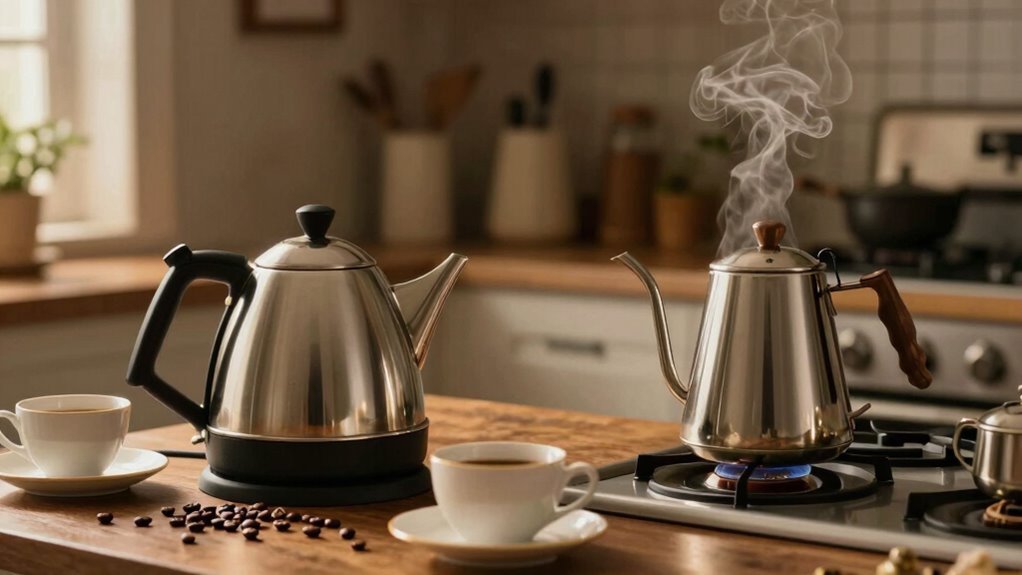
Choose a kettle based on your needs—electric kettles offer speed and energy efficiency, boiling water faster and consuming less energy. They provide precise temperature settings, ideal for specialty coffee and tea, and include safety features like automatic shut-off. Stovetop kettles, while slower and less energy-efficient, have traditional charm and heat water to higher temperatures. Decide what suits your lifestyle and explore further to reveal the perfect brewing experience.
Choosing the Right Kettle: Electric vs. Stovetop
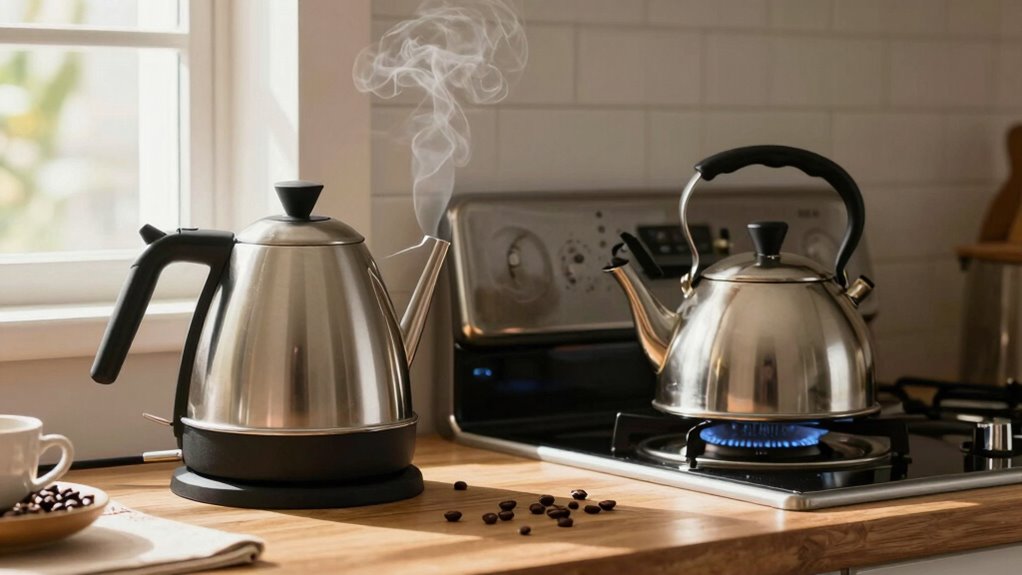
Electric kettles offer several benefits that make them a popular choice. They provide precise temperature control, essential for brewing specialty coffee and delicate teas. With electric kettles, you can achieve ideal brewing conditions easily. Additionally, they boil water considerably faster than stovetop kettles, ensuring you don’t have to wait long for your hot beverage. Moreover, using fresh, filtered water in an electric kettle can further enhance the flavor of your tea.
On the other hand, stovetop kettles have their unique advantages. They allow for a rolling boil and can heat water above the boiling point, perfect for certain teas that require higher temperatures. However, they need an external heat source, limiting their use to stovetop-equipped environments.
Ultimately, the choice between electric and stovetop kettles depends on your specific needs and preferences.
Speed and Efficiency: Fast Heating Comparisons
When it comes to speed and efficiency, electric kettles clearly outpace stovetop models.
You’re looking at a significant time-saving advantage with electric kettles, which boil 750 mL of water in just a few minutes. This rapid heating is due to their impressive 80% efficiency, compared to the 50-70% efficiency range of stovetop kettles.
Not only do electric kettles heat faster, but they also consume less energy—about 144,446 joules (0.040 kWh) compared to the 304,942 joules (0.085 kWh) used by stovetop models.
Plus, electric kettles offer convenience with automatic shut-off features, so you don’t need to monitor them. Additionally, using a quality kettle with adjustable temperature settings allows you to brew different types of tea at their optimal temperatures.
Switching to an electric kettle means you’ll save both time and energy, especially if you frequently need boiling water for your beverages.
Temperature Control: Precision Brewing Options
How do you achieve the perfect brew? Precision in temperature control is key.
Electric kettles, like the Fellow Stagg EKG, empower you to select exact temperatures for different drinks. For instance, you can set it to the ideal 96°C for specialty coffee, ensuring consistent flavor every time.
Unlike stovetop kettles, which only signal when water is boiling, electric models let you maintain specific temperatures, essential for delicate teas. They often include thermometers or digital displays, allowing you to monitor water temperature visually, enhancing brewing accuracy.
This precision prevents over-steeping, avoiding bitterness in tea and ensuring a delightful beverage experience. With electric kettles, achieving the perfect brew isn’t just possible; it’s easy and reliable. Additionally, using the correct water temperature for different tea types can significantly enhance your brewing results.
Eco-Friendly Energy Use
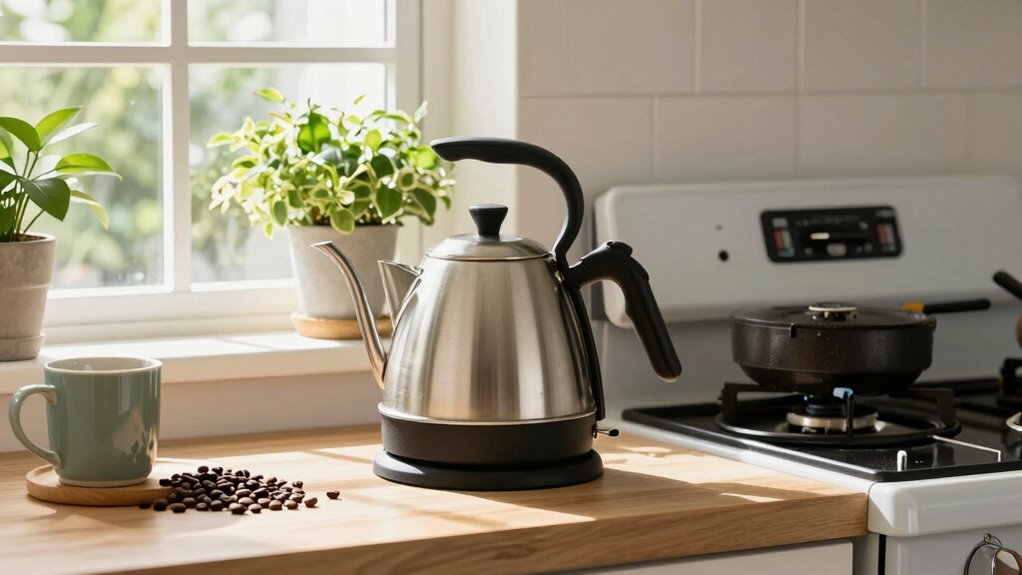
When it comes to eco-friendly energy use, electric kettles often outperform stovetop models in efficiency and sustainability.
By choosing an electric kettle, you can considerably reduce energy consumption, thanks to their 80% efficiency rate and automatic shut-off feature that prevents waste.
For those using stovetop kettles, mindful practices like avoiding prolonged boiling can still help minimize your environmental impact.
Energy Efficiency Comparison
Although both electric and stovetop kettles are popular choices for boiling water, electric kettles stand out regarding energy efficiency and eco-friendly usage.
With an efficiency rate of around 80%, electric kettles far surpass the 50-60% efficiency of stovetop kettles on gas stoves. They consume about 144,446 joules (0.040 kWh) to reach the boiling point, considerably less than the 304,942 joules (0.085 kWh) used by stovetop kettles.
This energy efficiency not only reduces your carbon footprint but also saves on energy bills. Additionally, electric kettles feature automatic shut-off mechanisms, preventing overboiling and ensuring peak efficiency.
- Reduce energy waste while boiling water.
- Save money on energy bills over time.
- Support eco-friendly choices by using less energy.
Choosing the right kettle can make a considerable difference!
Sustainable Brewing Practices
To brew sustainably and reduce your environmental impact, focus on using an electric kettle, which boasts around 80% energy efficiency.
Compared to a stovetop kettle, an electric kettle saves significant energy, using only about 144,446 joules for boiling 750 mL of water.
This efficiency allows for more sustainable brewing practices, as you consume less energy and conserve resources.
Environmental Impact Reduction
Shifting to more sustainable brewing methods involves making informed choices about your equipment, and one impactful change is using an electric kettle.
With an efficiency rate of around 80%, electric kettles allow you to boil water quickly and consume less energy compared to stovetop kettles, which range from 50-70% efficiency. This energy efficiency means you save approximately 0.045 kWh for boiling 750 mL of water, while a stovetop kettle uses about 0.085 kWh.
By reducing energy waste through precise temperature control and avoiding overboiling, electric kettles minimize environmental impact.
Consider these benefits:
- Save energy and reduce your carbon footprint.
- Use only the water you need, promoting energy efficiency.
- Choose eco-friendly practices without compromising convenience.
Embrace these changes for a greener planet!
Design and Aesthetic Appeal: Finding Your Kitchen Fit
How do you choose the right kettle to match your kitchen’s aesthetic?
Consider the design and aesthetic appeal of both stovetop and electric kettles. Stovetop kettles come in various charming designs that enhance your decor, perfect if you appreciate traditional aesthetics. Their nostalgic appeal, with classic whistles and polished metal finishes, adds a warm touch to your kitchen.
On the other hand, electric kettles often showcase modern designs prioritizing functionality. Sleek finishes and compact sizes make them a suitable fit for contemporary spaces. Models like the Fellow Stagg EKG merge elegance with practical features, offering precise temperature controls.
Ultimately, align your kettle choice with your kitchen’s overall theme, whether you lean towards vintage charm or contemporary style.
Portable Kettles: Convenience on the Go
While the aesthetic appeal of a kettle can elevate the ambiance of your kitchen, portability adds a new dimension to your lifestyle.
Portable kettles, especially electric ones, offer unmatched convenience. You can use them anywhere with a mains connection, making them perfect for travel, work, or dormitory living. Their compact designs mean they’re easy to pack and carry, ensuring you’re never far from a steaming cup of hot water.
- Stay refreshed wherever you go, knowing a warm beverage is just a plug away.
- Save time with electric kettles that heat water faster than stovetop options, perfect for busy mornings.
- Enjoy hassle-free travel, as their lightweight nature makes them easy on your luggage.
Portable kettles truly bring convenience to your fingertips.
Safety Features: Ensuring Safe and Easy Use
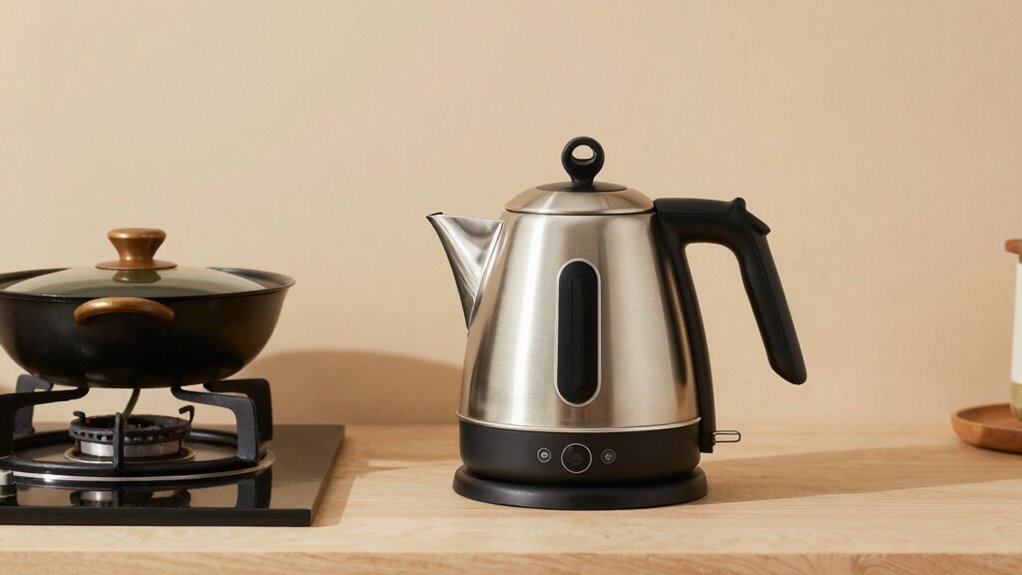
When it comes to safety features, electric kettles have a clear edge, ensuring your peace of mind while brewing.
With automatic shut-off mechanisms, these kettles prevent overheating, reducing the risk of burns from steam. You’ll appreciate the boil-dry protection, which automatically shuts off the kettle if there’s no water inside, preventing potential damage and hazards.
Unlike stovetop kettles that require constant monitoring and risk accidents if left unattended, electric kettles offer set-and-forget convenience. Their cool touch handles minimize heat exposure, letting you pour safely without fear of burns.
Plus, the quieter alerts in electric kettles replace loud whistles, enhancing your experience by maintaining a tranquil environment while ensuring safe operation.
Electric kettles clearly prioritize safety and ease of use.
Frequently Asked Questions
Is It Better to Boil Water on the Stove or Kettle?
You should use an electric kettle. It boils water faster, offers superior temperature control, and is more energy-efficient. Its convenience factor, especially with automatic shut-off, makes it an ideal choice for a hassle-free boiling experience.
Is an Electric Kettle Better Than a Stovetop?
You’ll find an electric kettle better for precise brewing temperature control and energy efficiency. While stovetop brewing offers convenience, the electric kettle’s advantages like speed and safety features outweigh it, especially when you need quick, efficient results.
What Is the Healthiest Way to Boil Water for Tea?
You should use an electric kettle for the healthiest water boiling method. It offers precise temperature control, enhances brewing efficiency, minimizes energy consumption, and, when combined with water purification methods, guarantees safe, delicious tea preparation.
What Are the Disadvantages of an Electric Kettle?
You’ll find electric kettles have efficiency drawbacks, with 15% energy loss during boiling. Temperature control can be inconsistent, and safety concerns arise from overheating. Additionally, they consume more energy, impacting your electricity bill over time.
Wrapping It Up
When choosing between an electric kettle and a stovetop brewing method, consider your priorities: speed, precision, or eco-friendliness. An electric kettle offers rapid heating and precise temperature control, perfect for tech-savvy users who value convenience. Stovetop kettles, while slower, often boast charming designs and might align with eco-conscious choices. Both options have safety features, but if portability is key, electric models might win. Ultimately, your decision should reflect your lifestyle and kitchen aesthetics.