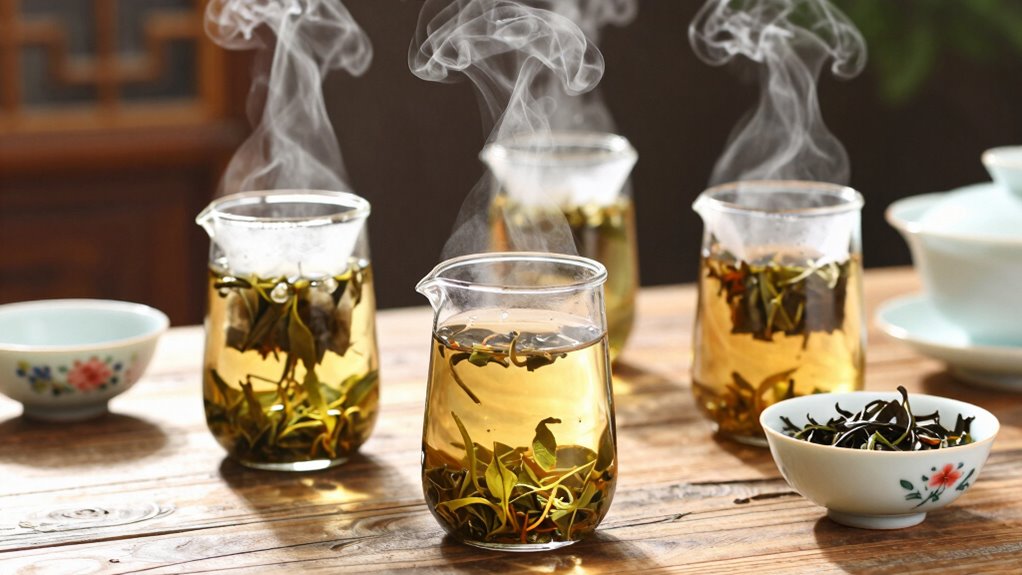
Start with high-quality tea leaves for rich flavors in every infusion. Opt for small brewing vessels that concentrate the flavors, using precise steeping times and temperatures to balance the taste. Store leaves properly between infusions to preserve their integrity. Combining multiple infusions creates larger flavorful batches, while cold brewing spent leaves gently extracts remaining flavors. By following these steps, you’ll explore diverse flavors and enhance your tea experience further.
Begin With Pure, High-Quality Tea Leaves
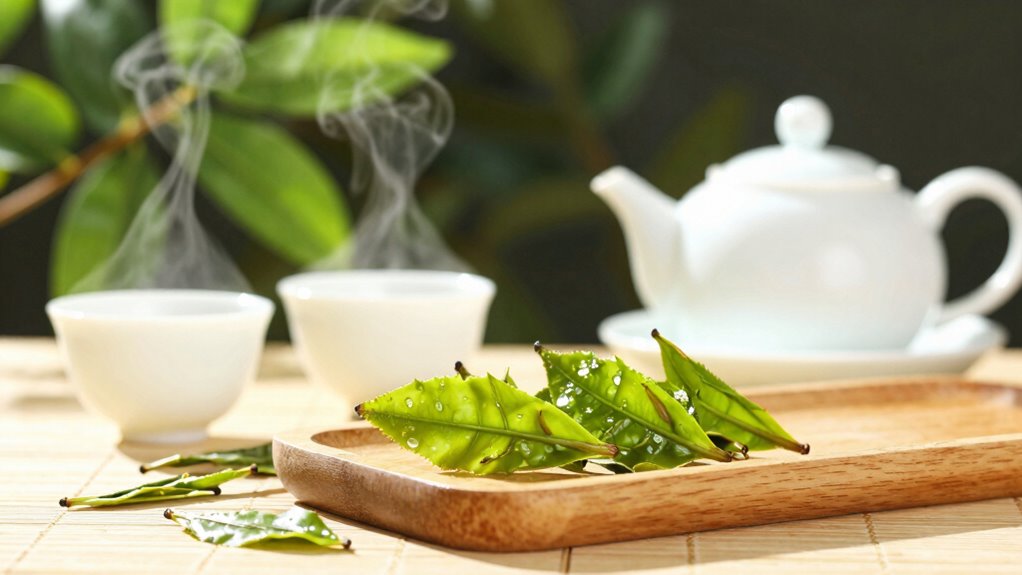
To truly appreciate the complex flavors of tea, start with pure, high-quality tea leaves. Whole leaf tea, especially from regions like Taiwan, is perfect for multiple infusions due to its superior flavor and viscosity.
When you choose high-quality tea leaves, you’re setting the stage for a rich, layered experience that unfolds with each steep. The steeping time plays an essential role; adjust it to release the full potential of each infusion.
Japanese green teas, for instance, offer delightful nuances that become more pronounced in the second or third brewing. High-quality leaves maintain their integrity through several infusions, unlike faster-growing varieties. Additionally, using optimal brewing conditions helps to maximize the flavor extraction during each steep.
Choose Small Brewing Vessels for Richer Flavor
When you’re looking to enhance the flavor concentration of your tea, choosing a small brewing vessel is key.
A smaller pot increases the ratio of tea leaves to water, optimizing flavor extraction and allowing the tea’s complexity to shine through. Additionally, using reusable infusers can help maintain the quality of your loose leaf tea while contributing to sustainable brewing practices.
Enhance Flavor Concentration
Although often overlooked, the size of your brewing vessel can greatly impact the flavor concentration of your tea. Using a smaller vessel increases the ratio of tea leaves to water, enhancing each infusion’s depth. This method guarantees that the flavor concentration is rich without being overwhelming, allowing you to savor the tea’s complexity.
High-quality leaves shine when brewed in a compact space, revealing intricate flavors with every steep. By managing the volume with smaller teapots or cups, you maximize the potential of the tea, extracting a full-bodied essence. This focused brewing approach creates a concentrated brew that enhances your experience, as pure teas develop more intricately over multiple infusions, delivering a satisfying and flavorful journey with every cup. Additionally, using fresh, clean water will ensure that the delicate flavors of your tea are preserved and highlighted throughout the brewing process.
Optimize Leaf-to-Water Ratio
Choosing the right leaf-to-water ratio is essential for accessing the full potential of your tea, and using smaller brewing vessels can make a significant difference. A smaller vessel naturally increases the ratio, allowing you to brew tea that’s rich in flavor and complexity.
Aim for one gram of loose leaf per ounce of water, as this guarantees a full-bodied experience without bitterness. Smaller vessels make it easier to enjoy multiple times, as they facilitate richer flavor extraction and noticeable flavor changes with each steep.
Short steep times further enhance the tea’s complexity, especially in the second infusion. This method is ideal for high-quality teas, offering a deeper, more enjoyable tasting experience with each brew.
Master Short Steeping Times for Balanced Flavors
To master short steeping times for balanced flavors in tea infusion, focus on the delicate art of timing and temperature.
Begin with a short steeping time of 30-60 seconds for the second infusion, ensuring controlled flavor release. This prevents bitterness and allows for multiple infusions of tea leaves, creating a nuanced tasting experience.
Use a slightly higher water temperature for subsequent infusions to enhance flavor extraction while maintaining balance. High-quality tea leaves benefit from these brief steeps, releasing complex flavors without becoming overwhelming.
Gradually adjust steeping times longer for each infusion to capture evolving profiles. By monitoring sensory cues like aroma and color, you’ll achieve the desired flavor balance, ensuring a delightful tea experience every time.
Discover Evolving Flavors With Each Infusion
As you explore the art of tea infusion, each steeping becomes a new chapter in your flavor journey, revealing distinct and evolving profiles.
With multiple infusions, you’ll uncover complexities that transform over time. The second steeping often introduces subtler flavors, becoming richer and more aromatic.
By fine-tuning your steeping time and adjusting water temperature slightly higher, you’ll enhance these evolving notes. Shorter steeping times are key to preventing bitterness while allowing the tea’s nuanced flavors to shine.
A smaller brewing vessel is perfect for achieving a higher leaf-to-water ratio, concentrating these flavors beautifully.
Each infusion, whether it’s the second or fourth, promises a unique experience. Embrace the changes; they’re what make tea infusion a delightful exploration of taste.
Combine Infusions for Larger, Flavorful Batches
Exploring the evolving flavors of tea infusions opens up new ways to enjoy your favorite brews, and combining multiple infusions can enhance this experience even further.
By using a high leaf-to-water ratio and short steeping times, you can brew flavorful tea efficiently. This method allows you to maintain control over flavor while brewing larger batches, making it perfect for multiple servings.
You can stack infusions from smaller vessels, ensuring each batch retains its quality. This approach prevents over-brewing and preserves the complexity of the leaves, offering you a consistent tea experience.
It’s also a time-efficient method, allowing you to enjoy high-quality tea without sacrificing flavor or time, ideal for busy individuals seeking daily indulgence.
Properly Store Tea Leaves Between Infusions
To preserve the flavor intensity and prevent leaf degradation between infusions, make sure you drain all water from the tea leaves after the initial steep.
Leaving the leaves in water can lead to a decline in quality, so aim to re-infuse them within a couple of hours for the best taste.
If you need to store them overnight, refrigerate the leaves to maintain freshness, but be aware that the flavor might change slightly.
Preserve Flavor Intensity
When aiming to preserve the flavor intensity of your tea, it’s crucial to store the leaves properly between infusions. After you’ve steeped your tea, drain all water from the leaves to prevent over-extraction and maintain ideal flavor.
You can leave the leaves in the brewing vessel for several hours, but don’t wait too long to re-steep them for the best taste. If you plan to reuse them after 12 hours, especially in hot conditions, refrigerate them to keep them fresh.
For a more robust infusion, consider adding fresh dry leaves to the used ones. Also, experimenting with cold infusions using spent leaves can yield delightful results—try 5 grams of leaves per 500 ml of cold water for an ideal flavor experience.
Prevent Leaf Degradation
Although it might seem straightforward, properly storing tea leaves between infusions is key to preventing leaf degradation and maintaining flavor quality.
After each infusion reveals its unique flavor, drain all water from the leaves to prevent over-extraction. If you’re planning a second steeping, store leaves in a cool, shaded area to help them release flavor effectively when reinfusing tea.
If you plan to wait more than a few hours, refrigerate the leaves, especially if they’ve been in hot weather for over 12 hours. Tea grown under ideal conditions deserves careful handling.
Adding fresh dry leaves to partially used ones can enhance the flavor profile, ensuring a robust infusion. Remember, how you store leaves between brews directly affects your tea experience.
Ensure Consistent Quality
Even if you’ve already enjoyed your first cup, storing tea leaves correctly between infusions is essential to guarantee consistent quality in your brews.
Teas can be infused multiple times, but to maintain flavor and aroma, you need to verify proper storage. After your first infusion, drain all hot water from the leaves to avoid unwanted steeping. Keep them in the brewing vessel with the lid on to retain intensity.
For a consistent number of infusions, use the same amount of dry leaf and water each time. If you plan to wait longer before your second cup, refrigerate the leaves, especially in hot weather.
Consider adding fresh dry leaves if the initial brew has lost its potency, ensuring a rich tea experience.
Try a Refreshing Cold Brew as a Final Step
Once you’ve savored the robust flavors of your tea leaves through hot infusions, it’s time to explore the invigorating world of cold brews by using the same leaves.
After multiple hot infusions, transfer your spent leaves to cold water for an overnight cold infusion. This gentle extraction process draws out any remaining flavors, creating a smooth and revitalizing tea that highlights the subtler notes left in your teas.
To maximize flavor extraction, use about 5 grams of spent leaves per 500ml of cold water. Cold brewing not only enhances the value of high-quality teas but also guarantees no flavor is wasted.
Whether you’re using green, black, or herbal teas, this versatile method offers a delightful final step in your tea-drinking journey.
Frequently Asked Questions
What Does It Mean to Infuse Tea Multiple Times?
When you infuse tea multiple times, you reveal various tea flavors through deliberate brewing techniques. Different tea types, cultural practices, and preparation methods like adjusting steeping times can enhance health benefits and deepen your tea experience.
How Many Times Can You Infuse Tea?
You’ll discover tea’s magic when you infuse it multiple times. Depending on tea types, leaf quality, and brewing techniques, you can steep two to four times, savoring evolving flavor profiles. Adjust water temperature and steeping time for ideal health benefits.
What Happens if You Over Infuse Tea?
If you over infuse tea, you’ll encounter a bitter taste and aroma loss. Different tea types require specific steeping times. Ignoring these can affect health impacts and disrupt flavor. Refine your brewing techniques for better results.
Can Tea Be Reboiled?
When you reboil tea, imagine the vibrant flavors fading into a dull murk. Reboiling tea diminishes flavor extraction, impacts tea quality, and reduces health benefits. Use proper brewing techniques, ideal steeping time, and fresh tea leaves.
Wrapping It Up
You’ve commenced on a journey akin to a tea sommelier, exploring the art of multiple infusions. By choosing high-quality leaves and using small vessels, you reveal a symphony of flavors with each steep. Mastering short steeping times guarantees a balanced taste, while combining infusions creates a robust blend. Store your leaves properly, and don’t overlook the revitalizing twist of a cold brew finale. Your tea experience is now as rich and varied as a well-conducted orchestra.