
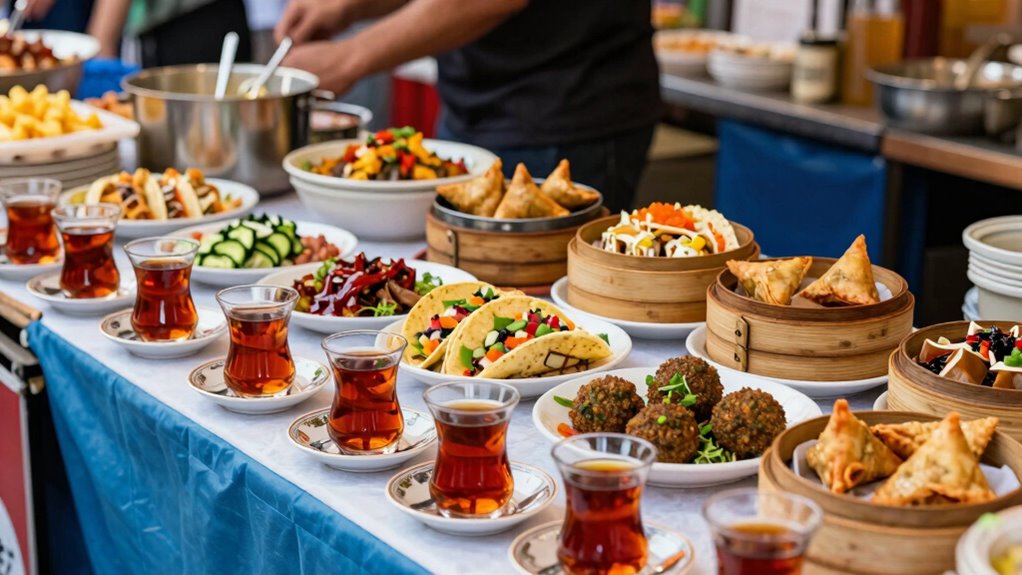
Pairing tea with international street foods enhances your culinary adventure by perfectly matching tea intensity with dish characteristics. Green tea highlights light seafood and Asian delights, while bold black teas complement robust meats and spicy treats. Oolong’s floral notes uplift fruity street snacks, and delicate white tea enriches fresh appetizers. Pu-Erh pairs well with hearty meals, adding depth to flavors. Unique combinations, such as Gyokuro with Indian chaat, await discovery just beyond this overview.
Understanding Tea Pairing Basics
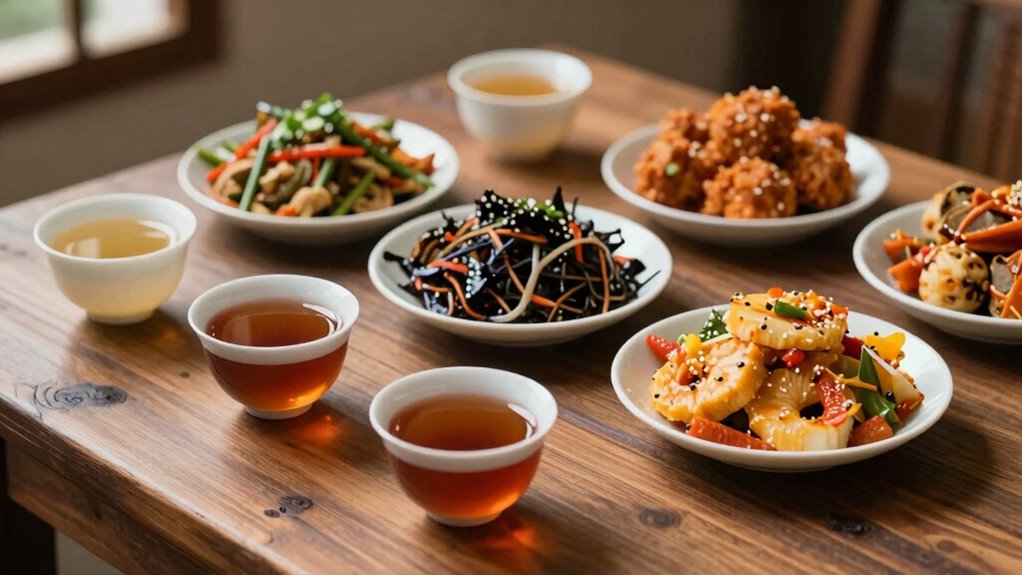
When it comes to tea pairing, understanding the basics can elevate your culinary experience considerably.
As you explore different pairings, think of tea as a versatile companion to your meals. A tea sommelier might guide you to pair green tea with seafood-based street foods, highlighting its light, grassy flavors.
In contrast, robust black teas, with their bold profiles, can complement hearty meat dishes and spicy snacks. Embracing these pairings aligns with culinary traditions, enhancing flavors much like wine does with fine dining.
The key lies in matching the intensity and characteristics of the tea with your food. By understanding these simple principles, you’ll find that tea pairing opens up a world of delightful culinary possibilities, enriching every meal with newfound depth. Additionally, experimenting with complementing flavors can lead to even more enjoyable pairings, allowing you to discover unique combinations that resonate with your palate.
Green Tea’s Harmony With Asian Delights
As you explore the world of tea pairing, you’ll find that green tea, especially the Gyokuro variety, brings a harmonious balance to Asian street foods. With its umami, sweet, and grassy flavors, green tea elevates dishes like sushi, dim sum, and light broths.
Its invigorating qualities make it an ideal companion for seafood-based snacks like grilled eel or fish balls, enhancing their delicate flavors. Pairing green tea with vegetable-based dishes such as Korean kimbap or Vietnamese spring rolls highlights their fresh and vibrant tastes.
Try infusing your green tea with citrus notes like yuzu to add a zesty twist, perfectly balancing spicy flavors in Asian street foods. The minimal oxidation keeps green tea’s taste fresh, complementing lighter appetizers like edamame or cold tofu. Additionally, the health benefits of green tea are amplified when paired with these dishes, promoting overall wellness as you enjoy your meal.
Bold Black Tea With Savory and Spicy Dishes
When pairing bold black tea with savory and spicy street foods, you’ll find it enhances dishes like grilled meats and spicy curries with its robust flavor profile. The tea’s full-bodied nature balances the heat and richness, creating a harmonious dining experience. Whether you’re enjoying the caramel notes of Baisen Kocha with spicy fried chicken or using it to cleanse your palate between bites of tangy kebabs, black tea stands up to the intensity of spices and enriches the overall flavor. Additionally, the antioxidants in tea may also contribute to improved digestion, making it an excellent choice to accompany flavorful meals.
Grilled Meat Pairings
Exploring the art of pairing bold black tea with grilled meats can elevate your dining experience, creating a symphony of flavors that enrich both the tea and the dish.
Bold black tea, like Baisen Kocha, complements grilled meats beautifully. Its full-bodied profile enhances rich flavors, making it a perfect companion for street food offerings like grilled chicken skewers or spicy lamb kebabs. The caramel fragrance and malty sweetness of the tea balance savory and spicy elements, offering a satisfying contrast.
High-temperature brewing brings out complex flavors in the tea, harmonizing with the charred, smoky notes of grilled meats. When enjoying traditional street foods, such as spicy pork or beef tacos, black tea’s boldness cleanses your palate, enhancing the overall flavor experience.
Spicy Curry Enhancements
Bold black tea isn’t just for grilled meats; it also pairs wonderfully with spicy curries, creating a rich and satisfying dining experience.
When you pair bold, malty black tea, like Baisen Kocha, with spicy curries, you’ll notice how its flavors enhance the dish. The complete oxidation of black tea gives it a full-bodied flavor, perfect for balancing the heat and complexity of spicy curries.
This pairing cuts through intense flavors, offering a harmonious balance that elevates your taste experience. The caramel fragrance of black tea further enriches the savory notes of street food, making each sip and bite more delightful.
Pairing black tea with spicy elements, such as kurosichimi, enhances the overall enjoyment, providing a perfect blend of flavors.
Broth Richness Balance
To achieve a delightful balance in savory and spicy dishes, consider pairing them with bold black tea.
Bold black tea, like Baisen Kocha, perfectly complements street foods with savory and spicy profiles. The tea’s full-bodied flavor and malty sweetness enhance the richness of thick broths, such as those in spicy noodle soups or curries.
The caramel notes of black tea bring out the flavors in grilled meats, making it ideal for skewers and barbecue. When you’re enjoying spicy dishes seasoned with kurosichimi, the robust profile of black tea can help temper the heat, creating a harmonious blend.
Pairing black tea with these rich and spicy street foods elevates your dining experience, ensuring every bite and sip is perfectly balanced.
Oolong Tea and Fruity Street Treats
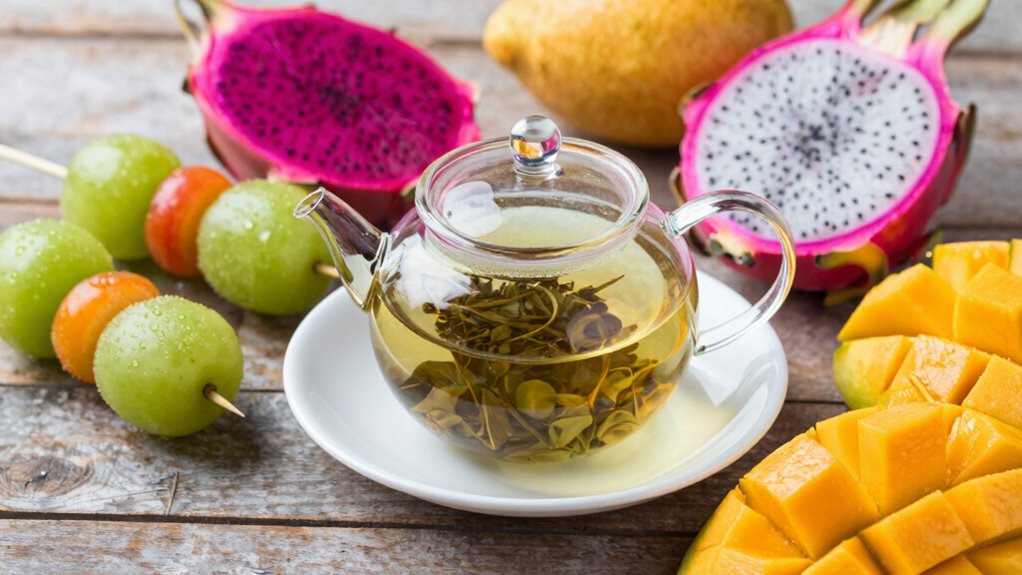
Amid the bustling world of street food, oolong tea stands out as a versatile companion to fruity treats. Its flavor profile, ranging from floral to nutty, complements delectable options like mango sticky rice or fruit skewers.
The natural sweetness of the Oriental Beauty oolong enhances vibrant flavors of fresh lychee and peach. As a palate cleanser, cold oolong refreshes your taste buds between bites of rich street foods, including fried snacks and coconut pancakes.
Its complex aroma elevates the experience when paired with crispy fried snacks served with fruit-based sauces like sweet chili. Oolong’s higher oxidation level balances the sweetness and acidity of fruity desserts, making it ideal for enjoying with Taiwanese pineapple cakes.
Embrace oolong’s versatility as you explore fruity street treats.
Delicate White Tea With Fresh Snacks
When you’re exploring street foods, pairing delicate white tea with fresh snacks is a revitalizing choice that enhances your tasting experience.
This tea’s subtle floral and fruity notes beautifully complement fresh vegetable dishes, while its clean aftertaste enhances seafood treats like cold ebi with dashi jelly.
With light appetizers, such as Japanese clams or salads with microgreens, white tea acts as a balancing agent, ensuring the flavors remain vibrant without overpowering your palate.
Complementing Fresh Vegetable Dishes
Exploring the world of tea pairings, you’ll find that delicate white tea, such as Crescent Moon White Tea, perfectly complements fresh vegetable dishes, bringing out their natural flavors with its floral and fruity notes.
This pairing enhances the experience of eating fresh, crunchy vegetables like cucumber and radish. The minimal oxidation of white tea preserves its delicate flavor profile, making it ideal for highlighting the subtle freshness of these ingredients.
Infusing white tea with citrus notes, like yuzu or kabosu, adds a bright, zesty twist that further elevates the dish. The thick, round mouthfeel of the tea provides a pleasant texture, transforming simple vegetable snacks into gourmet delights.
Pairing With Seafood Treats
Pairing delicate white tea with seafood treats opens up a whole new world of culinary possibilities. You’ll find that the subtle flavors of Crescent Moon White Tea beautifully enhance the freshness of seafood snacks like Japanese clams and cold ebi dishes.
Here’s how white tea can elevate your seafood experience:
- Flavor Harmony: White tea’s floral and fruity notes create a clean aftertaste, perfectly complementing the lightness of seafood.
- Umami Balance: Its minimal processing preserves delicate flavors, harmonizing with the umami characteristics in seafood-based street foods.
- Invigorating Contrast: The thick, round mouthfeel offers an invigorating contrast to the textural experience of fresh seafood.
- Cultural Connection: Pairing white tea with seafood aligns with global traditions, emphasizing lighter teas with delicate flavors.
Enjoy this sophisticated pairing!
Enhancing Light Appetizers
Have you ever considered how delicate white tea can transform your experience with light appetizers? This tea’s floral and fruity notes make it an exceptional companion for light appetizers, enhancing the freshness of a variety of snacks.
Imagine pairing Crescent Moon White Tea with seafood dishes like cold ebi with dashi jelly; the combination complements the clean aftertaste beautifully. Additionally, its thick, round mouthfeel elevates vegetable-based snacks, such as fresh salads and light spring rolls.
The subtle flavor profile of white tea also allows it to harmonize with light cheeses, letting the natural flavors of both shine. For an extra layer of refreshment, infuse your white tea with citrus or berries, further enhancing its compatibility with delicate appetizers.
Pairing Earthy Pu-Erh Tea With Hearty Eats
While Pu-Erh tea mightn’t be the first beverage that comes to mind when thinking of street food, its earthy and complex flavor profile makes it an exceptional match for hearty eats.
This fermented tea pairs beautifully with a variety of street foods:
- Hearty Street Foods: Think meat skewers or rich dumplings. The tea’s depth balances these dishes’ richness.
- Savory Snacks: Fried chicken or pork belly buns are enhanced by Pu-Erh’s robust nature.
- Spicy Street Food: Chili-laden tacos or samosas find harmony as Pu-Erh’s smoothness tempers the heat.
- Earthy Flavors: Mushroom-based foods or gravies resonate with the tea’s earthy notes.
Enjoy Pu-Erh with heavier snacks like chocolate pastries, where its complex flavors truly shine.
Create Unique Street Food and Tea Pairings

Exploring the world of tea beyond the typical pairings opens up a domain of exciting culinary possibilities.
When you immerse yourself in unique food pairings, you’ll discover that a grassy green tea like Gyokuro perfectly enhances the umami and balances the heat in spicy Indian chaat.
For Vietnamese banh mi, the robust flavor of a black tea, such as Baisen Kocha, complements the savory meats and pickled vegetables by cutting through the richness.
Japanese takoyaki’s crispy texture is beautifully matched with the floral notes of Oolong tea, like Oriental Beauty.
Meanwhile, Mexican elote finds an ideal companion in a strong black tea like Earl Grey, while Korean tteokbokki pairs with chamomile green tea, which mellows the spice and complements its sweetness.
Frequently Asked Questions
What Food Is Best Paired With Tea?
You should pair tea with savory snacks, sweet pastries, spicy dishes, light bites, or grilled meats. Choose black tea for spicy dishes, green tea for light bites, or chai for sweet pastries to enhance their flavors perfectly.
What Tea Goes With Mexican Food?
Immerse yourself in delightful Mexican tea pairings by choosing herbal tea options that balance spicy food combinations. Authentic Mexican flavors pair perfectly with traditional tea choices like robust black tea or revitalizing hibiscus, enhancing every bite’s brilliance.
What Do Europeans Eat With Tea?
Europeans enjoy scone varieties, pastries, and cheeses with tea, embracing rich tea traditions. For a classic afternoon tea, explore tea etiquette by pairing your brew with delightful European pastries, enhancing the overall experience and flavor harmony.
What Tea to Drink With Chinese Food?
You should try different Chinese tea varieties with your meal. For dim sum pairings, explore regional tea preferences like oolong or jasmine. Use proper tea brewing methods to enhance flavor balance techniques and elevate your dining experience.
Wrapping It Up
As you explore the world of tea and international street foods, you’ll find delightful coincidences in flavors. Green tea effortlessly complements Asian dishes, while bold black tea pairs well with spicy, savory options. Oolong tea’s versatility enhances fruity treats, and delicate white tea shines next to fresh snacks. Meanwhile, earthy Pu-Erh tea finds a match in hearty eats. By experimenting with these pairings, you create unique culinary experiences, blending cultures in a delicious symphony of taste.