

Try calming herbal teas for natural stress relief. Chamomile tea, renowned for relaxation, reduces anxiety and aids sleep with its antioxidants. For mental clarity, Brahmi tea stands out, while Ashwagandha lowers stress hormones like cortisol. Holy Basil (Tulsi) and Fennel tea offer mental calmness and digestive ease. Customize your tea with citrus or honey for added benefits. Incorporating these herbal teas into your routine can bring peace and focus to your day. Discover more options and benefits now.
Why Choose Herbal Teas for Stress Relief?

When it comes to managing stress, herbal teas are a natural and effective option you shouldn’t overlook. Chamomile tea, in particular, stands out due to its long history of use for reducing anxiety and promoting relaxation.
With 43% of individuals reporting increased anxiety in 2024, the demand for natural remedies like chamomile tea is growing. Clinical trials overwhelmingly support its effectiveness, with 9 out of 10 studies showing positive results in alleviating stress symptoms.
Chamomile tea contains beneficial compounds, including flavonoids, that improve mood and mental well-being. By incorporating chamomile tea into your daily routine, especially in the evenings, you can create a calming ritual that not only helps combat stress but also enhances sleep quality, ultimately improving your overall health. Additionally, its anti-inflammatory properties can relieve minor aches and pains that often accompany stress.
Discover Chamomile: Your Go-To Stress-Reliever
Chamomile tea stands out as a top choice for stress relief, backed by 9 out of 10 clinical trials highlighting its ability to markedly reduce anxiety symptoms.
Rich in antioxidants like apigenin, it not only promotes relaxation but also enhances sleep quality and duration, making it a great option for those dealing with stress-related insomnia. Additionally, incorporating chamomile tea into your evening routine can transform bedtime into a tranquil ritual, further aiding in relaxation and stress reduction.
While chamomile is a safe and natural remedy, always consult a healthcare provider if you’re on anticoagulants, have asthma, or are pregnant before incorporating it into your routine.
Chamomile’s Anxiety-Reducing Effects
While many people seek natural remedies for anxiety, chamomile tea stands out as a particularly effective option. It’s not just a soothing beverage; it’s a powerful ally against chronic stress.
With flavonoids like apigenin, chamomile promotes relaxation and mental calmness. In fact, 9 out of 10 clinical trials reveal its significant impact on alleviating anxiety symptoms. Regularly drinking chamomile tea could be your simple step toward reducing stress-related issues.
A 2016 study highlighted its potential to reduce symptoms of generalized anxiety disorder (GAD) with long-term use, emphasizing its role in ongoing mental health support.
Plus, chamomile’s calming properties can soothe stress-related digestive troubles, making it beneficial for both mental and physical stress relief. Incorporating herbal teas into your daily routine can enhance your overall well-being.
Consider making chamomile tea a part of your daily routine.
Enhancing Sleep With Chamomile
For those seeking a natural solution to enhance sleep quality, chamomile tea offers an effective remedy. This herbal tea is renowned for its ability to improve sleep quality and reduce nighttime awakenings, making it a go-to solution for insomnia.
Chamomile’s secret lies in its antioxidants, especially flavonoids like apigenin, which possess sedative properties that help you fall asleep faster. A systematic review of clinical trials underscores chamomile’s effectiveness in managing anxiety, with nine out of ten studies confirming its role in alleviating stress-related sleep disturbances.
Brahmi Tea for Mental Clarity and Calm
If you’re searching for a natural way to enhance mental clarity and calm agitation, Brahmi tea might be your perfect match.
This ancient Ayurvedic herb, Bacopa monnieri, is renowned for its ability to reduce anxiety and improve memory, offering a soothing experience for your mind.
Enhancing Mental Clarity
Amidst the hustle of daily life, finding a moment of calm and clarity can be challenging, yet Brahmi tea offers a natural solution for those seeking mental peace.
This ancient Ayurvedic herbal drink is renowned for enhancing mental clarity and providing stress relief. To prepare Brahmi tea, simply steep 3–4 stalks in 250 ml of water for at least 10 minutes. Adding honey not only enhances flavor but also boosts its health benefits.
Brahmi tea promotes balance in mental states, helping you alleviate anxiety and improve memory function. Regularly enjoying this herbal tea supports cognitive health, making it especially valuable during stressful periods when mental fatigue looms.
Its calming properties make it an essential addition to your stress-relief regimen.
Calming Agitation Naturally
While the stresses of life can often leave you feeling agitated, Brahmi tea offers a natural path to mental clarity and calm. Made from the ancient Ayurvedic herb Bacopa monnieri, this tea is renowned for reducing anxiety and promoting mental clarity.
To prepare Brahmi tea, simply steep 3–4 stalks in 250 ml of water for at least 10 minutes. For added flavor, squeeze the leaves before drinking.
This herbal tea not only calms the mind but also supports memory enhancement, balancing emotional states and reducing agitation. Regular consumption can greatly contribute to your overall mental well-being, making it a valuable addition to your stress management routine.
Brahmi’s centuries-old use highlights its importance in traditional medicine for achieving calmness.
Ashwagandha: The Adaptogenic Stress-Buster
Ashwagandha tea, a renowned adaptogen, stands out as a powerful ally in your battle against stress. Made from the root of the Withania somnifera plant, it’s celebrated for its ability to reduce stress-related fatigue and anxiety.
Regular consumption can lower cortisol levels by up to 30%, essential for managing stress effectively. You can prepare ashwagandha tea by mixing ½ cup of milk, ½ cup of water, 1 teaspoon of ashwagandha powder, and 2 teaspoons of honey, enjoying this twice daily for ideal calming effects.
Beyond stress relief, this ancient herb supports memory, immunity, and heart health, making it a multifaceted choice. If you’re dealing with chronic stress, ashwagandha tea promotes overall mental and physical well-being.
Holy Basil (Tulsi): Mind-Soothing Benefits
Following the calming benefits of ashwagandha, another potent herb for stress relief is Holy Basil, or Tulsi. Known for its health benefits, Tulsi is an ancient Ayurvedic herb with anxiolytic and antidepressant properties that help alleviate stress and promote emotional balance.
The active compound, rosmarinic acid, reduces anxiety and enhances sleep quality, making it an excellent choice for stress relief.
To enjoy Holy Basil tea, steep 1 teaspoon of fresh Tulsi leaves or ½ teaspoon of dried leaves in 1½ cups of water for 10 minutes. You can add lemon juice and honey for flavor.
Regular consumption offers several advantages:
- Enhances mental clarity and calmness
- Helps alleviate stress
- Supports emotional balance
- Can be customized with chamomile or peppermint for added effects
Tulsi tea is a soothing option for natural stress relief.
Fennel Herbal Tea: For Digestive Ease and Calm
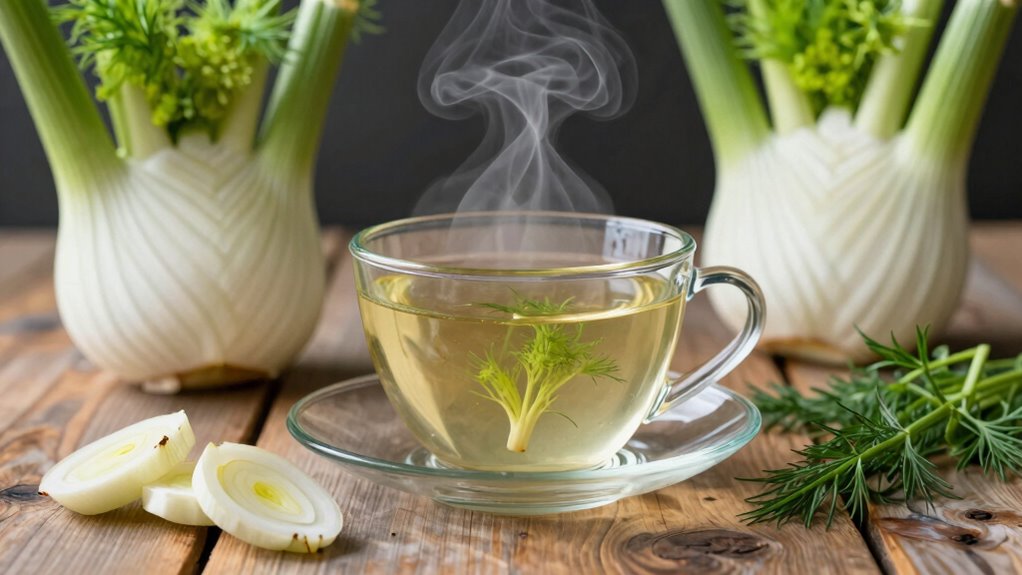
Fennel herbal tea, a simple yet effective remedy, offers dual benefits for both digestion and mental calmness. By simmering 1 tablespoon of crushed fennel seeds with 3 mint leaves and a small piece of crushed ginger in 1½ cups of water, you create a soothing blend that tackles digestive issues and promotes tranquility.
Fennel tea’s cooling properties can greatly reduce bloating, ensuring a more comfortable digestive experience. It’s particularly beneficial for alleviating anxiety and depression, especially in postmenopausal women.
To amplify its calming effects, let the tea reduce to 1 cup and serve it warm, garnished with fresh mint. Regularly drinking fennel tea not only supports your digestive health but also enhances overall mental well-being, linking gut health to emotional stability.
Practical Ways to Enjoy Herbal Teas Daily
When it comes to incorporating herbal teas into your daily routine, there’s a lot to reflect on regarding both variety and timing.
Consider these practical ways to enjoy herbal teas:
- Evening Relaxation: Swap your evening drinks with dried chamomile tea to enhance sleep quality and reduce nighttime awakenings.
- Afternoon Boost: Replace your afternoon coffee with chamomile or ashwagandha tea for relaxation and mental clarity.
- Iced Convenience: Prepare a pitcher of iced chamomile tea in advance for easy, healthy hydration throughout the day.
- Flavor Enhancements: Customize your tea with citrus, honey, or fresh herbs like mint to boost flavor and benefits.
Pairing these teas with energy-rich snacks can provide a calming yet energizing effect, making them ideal for any time of day.
Frequently Asked Questions
Can Herbal Teas Interact With Medications?
Yes, herbal teas can interact with medications. You should always check for herbal interactions before drinking them. Consult your healthcare provider to guarantee the herbs don’t affect your medication’s efficacy or cause unwanted side effects.
Are There Any Side Effects of Drinking Herbal Teas?
Yes, you might experience side effects like herbal tea allergies, digestive issues, or headaches. Always check labels and consult your doctor, especially if you’re pregnant, breastfeeding, or have existing health conditions to guarantee safety.
How Long Does It Take to Feel the Effects of Herbal Teas?
Like a gentle wave, you might feel the effects of a herbal infusion in about 15 to 30 minutes. Everyone’s different, so give it a little time and enjoy the calming ride.
Are Herbal Teas Safe for Pregnant or Breastfeeding Women?
Always consult your healthcare provider before trying herbal teas during pregnancy or breastfeeding. Some herbs can harm both you and your baby. Taking pregnancy precautions is essential to guarantee safety and avoid potential complications.
How Should Herbal Teas Be Stored for Optimal Freshness?
Store herbal teas in airtight containers away from heat, light, and moisture to maintain freshness. Use dark glass jars or tins, and keep them in a cool, dry place. Following these storage tips guarantees peak flavor and potency.
Wrapping It Up
Imagine your stress melting away like snow under the sun with each sip of herbal tea. By choosing chamomile, brahmi, ashwagandha, holy basil, or fennel tea, you’re embracing a natural, effective path to calmness and clarity. These teas don’t just soothe your mind; they support your well-being, offering a gentle escape from daily pressures. Incorporate them into your routine to reveal their full potential, ensuring you face life’s challenges with refreshed vigor and peace.


