
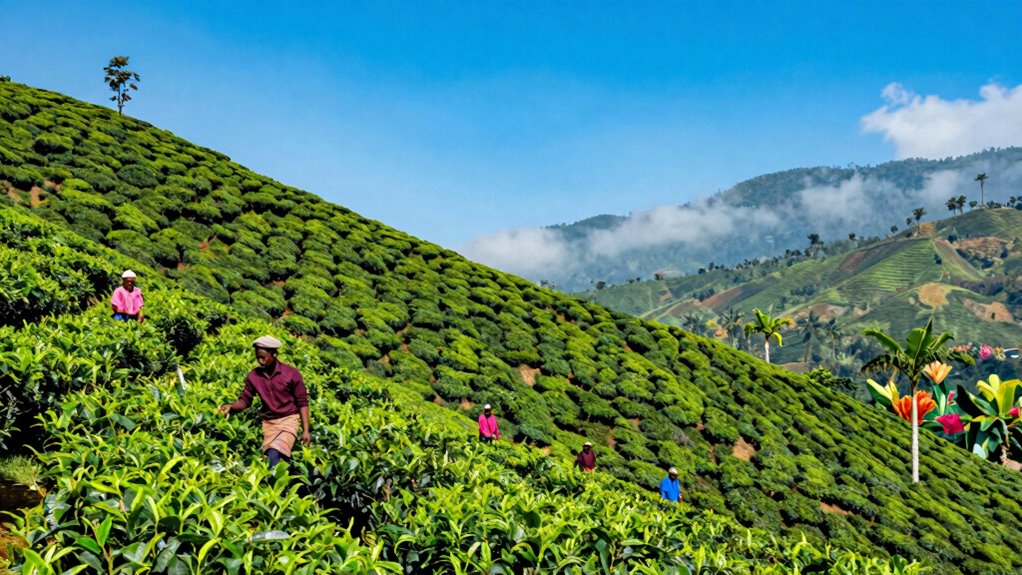
Discover the rich tradition of Sri Lankan tea through Ceylon tea, accounting for 19% of global demand. Introduced in the 19th century, Ceylon tea thrives in Sri Lanka’s unique climate, offering diverse flavors from citrusy to spicy, shaped by elevation. Ethical production methods guarantee purity, and serving tea symbolizes warm hospitality in Sri Lankan culture. Afternoon tea is a cherished tradition, creating opportunities for meaningful social connections. Explore these traditions to deepen your appreciation of Ceylon tea’s cultural importance.
The Rich History of Ceylon Tea
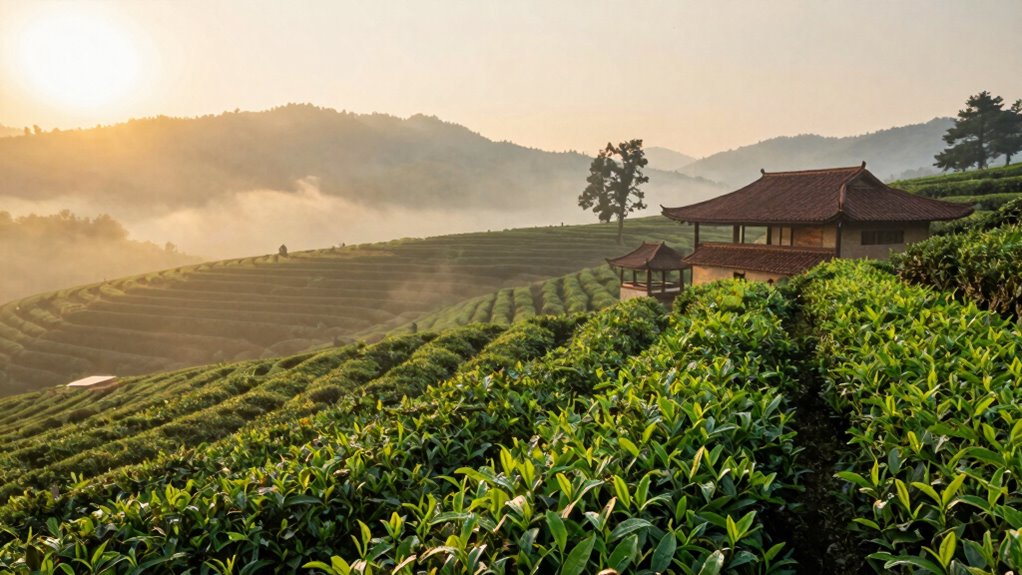
Although the lush landscapes of Sri Lanka are now synonymous with Ceylon tea, it all began in 1824 when James Taylor, a visionary Scottish planter, introduced tea cultivation to the island. This marked a pivotal change from coffee agriculture, especially after the coffee blight of the 1870s.
The first tea bush he planted still thrives in the Peradeniya Royal Botanical Garden, a living symbol of Sri Lanka’s robust tea industry. By the late 19th century, Ceylon emerged as a leading tea producer, considerably impacting global tea supply.
Ceylon tea’s growth is characterized by labor-intensive, orthodox processing, preserving its quality. Today, it represents 19% of global tea demand, underscoring its importance to Sri Lankans and reflecting its enduring legacy. The unique climate of cool highlands and rich soil in Sri Lanka plays a crucial role in cultivating high-quality Ceylon tea.
Unique Flavors and Aromas of Ceylon Tea
Ceylon tea captivates the senses with its unique flavors and aromas, each cup offering a distinct experience shaped by its growing conditions. From fresh and citrusy to chocolatey and spicy, Ceylon tea presents a delightful range of tastes.
The tea leaves’ characteristics are influenced by the elevation of the growing regions. High-grown teas, cultivated above 1,200 meters, provide a nuanced flavor profile, while low-grown varieties offer robust and full-bodied flavors.
Notable types like Aislaby Pekoe and Waulugalla silver candy fop boast distinctive aromatic qualities. Hand-plucked and processed traditionally, these tea leaves preserve natural aromas and enhance bold flavors.
The careful, organic cultivation guarantees Ceylon tea is among the cleanest globally, meeting ethical production standards with minimal pesticide residues. Additionally, the use of oxidation processes during production contributes to the diverse flavor profiles found in Ceylon tea.
Traditional Tea Production
In the world of Ceylon tea, you’re stepping into a domain where handcrafted excellence is celebrated through traditional production methods.
The orthodox processing techniques, involving meticulous hand plucking and precise withering, rolling, and oxidation, guarantee that each cup offers a superior quality experience.
With these time-honored practices, Ceylon tea not only achieves bold flavors and rich aromas but also stands out for its commitment to high standards and minimal pesticide residues. Additionally, the unique health properties of Ceylon tea contribute to its popularity among health-conscious consumers.
Handcrafted Excellence Tradition
Explore the world of Ceylon Tea, where handcrafted excellence elevates tea production to an art form.
You’re diving into a domain where every leaf tells a story of dedication and precision. Hand plucking guarantees that only the finest leaves make it into your cup, preserving the unique characteristics that make Ceylon Tea celebrated worldwide.
The labor-intensive orthodox methods, including careful withering, rolling, and oxidation, enhance both flavor and aroma, giving each sip a depth that’s unparalleled.
This meticulous process results in one of the cleanest teas globally, boasting low pesticide residues and ethical certifications.
The diverse flavors, from citrus to chocolate, showcase the tea’s superior quality, fulfilling 19% of global demand and establishing a legacy of traditional craftsmanship.
Orthodox Processing Techniques
Diving into the world of orthodox tea processing reveals a meticulous journey where traditional methods meet exceptional quality. When you explore Ceylon tea, you’ll discover a process that includes withering, rolling, and oxidation. Each step enhances the tea’s bold flavor and aroma.
Hand-plucking guarantees only the finest leaves make it into your cup, safeguarding the high quality of Ceylon tea. Orthodox processing is labor-intensive, leading to a higher price point, but it preserves the tea plant’s natural aromas better than mechanical methods.
You’ll appreciate Ceylon tea’s purity, as these techniques maintain low pesticide residues, making it one of the cleanest teas globally. The legacy of quality is evident in every sip, reflecting traditional practices passed down through generations.
Superior Quality Standards
As you appreciate the meticulous process of orthodox tea production, it’s clear that Ceylon tea’s superior quality standards are deeply rooted in tradition.
The dedication to quality begins with the hand-plucking of tea leaves, a labor-intensive method that guarantees only the finest leaves contribute to Ceylon tea’s renowned flavor and aroma.
These leaves go through careful withering, rolling, and oxidation, essential steps in preserving their unique characteristics.
Ceylon tea also stands out for its strict adherence to environmental and ethical standards, earning the title of the cleanest tea regarding pesticide residues.
This commitment to excellence allows Ceylon tea to meet 19% of global tea demand, solidifying Sri Lanka’s status as a leading tea exporter.
Each type—black, green, oolong, and white—reflects these superior quality standards.
Ceylon Tea in Sri Lankan Rituals and Social Life

Sri Lanka’s rich cultural tapestry is deeply interwoven with the traditions of Ceylon tea, playing an essential role in rituals and everyday social life.
Tea is a symbol of hospitality, offered to guests as a warm welcome. The tradition of afternoon tea, inherited from the British, is still popular and often includes an array of sweetmeats. The phrase “Shall we make tea?” signifies comfort and connection, emphasizing tea’s role in fostering bonds.
Here’s how tea weaves into social life:
- Hospitality: Offering tea to guests reflects warmth and tradition.
- Social Hubs: Thé kadé in rural areas serve as gathering spots.
- Afternoon Tea: A cherished tradition with sweet treats.
- Cultural Preference: Loose leaf tea showcases quality and ritual.
Why Ceylon Tea Is Good for the Planet and People
Although Ceylon Tea is steeped in tradition, its modern practices are a demonstration of its commitment to sustainability and ethical production.
As the first Ethical Tea Brand certified by the United Nations Global Compact, Ceylon Tea stands out for its high social and environmental standards. It’s grown under the Ozone Friendly Tea label, adhering to the Montreal Protocol to reduce environmental impact.
The tea is renowned for being the cleanest in the world, free from harmful pesticide residues, ensuring safety for both consumers and the ecosystem.
Diverse Tea Regions of Sri Lanka
When exploring the diverse tea regions of Sri Lanka, you’ll notice how regional climate and elevation distinctly shape the flavors of Ceylon tea.
The central mountains and southern foothills offer a variety of climates and altitudes, resulting in teas with unique characteristics.
High-grown teas, cultivated at elevations above 1,200 meters, are known for their light and aromatic profiles, while their low-grown counterparts, thriving at sea level to 600 meters, are stronger and richer, providing a wide range of sensory experiences.
Regional Climate Impact
Nestled within the central mountains and southern foothills, Sri Lanka’s diverse tea regions owe much of their distinctiveness to the regional climate.
As you explore these areas, you’ll discover that Sri Lankan tea types vary greatly. The key factors influencing these variations are:
- Climate Zones: Each of the seven defined regions has its own climate, affecting the local tea’s flavor and aroma.
- Rainfall Patterns: Variability in rainfall impacts the growth cycle, influencing the strength and quality of the tea leaves.
- Temperature Variations: Fluctuating temperatures can alter the chemical composition of the leaves, affecting their taste.
- Altitude Influence: While low-grown teas have a robust flavor, high-grown varieties offer a delicate and nuanced profile, shaped by the climatic conditions at different elevations.
Elevation and Taste
Sri Lanka’s tea-growing regions, nestled in the central mountains and southern foothills, boast a remarkable diversity influenced by elevation. The elevation plays a vital role in shaping the taste of Ceylon tea.
Low-grown teas, cultivated from sea level to 600 meters, are known for their stronger, more robust flavors. In contrast, high-grown teas, found above 1,200 meters, offer lighter and more fragrant profiles. This variation results from the distinct climate and terrain of each area.
These characteristics guarantee that Ceylon tea meets 19% of the global demand, making it the third-largest exporter worldwide. As you explore these teas, you’ll notice the unique attributes imparted by their specific growing conditions, allowing you to savor the regional character in every infusion.
Tea Rituals: The Elegance of Sri Lankan Social Gatherings
In Sri Lanka, tea rituals capture the essence of elegance and social grace, offering a window into the country’s rich cultural tapestry.
Tea gatherings are more than just an event; they’re a tradition where hospitality shines through beautifully set tables and china cups.
Here’s what makes Sri Lanka’s tea rituals truly special:
- Thoughtful Offerings: Enjoy not just tea, but also biscuits, cakes, and scones, showing the care put into each gathering.
- Afternoon Tea Tradition: Inherited from British colonials, this practice fosters deeper connections among friends and family.
- Warm Atmosphere: Experience meaningful interactions in a setting marked by warmth and refinement.
- Symbolic Serving: Serving tea symbolizes welcome and comfort, strengthening communal bonds in both rural and urban settings.
These rituals elegantly bridge tradition and connection.
Frequently Asked Questions
What Is Special About Ceylon Tea?
You’ll find Ceylon tea special because of its unique flavor profiles and diverse Ceylon varieties. It offers aromas ranging from citrus to chocolate. The orthodox cultivation methods guarantee high quality, making each sip a delightful experience.
What Is Special About Sri Lankan Tea?
Picture a symphony of flavors dancing on your tongue. Sri Lankan tea dazzles with its unique flavor profiles, offering health benefits like antioxidants. You’ll delight in every sip, making it an irresistible choice for tea lovers.
What Is the Tradition of the Tea Ceremony?
You experience the tea ceremony as a blend of hospitality and grace. Engage in tea preparation with care, highlighting its cultural significance. Embrace the warmth of shared moments, where elegance and thoughtful conversation create meaningful connections.
How to Drink Sri Lankan Tea?
You’d think drinking Sri Lankan tea was rocket science, but it’s just about mastering tea preparation. Use loose leaves, steep properly, and serve with grace. Don’t forget the serving etiquette—elegance is essential, even if you’re home alone.
Wrapping It Up
Embrace the legacy of Ceylon tea, where each sip becomes a journey through time, echoing ancient rituals and vibrant social traditions. As you explore its diverse flavors and aromas, remember that these leaves not only offer a sensory delight but also promote sustainability for the planet and wellness for humanity. Whether you’re sharing a cup in a bustling market or a serene garden, Ceylon tea invites you to partake in a timeless tradition, rich with history and cultural significance.