Discover the cultural richness of Vietnamese green tea, an ancient tradition cherished for over 4,000 years. It plays an essential role in social rituals, symbolizing hospitality and community. Relish its health benefits, from boosting immunity to enhancing heart health. As part of herbal medicine, green tea soothes and heals. During family gatherings and festivals, offering green tea reflects respect and reverence. Embrace this tradition and reveal the deeper cultural connections it brings.
Vietnamese Green Tea’s Rich History

Though often overshadowed by its more famous neighbors, Vietnamese green tea, or ‘trà xanh,’ boasts a rich history that stretches back over 4,000 years, intertwining deeply with the nation’s cultural and social narrative.
As you explore Vietnam’s tea culture, you’ll discover that this high-quality beverage has been treasured through various dynasties. Scholars and officials once revered it, reflecting philosophical values from the 13th to early 15th centuries.
The French colonial era expanded its reach, with plantations boosting cultivation to meet European demands.
Today, tea drinking in Vietnam remains a cherished tradition, where fresh tea buds are preferred to dried ones. Meticulous brewing enhances its flavor, making it a centerpiece in traditional ceremonies that celebrate its invigorating taste and health benefits. Additionally, Vietnamese tea culture underscores the importance of community gathering, similar to practices observed in India and Morocco.
Social and Cultural Role of Green Tea in Vietnam
After exploring the historical significance of Vietnamese green tea, it’s time to understand its profound social and cultural roles in Vietnam.
Green tea, or ‘trà xanh’, is more than a daily beverage; it’s a crucial part of Vietnamese culture. In daily life, tea drinking symbolizes hospitality and social connection, bringing families and friends together. Serving green tea with respect, using both hands, emphasizes the importance of social bonds.
During Tet, the Lunar New Year, green tea is essential in ancestral offerings, showing respect and gratitude for family heritage. Elders, appreciating its health benefits, often choose green tea to improve blood flow and lower cholesterol. Furthermore, the cultural significance of tea rituals in Vietnam highlights how tea strengthens community ties and fosters connections among individuals.
Gathering around for tea becomes a cherished communal activity, weaving stories and experiences into the fabric of Vietnamese life.
The Art of Preparing Vietnamese Green Tea
Preparing Vietnamese green tea is an art that combines tradition with meticulous attention to detail. To prepare tea, you’ll start by heating fresh green tea leaves right after picking. This step preserves their flavor and nutrients, setting them apart from fermented varieties.
Traditional brewing emphasizes using clean water, preferably rainwater, and maintaining the cleanliness of tea sets. Here’s how you can enjoy a deeper tea-drinking experience:
- Heat leaves immediately: This preserves the green tea’s natural taste.
- Use clean, boiled water: Guarantees ideal flavor; rainwater is preferred.
- Practice Gong Fu Cha: A ritualistic method allowing multiple infusions.
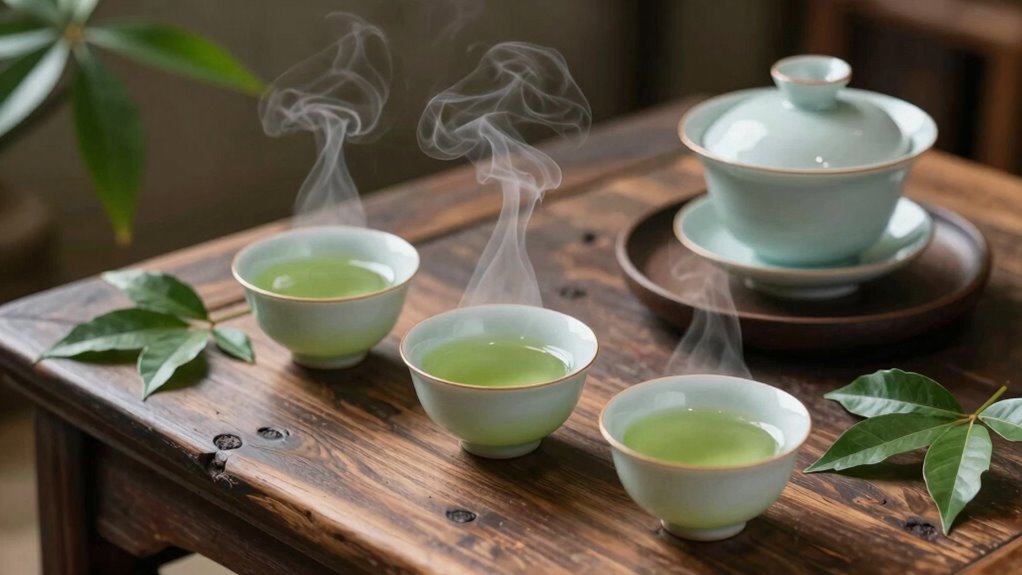
- Serve in small cups: Arranged in a circle, promoting a communal atmosphere.
These steps reflect both the dedication of tea producers and the rich cultural heritage of drinking tea in Vietnam.
Why Vietnamese Green Tea Is Good for Your Health

Vietnamese green tea offers numerous health benefits that make it an excellent choice for daily consumption. Rich in catechins, it helps combat infections and slows down aging, promoting overall health.
Regularly drinking this tea can lower your blood pressure and blood sugar, greatly boosting heart health. Its ability to improve blood flow and reduce cholesterol levels further reduces heart-related risks. The presence of theophylline guarantees a steady energy release, keeping you energized throughout the day.
In traditional practices, Vietnamese green tea is valued for its medicinal properties. It enhances the immune system, aiding in defense against common ailments. Engaging in tea rituals can lead to spiritual awakening and tranquility, further enriching the experience of consuming Vietnamese green tea.
How Vietnamese Green Tea Is Used as Herbal Medicine
You’ll find Vietnamese green tea is more than just a beverage; it’s a natural remedy packed with health benefits that improve blood circulation, lower cholesterol, and help prevent heart issues like high blood pressure.
Traditional uses in Vietnam include applying it to skin conditions, such as soothing heat rash on infants, showcasing its versatility beyond just drinking.
Whether you’re brewing it with rainwater to emphasize its medicinal qualities or using it in culinary practices to enhance flavors and remove odors, green tea is a staple in promoting overall well-being.
Health Benefits Overview
Though often enjoyed for its invigorating taste, Vietnamese green tea is much more than just a daily beverage—it’s a valued component of herbal medicine.
With its rich health benefits, green tea plays a central role in Vietnamese culture. Its potent medicinal properties contribute to cardiovascular health and boast impressive herbal qualities.
Here’s why you should consider incorporating it into your daily routine:
- Catechins: These antioxidants combat infections and slow aging.
- Blood Sugar and Pressure: Regular consumption lowers both, promoting heart health.
- Skin Care: Used for cleaning infants’ skin and treating heat rash.
- Cholesterol Reduction: Supports better blood flow, appealing to health-conscious individuals.
Embrace these benefits and experience how Vietnamese green tea can enhance your well-being.
Traditional Medicinal Uses
While green tea is commonly appreciated for its invigorating taste, its role as a traditional medicine in Vietnamese culture is profound. Known for its medicinal properties and health benefits, green tea in Vietnam is used to improve blood flow and lower cholesterol levels, helping prevent heart-related issues like high blood pressure.
The catechins in green tea possess antimicrobial properties, effectively combating infections and boosting the immune system. Traditional uses include treating heat rash in infants and cleaning sensitive skin.
Additionally, green tea is infused with lotus flowers, enhancing its therapeutic effects. Regular consumption contributes to longevity and overall well-being, emphasizing its significance as a herbal remedy.
Consequently, green tea remains a staple in both everyday life and traditional Vietnamese medicine.
Green Tea Applications
Building on its medicinal uses, Vietnamese green tea finds numerous applications as a versatile herbal remedy. You’ll discover its therapeutic properties deeply embedded in Vietnamese culture. Here’s how it’s used:
- Health Benefits: Green tea enhances blood flow, lowers cholesterol, and helps prevent heart issues like high blood pressure.
- Traditional Practices: It’s used to clean infants’ sensitive skin and treat heat rash, thanks to its soothing nature.
- Cuisine: Beyond just a drink, green tea flavors dishes and removes odors from foods like fish and eggs.
- Anti-aging and Wellness: The catechins in green tea combat infections and slow aging, promoting overall wellness.
These practices highlight green tea’s multifaceted role in Vietnamese herbal medicine, showcasing its trusted effectiveness.
The Role of Green Tea as a Cultural Gift
Green tea plays a significant role in Vietnamese culture as a cherished gift, symbolizing respect and appreciation during important occasions like weddings, anniversaries, and Tet celebrations.
Exchanging green tea during the Tet holiday signifies goodwill and strengthens social bonds. As a cultural gift, it embodies hospitality, showing honor and filial piety to guests. Offering premium green tea selections is a thoughtful gesture, reflecting care for the recipient’s well-being, thanks to its health benefits.
During special occasions, it’s common to place premium green tea on ancestral altars, underscoring its role as a symbol of reverence and gratitude within family rituals. This tradition illustrates the deep respect for family heritage and the importance of maintaining strong social connections through this versatile beverage.
How to Best Enjoy Vietnamese Green Tea During Your Visit

- Use fresh tea leaves: This enhances the flavor and makes your tea experience more authentic.
- Visit local tea shops: Discover traditional brewing methods emphasized by Vietnamese people, offering a rich taste and aroma.
- Participate in a tea ceremony: Engage with the cultural importance of hospitality and connection through this communal activity.
- Pair with local snacks: Complement your green teas with Vietnamese cuisine for a full culinary experience.
Embracing these steps guarantees you’ll savor the essence of Vietnamese green tea culture.
Frequently Asked Questions
What Is the Best Time of Day to Drink Vietnamese Green Tea?
You can enjoy Vietnamese green tea during morning rituals for a revitalizing start, as an afternoon pick-me-up, or for evening relaxation. Embrace tea ceremonies anytime to appreciate its health benefits and cultural significance, enhancing your day.
Are There Any Specific Regional Variations of Vietnamese Green Tea?
Yes, you’ll find regional tea differences in Vietnam. Each tea cultivation region offers unique tea flavor profiles and historical tea significance. Local tea ceremonies and tea preparation methods reflect these variations, enhancing your experience of Vietnamese green tea.
How Is Vietnamese Green Tea Different From Other Types of Green Tea?
Vietnamese tea tantalizes with its unique flavor profile; fresh and floral. You’ll find distinct brewing techniques that enhance its cultural significance. These methods, coupled with rich tea ceremonies, bring health benefits and a serene sipping experience.
Can Children Also Drink Vietnamese Green Tea Safely?
Yes, children can drink Vietnamese green tea safely in moderation. Consider caffeine effects and age recommendations. For children’s health, follow moderation guidelines. Explore herbal alternatives in cultural practices to guarantee suitable choices for young ages.
What Are Some Popular Vietnamese Green Tea Brands?
You can explore popular Vietnamese green tea brands like Ly Quoc Su, Thai Nguyen, and Trung Nguyen. Don’t miss aromatic blends from Lam Dong, Da Lat, and Ha Giang, offering distinct flavors reflecting their unique growing regions.
Wrapping It Up
In exploring Vietnamese green tea, you’ve uncovered its profound cultural significance and health benefits. This isn’t just a beverage; it’s a tradition steeped in history, bringing people together and offering wellness through its medicinal properties. When visiting Vietnam, embrace the chance to experience this ritual firsthand. You’ll find that sharing a cup of green tea is more than drinking; it’s about connecting with the heritage and warmth of a nation, making your journey truly memorable.

