Germany’s tea culture has transformed from a luxury item in the 17th century to a beloved tradition. Introduced by the Dutch, tea became widely accessible by the 18th century. East Frisian traditions hold a unique place, featuring strong black tea rituals. Regional preferences vary, with North favoring black blends and South enjoying herbal varieties. Modern tea shops and festivals highlight diverse selections, fostering social connections. Discover more about Germany’s evolving tea appreciation and practices.
Introduction to German Tea: From 17th-Century Luxury to Everyday Brew
While tea might seem like an everyday staple now, it actually has a rich history in Germany that dates back to the 17th century. Introduced by the Dutch East India Company, tea initially served as a luxury item for the nobility and wealthy merchants.
As you explore the history of tea in Germany, you’ll find that by the 18th century, tea became more accessible, increasing its popularity among the general population. Germans have long appreciated not just black and green teas but also herbal varieties.
The establishment of tea plantations in Bavaria in 1884 marks a significant attempt to cultivate tea locally, though it was short-lived.
Post-World War II, tea culture in Germany flourished, with tea shops and rooms sprouting across the country. This growth reflects the global trend of tea serving as a medium for social connection, highlighting how tea brings people together in various cultures.
East Frisian Tea Traditions: The Heart of German Tea Culture
In the heart of German tea culture, East Frisian traditions offer a special tea experience with their unique brewing techniques.
You begin by pouring strong, malty black tea over a sugar cube, letting the flavors blend naturally as you enjoy each sip.
This ceremony is more than just a drink; it’s a time-honored practice where you’re encouraged to savor at least three cups, reflecting the region’s deep appreciation for this comforting ritual. Additionally, the antioxidants in tea can enhance heart health, making it a beneficial choice for those who partake in this cherished tradition.
East Frisian Tea Ceremony
Although Germany may be renowned for its beer culture, the East Frisian tea ceremony offers a compelling glimpse into the nation’s diverse traditions.
In East Frisia, this ceremony is a cherished practice, where strong black tea is served with rock sugar and cream. It highlights the cultural significance of tea in the region, symbolizing East Frisian hospitality.
You start by placing a sugar cube on a spoon, pouring the robust tea over it, and then adding a touch of cream. This ritual emphasizes the importance of ingredient order.
Often, you drink at least three cups in one sitting, with the rock sugar enduring multiple servings. The tea must be packaged in East Frisia to maintain authenticity, distinguishing it from other German tea customs. Warm teas boost mood and enhance the overall experience of this delightful ceremony.
Unique Brewing Techniques
Few traditions capture the heart of East Frisian tea culture quite like their unique brewing techniques.
This East Frisian tea tradition involves a meticulous brewing method using robust Assam black tea, cream, and rock sugar. You start by placing a sugar cube on a spoon, pouring the strong tea over it, and finishing with cream. This order guarantees the flavors meld naturally, creating a distinct taste experience.
In East Friesland, you’re encouraged to enjoy at least three cups in one sitting, with the sugar enhancing each infusion. This tea ceremony isn’t just about taste; it’s a symbol of hospitality and social connection, emphasizing the region’s essential role in German tea culture.
The phrase “Zeit für eine Tasse Tee” perfectly encapsulates this cultural significance.
The East Frisian Tea Ceremony: Rituals and Traditions
Nestled in the cultural tapestry of Germany, the East Frisian tea ceremony stands out as a unique and cherished tradition that captivates both locals and visitors alike.
This ceremony, with its distinct brewing methods, emphasizes the cultural significance of tea in East Frisia. You begin with strong black tea, pouring it over a sugar cube carefully placed on a spoon. Traditional preparation methods dictate that cream is added afterward, enriching the flavor and texture.
As you partake, remember that at least three cups are customary, with the rock sugar sweetening multiple servings. It’s vital not to stir; let the flavors naturally blend as you sip.
This ceremonial practice, using special cups, is a hallmark of the region’s esteemed tea culture.
The Evolution of Tea Rooms and Their Role in German Tea Culture
While the café culture in Germany is widely celebrated, the evolution of tea rooms in the late 19th and early 20th centuries marked a crucial transformation in the country’s tea culture.
Tea rooms became popular, offering a dedicated space for tea drinking, blending seamlessly with the rich tradition of Kaffee und Kuchen. These establishments expanded beverage options, introducing diverse teas and highlighting the health benefits of German herbal blends.
As tea in Germany evolved, tea rooms emerged as cultural hubs, providing a place for socializing and sharing rituals.
Today, they continue to play an essential role, focusing on high-quality loose-leaf teas and knowledgeable staff. They enhance the tea-drinking experience, ensuring that the tradition remains vibrant and appreciated in modern times.
How Regional Preferences Shape German Tea Culture
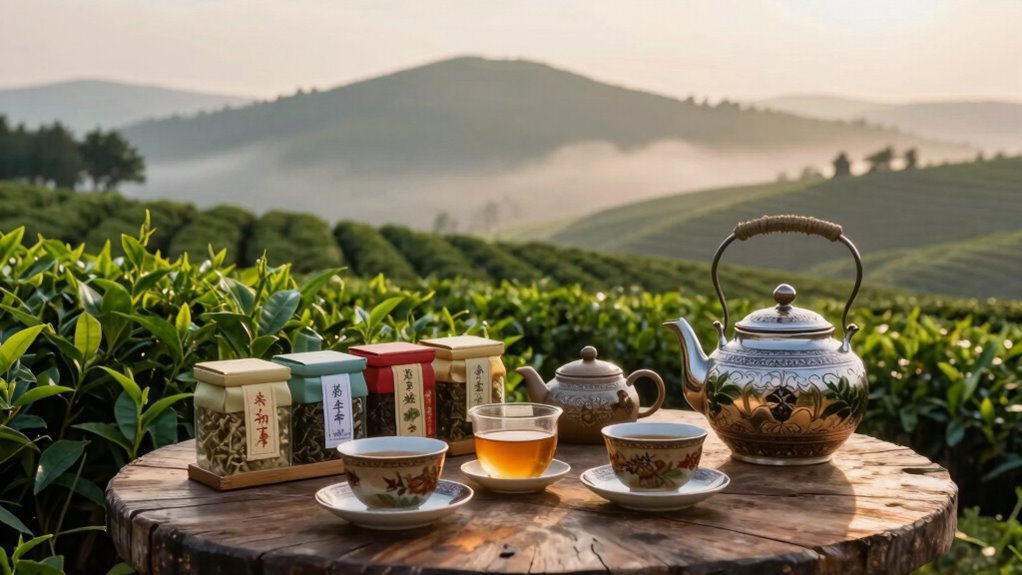
You’ll find that regional preferences greatly shape German tea culture, with North Germany, especially East Frisia, favoring a traditional black tea known as Ostfriesentee, often served with cream and rock sugar.
In contrast, South Germany leans towards herbal teas like chamomile and peppermint, echoing wellness practices influenced by neighboring countries.
These differences aren’t just about taste; they reflect deep-rooted local traditions, with unique rituals and phrases like “Zeit für eine Tasse Tee” underscoring the importance of tea in daily life.
Regional Tea Preferences
Germany’s tea culture is as diverse as its regions, each with unique preferences that shape the national tea scene.
In North Germany, cities like Hamburg and Bremen favor East Frisian tea, a strong black blend served with cream and rock sugar, reflecting deep-rooted German traditions.
Meanwhile, South Germany leans towards herbal teas such as chamomile and peppermint, influenced by cultural ties to Switzerland and Austria, focusing on wellness.
The history of German tea is marked by 17th-century trade routes, introducing diverse practices and regional preferences that persist today.
East Frisian tea traditions incorporate a ceremonial approach, emphasizing order and ingredients.
Regional variations in additives, like sugar cubes in the north and lemon in the south, highlight Germany’s rich, varied tea culture.
Influence of Local Traditions
Local traditions play a significant role in shaping Germany’s diverse tea culture, highlighting how regional preferences add depth and variety to the national tea scene.
In the East, the distinctive black tea blend of East Frisian tea is a reflection of local traditions, served with cream and rock sugar. This ritual is a unique aspect of drinking in Germany, showcasing how culture influences preferences.
In contrast, North Germany, including cities like Hamburg and Bremen, favors strong black teas, reflecting historical ties to tea trading.
Meanwhile, South Germany leans into herbal teas, such as chamomile and peppermint, influenced by its proximity to Switzerland and Austria.
These regional preferences, from black tea blends to herbal teas, underscore the cultural diversity found within Germany’s tea traditions.
Modern Practices: Blending Tradition With Herbal Innovations
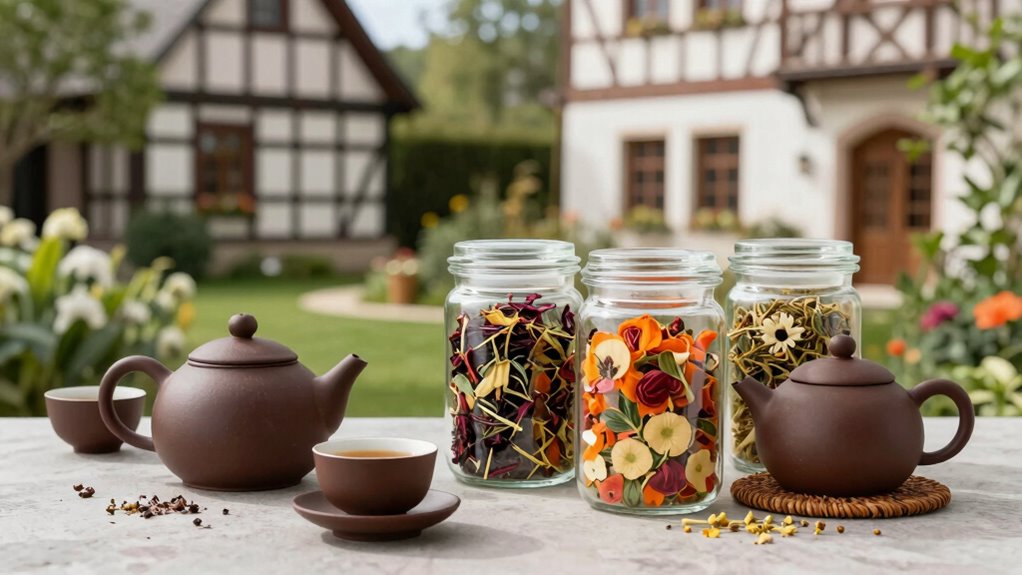
While the rich history of tea in Germany is steeped in tradition, modern practices are creatively merging this heritage with an innovative focus on herbal infusions.
You’re likely to notice the rise in popularity of herbal teas, with many turning to these infusions for their wellness benefits. Specialty tea shops have popped up across the country, offering diverse selections of high-quality loose-leaf herbal teas. Knowledgeable staff can guide you through the wellness benefits and flavor profiles.
- Herbal Teas: Seek out natural remedies and wellness through new and traditional blends.
- Specialty Tea Shops: Explore a variety of herbal teas with expert guidance.
- Traditional Rituals: Blend modern preferences with the classic East Frisian tea ceremony.
- Tea Festivals: Celebrate herbal innovations and community among enthusiasts.
Exploring German Tea Culture Today
As you explore German tea culture today, you’ll discover a vibrant landscape where tradition and modernity blend seamlessly.
In East Frisia, the cherished tea ceremony highlights the region’s rich heritage, serving strong black tea with cream and rock sugar.
Across Germany, modern tea shops and tea rooms have sprung up, offering diverse loose-leaf selections and fostering social connections.
You’ll find that herbal tea, especially Kräutertee, is gaining popularity as people seek natural remedies and health benefits. This shift reflects a broader focus on wellness within German culture.
Additionally, tea festivals celebrate this evolving culture, showcasing a wide array of tea varieties and encouraging community engagement.
Together, these elements create a dynamic scene, illustrating Germany’s multifaceted appreciation for tea.
Frequently Asked Questions
What Health Benefits Are Associated With Drinking Tea in Germany?
Drinking tea offers you several health benefits. It serves as herbal remedies, enhances digestive health, boosts immunity, and provides mental clarity. Enjoy relaxation benefits, stay hydrated, and support weight management. Embrace these perks in your daily routine.
Are There Any Famous German Tea Brands Recognized Internationally?
Imagine your taste buds dancing. Yes, Germany boasts famous tea brands recognized globally. They offer diverse selections, traditional blends, and herbal infusions. International collaborations fuel market growth, while sustainability initiatives and the craft tea movement enhance their global appeal.
How Does German Tea Culture Compare to British Tea Traditions?
You’ll find German tea culture emphasizes diverse flavors and brewing methods, contrasting with British tea traditions focused on ceremony and social significance. Historical influences shape these cultural differences, each offering unique experiences in their tea ceremonies.
What Are Popular Tea Flavors Among Younger Germans Today?
Plunge into Germany’s tea wave! Younger generations are riding high on the matcha craze and chai popularity. Herbal infusions and fruity blends captivate, while iced teas refresh. Regional specialties and sustainability trends add depth to the experience.
How Has Globalization Influenced German Tea Preferences?
Globalization’s impact on German tea preferences is evident as you explore global trade and cultural exchange. You find diverse tea varieties, herbal blends, and international influences shaping consumer preferences, enriching social gatherings with flavors from around the world.
Wrapping It Up
In Germany, tea culture is a vibrant tapestry woven from rich traditions and modern innovations. You’ve seen how East Frisian rituals keep the heart of this culture beating, blending with new herbal twists that keep things fresh. From the cozy corners of tea rooms to the diverse regional preferences, Germany’s love for tea is as varied as its landscapes. So, as you sip your next cup, remember, you’re part of a timeless story that’s always evolving.